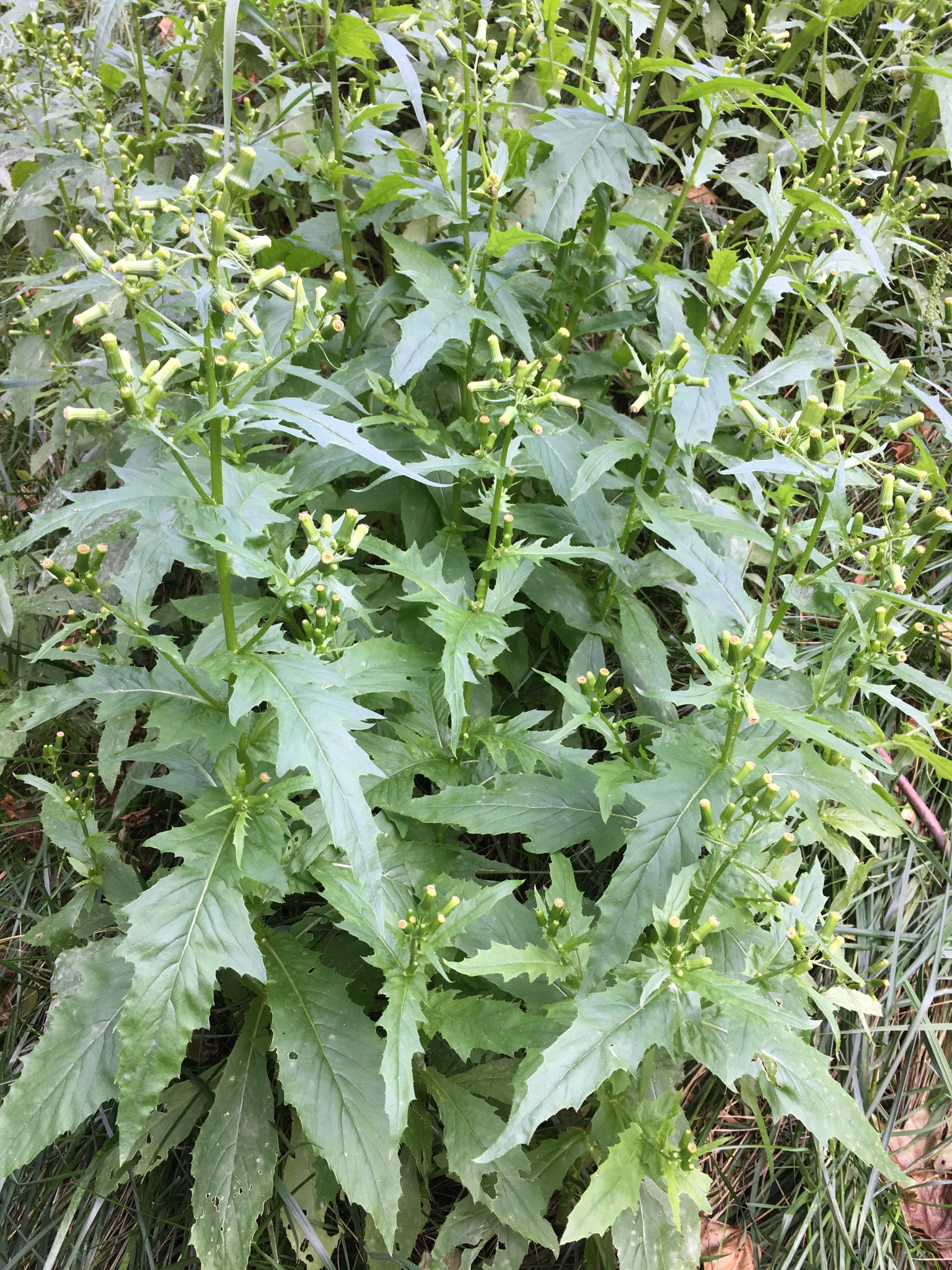
American Burnweed
Erechtites hieraciifolius
Also listed as Senecio hieraciifolius, Cineraria canadensis
Also known as Eastern Burnweed, Pilewort, Burnweed
Climate Match for your location
See how well American Burnweed grows in your area.
Enter your ZIP code and we'll show you how this plant fits your local climate.
A fast-growing annual wildflower with small white or pale pink flowers and feathery seeds that often colonizes disturbed ground and sunny areas. It is valued by pollinators and self-seeds readily.
Why grow it
American burnweed establishes quickly on bare or disturbed soil where slower-growing perennials might struggle, making it useful for temporary ground cover or as a pioneer species in restoration work. Unlike many introduced cover crops, it is native to eastern North America and supports native pollinators without requiring active management. Its feathery seeds disperse readily, reducing the need for replanting in suitable conditions.
Watch out for
This plant thrives in open, sunny sites but can become straggly or sparse in partial shade, limiting its usefulness in shaded permaculture zones. The seedlings are relatively delicate and may require protection from competition if sown into weedy areas, so timing and site preparation affect establishment success.
Overview
- Form
- Growth Rate
- Size
- Dormancy
- Family
- Asteraceae
Native to the United States
Native Range
Eastern North America
Native to: Alabama, Arkansas, Connecticut, Delaware, Florida, Georgia, Iowa, Illinois, Indiana, Kansas, Kentucky, Louisiana, Massachusetts, Maryland, Maine, Michigan, Minnesota, Missouri, Mississippi, North Carolina, Nebraska, New Hampshire, New Jersey, New York, Ohio, Oklahoma, Pennsylvania, Rhode Island, South Carolina, South Dakota, Tennessee, Texas, Virginia, Vermont, Wisconsin, West Virginia
Seasonality
Bloom Season
Edible Parts
Season of Interest
Herb
Soft non-woody plants of the field layer.
Succession Role
Tolerances & Soil
Establishment & Care
- Establishment
- Maintenance
- Propagation
A fast-growing annual wildflower with small white or pale pink flowers and feathery seeds that often colonizes disturbed ground and sunny areas. It is valued by pollinators and self-seeds readily.
Climate Match for your location
See how well American Burnweed grows in your area.
Enter your ZIP code and we'll show you how this plant fits your local climate.
Why grow it
American burnweed establishes quickly on bare or disturbed soil where slower-growing perennials might struggle, making it useful for temporary ground cover or as a pioneer species in restoration work. Unlike many introduced cover crops, it is native to eastern North America and supports native pollinators without requiring active management. Its feathery seeds disperse readily, reducing the need for replanting in suitable conditions.
Watch out for
This plant thrives in open, sunny sites but can become straggly or sparse in partial shade, limiting its usefulness in shaded permaculture zones. The seedlings are relatively delicate and may require protection from competition if sown into weedy areas, so timing and site preparation affect establishment success.
Overview
- Form
- Growth Rate
- Size
- Dormancy
- Family
- Asteraceae
Native to the United States
Native Range
Eastern North America
Native to: Alabama, Arkansas, Connecticut, Delaware, Florida, Georgia, Iowa, Illinois, Indiana, Kansas, Kentucky, Louisiana, Massachusetts, Maryland, Maine, Michigan, Minnesota, Missouri, Mississippi, North Carolina, Nebraska, New Hampshire, New Jersey, New York, Ohio, Oklahoma, Pennsylvania, Rhode Island, South Carolina, South Dakota, Tennessee, Texas, Virginia, Vermont, Wisconsin, West Virginia
Seasonality
Bloom Season
Edible Parts
Season of Interest
Herb
Soft non-woody plants of the field layer.
Succession Role
Tolerances & Soil
Establishment & Care
- Establishment
- Maintenance
- Propagation
Similar herbs you might consider:
Enter your ZIP code to see top native species and strong climate fits for you.