American Cranberry
Vaccinium macrocarpon
Also listed as Oxycoccus macrocarpos, Oxycoca berberidacea
Also known as Cranberry, Large Cranberry, Wild Cranberry
Climate Match for your location
See how well American Cranberry grows in your area.
Enter your ZIP code and we'll show you how this plant fits your local climate.
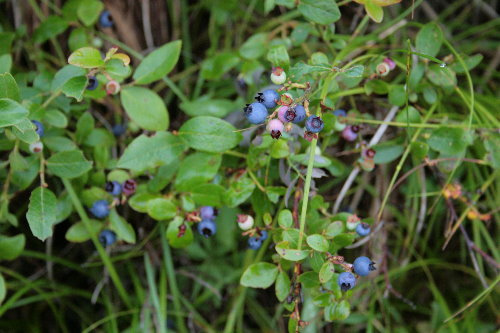
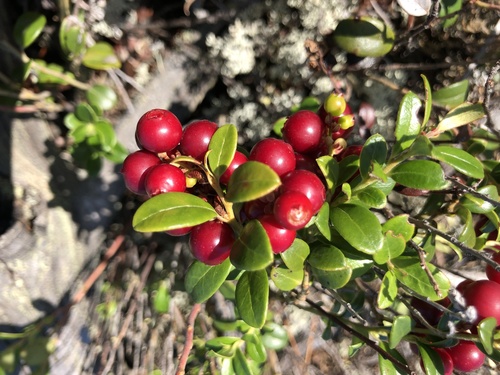
American cranberry is a low-growing, spreading shrub that produces tart red berries in fall, prized for fresh eating and processing. It thrives in acidic wetlands and boggy conditions, making it valuable for permaculture systems with wet microclimates.
Why grow it
American cranberry is better adapted than most berry shrubs to permanently wet, acidic soils where few other fruit crops will establish. Unlike highbush blueberries, which require drier conditions, this species tolerates boggy microclimates and can anchor wetland edges in permaculture systems. Its long storage life and dual use for fresh consumption and processing make it more versatile than many native understory species.
Watch out for
Establishment typically requires 2-3 years before reliable fruiting, so site preparation and competing vegetation management are more critical than with faster-producing berry crops. The plant's shallow root system makes it sensitive to drought during dry spells, even in wetland settings, and may need supplemental water in unusually dry seasons.
Overview
- Form
- Growth Rate
- Size
- Dormancy
- Family
- Ericaceae
Native to the United States
Native Range
Eastern North America
Native to: Connecticut, Delaware, Illinois, Indiana, Massachusetts, Maryland, Maine, Michigan, Minnesota, North Carolina, New Hampshire, New Jersey, New York, Ohio, Pennsylvania, Rhode Island, Tennessee, Virginia, Vermont, Wisconsin, West Virginia
Seasonality
Bloom Season
Harvest Season
Edible Parts
Season of Interest
Ground cover
Low spreading plants that carpet the soil.
Succession Role
Tolerances & Soil
Establishment & Care
- Establishment
- Maintenance
- Years to Bearing
- Propagation
American cranberry is a low-growing, spreading shrub that produces tart red berries in fall, prized for fresh eating and processing. It thrives in acidic wetlands and boggy conditions, making it valuable for permaculture systems with wet microclimates.
Climate Match for your location
See how well American Cranberry grows in your area.
Enter your ZIP code and we'll show you how this plant fits your local climate.
Why grow it
American cranberry is better adapted than most berry shrubs to permanently wet, acidic soils where few other fruit crops will establish. Unlike highbush blueberries, which require drier conditions, this species tolerates boggy microclimates and can anchor wetland edges in permaculture systems. Its long storage life and dual use for fresh consumption and processing make it more versatile than many native understory species.
Watch out for
Establishment typically requires 2-3 years before reliable fruiting, so site preparation and competing vegetation management are more critical than with faster-producing berry crops. The plant's shallow root system makes it sensitive to drought during dry spells, even in wetland settings, and may need supplemental water in unusually dry seasons.
Overview
- Form
- Growth Rate
- Size
- Dormancy
- Family
- Ericaceae
Native to the United States
Native Range
Eastern North America
Native to: Connecticut, Delaware, Illinois, Indiana, Massachusetts, Maryland, Maine, Michigan, Minnesota, North Carolina, New Hampshire, New Jersey, New York, Ohio, Pennsylvania, Rhode Island, Tennessee, Virginia, Vermont, Wisconsin, West Virginia
Seasonality
Bloom Season
Harvest Season
Edible Parts
Season of Interest
Ground cover
Low spreading plants that carpet the soil.
Succession Role
Tolerances & Soil
Establishment & Care
- Establishment
- Maintenance
- Years to Bearing
- Propagation
Similar ground covers you might consider:
Enter your ZIP code to see top native species and strong climate fits for you.