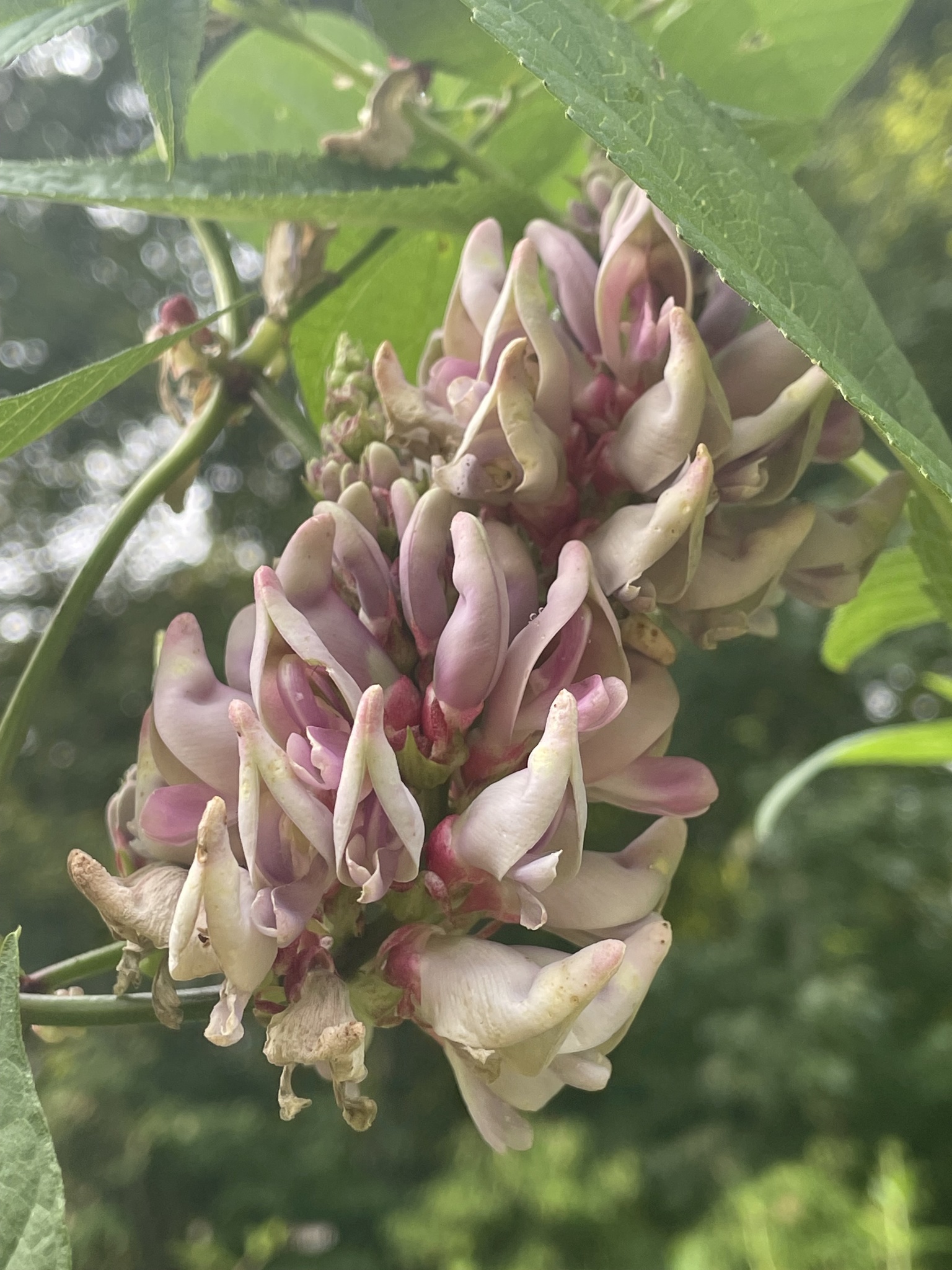
American Groundnut Vine
Apios priceana
Also listed as Glycine priceana
Also known as Price's Potato-bean, Traveler's Delight
Climate Match for your location
See how well American Groundnut Vine grows in your area.
Enter your ZIP code and we'll show you how this plant fits your local climate.
A native North American climbing vine with small, fragrant purple flowers and edible underground tubers similar to potatoes. Valuable for permaculture systems as a nitrogen-fixing legume that produces nutritious food while improving soil.
Why grow it
American groundnut vine offers a dual-purpose perennial for nitrogen-fixing systems: the tubers provide a starchy root crop with higher protein content than potatoes, while the plant builds soil fertility over time. Compared to cultivated beans or peas, it requires less annual management once established, though tuber yields are modest and variable. It suits woodland edges and shaded margins better than most legumes, making it useful for systems where sun is limited.
Watch out for
Tubers may take 2-3 years to reach harvestable size, so patience is required before meaningful yield. Harvest can be labor-intensive due to the scattered, deep placement of tubers in the soil. In areas outside its native range, growth may be slower or less vigorous than expected, and local growing data is sparse compared to mainstream crops.
Overview
- Form
- Growth Rate
- Size
- Dormancy
- Family
- Fabaceae
Native to the United States
Native Range
Southeastern United States
Native to: Alabama, Illinois, Kentucky, Mississippi, Tennessee
Seasonality
Bloom Season
Harvest Season
Edible Parts
Season of Interest
Climber
Vines that climb the layers above on a support.
Succession Role
Tolerances & Soil
Establishment & Care
- Establishment
- Maintenance
- Years to Bearing
- Propagation
A native North American climbing vine with small, fragrant purple flowers and edible underground tubers similar to potatoes. Valuable for permaculture systems as a nitrogen-fixing legume that produces nutritious food while improving soil.
Climate Match for your location
See how well American Groundnut Vine grows in your area.
Enter your ZIP code and we'll show you how this plant fits your local climate.
Why grow it
American groundnut vine offers a dual-purpose perennial for nitrogen-fixing systems: the tubers provide a starchy root crop with higher protein content than potatoes, while the plant builds soil fertility over time. Compared to cultivated beans or peas, it requires less annual management once established, though tuber yields are modest and variable. It suits woodland edges and shaded margins better than most legumes, making it useful for systems where sun is limited.
Watch out for
Tubers may take 2-3 years to reach harvestable size, so patience is required before meaningful yield. Harvest can be labor-intensive due to the scattered, deep placement of tubers in the soil. In areas outside its native range, growth may be slower or less vigorous than expected, and local growing data is sparse compared to mainstream crops.
Overview
- Form
- Growth Rate
- Size
- Dormancy
- Family
- Fabaceae
Native to the United States
Native Range
Southeastern United States
Native to: Alabama, Illinois, Kentucky, Mississippi, Tennessee
Seasonality
Bloom Season
Harvest Season
Edible Parts
Season of Interest
Climber
Vines that climb the layers above on a support.
Succession Role
Tolerances & Soil
Establishment & Care
- Establishment
- Maintenance
- Years to Bearing
- Propagation
Similar climbers you might consider:
Enter your ZIP code to see top native species and strong climate fits for you.