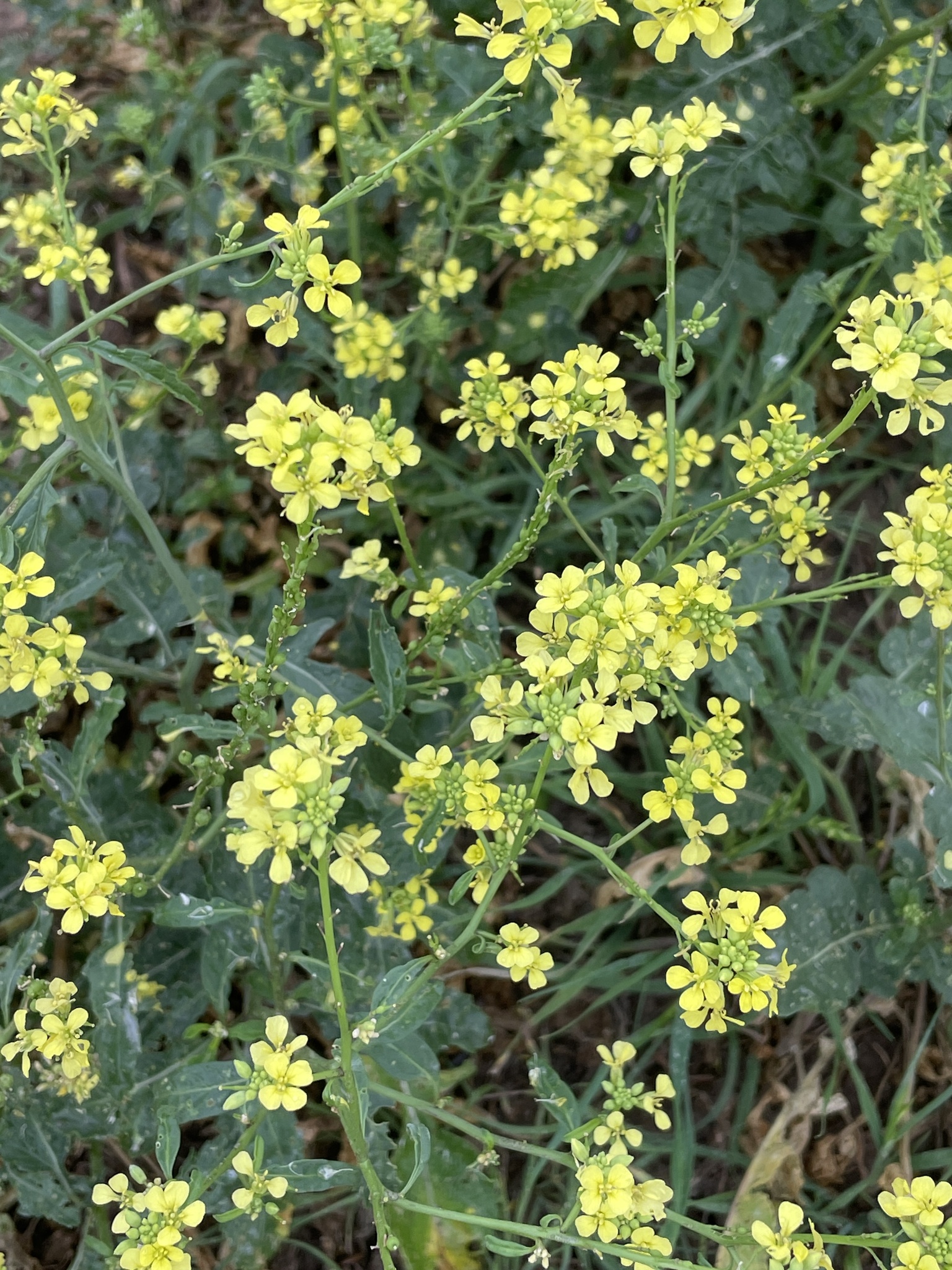
Annual Bastard Cabbage
Rapistrum rugosum
Also listed as Myagrum rugosum, Rapistrum orientale
Also known as Bastard Cabbage, Turnip Weed, Ball-turnip
Climate Match for your location
See how well Annual Bastard Cabbage grows in your area.
Enter your ZIP code and we'll show you how this plant fits your local climate.
An annual weedy mustard with small yellow flowers and deeply wrinkled seed pods. Primarily encountered as a volunteer or adventive plant rather than intentionally cultivated.
Why grow it
Rapistrum rugosum has limited intentional cultivation value compared to related mustards bred for culinary or forage use. It may interest growers studying weed ecology, mustard family diversity, or managing volunteer populations in agricultural settings, but superior alternatives exist for most permaculture applications. The deeply wrinkled seed pods and small yellow flowers are botanically distinctive features rather than practical assets for food or fodder production.
Watch out for
This plant establishes readily from seed and can spread through crop rotations if seed is allowed to mature. In regions where it has become naturalized, removing flowering plants before seed set helps prevent volunteer populations in subsequent seasons. Soil disturbance during cultivation can bring dormant seeds to the surface, so timing of garden bed preparation may influence persistence.
Overview
- Form
- Growth Rate
- Size
- Dormancy
- Family
- Brassicaceae
Native Range
Mediterranean and Western Asia
Seasonality
Bloom Season
Season of Interest
Herb
Soft non-woody plants of the field layer.
Succession Role
Tolerances & Soil
Establishment & Care
- Establishment
- Maintenance
- Propagation
An annual weedy mustard with small yellow flowers and deeply wrinkled seed pods. Primarily encountered as a volunteer or adventive plant rather than intentionally cultivated.
Climate Match for your location
See how well Annual Bastard Cabbage grows in your area.
Enter your ZIP code and we'll show you how this plant fits your local climate.
Why grow it
Rapistrum rugosum has limited intentional cultivation value compared to related mustards bred for culinary or forage use. It may interest growers studying weed ecology, mustard family diversity, or managing volunteer populations in agricultural settings, but superior alternatives exist for most permaculture applications. The deeply wrinkled seed pods and small yellow flowers are botanically distinctive features rather than practical assets for food or fodder production.
Watch out for
This plant establishes readily from seed and can spread through crop rotations if seed is allowed to mature. In regions where it has become naturalized, removing flowering plants before seed set helps prevent volunteer populations in subsequent seasons. Soil disturbance during cultivation can bring dormant seeds to the surface, so timing of garden bed preparation may influence persistence.
Overview
- Form
- Growth Rate
- Size
- Dormancy
- Family
- Brassicaceae
Native Range
Mediterranean and Western Asia
Seasonality
Bloom Season
Season of Interest
Herb
Soft non-woody plants of the field layer.
Succession Role
Tolerances & Soil
Establishment & Care
- Establishment
- Maintenance
- Propagation
Similar herbs you might consider:
Enter your ZIP code to see top native species and strong climate fits for you.