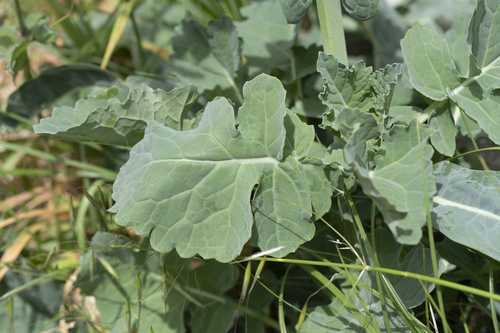
Black Medick
Medicago lupulina
Also listed as Lupularia parviflora, Lupulina aurata
Also known as Black Medic, Yellow Trefoil, Nonesuch
Climate Match for your location
See how well Black Medick grows in your area.
Enter your ZIP code and we'll show you how this plant fits your local climate.
Black Medick is a low-growing annual legume with small yellow flower clusters and distinctive black seed pods. It is commonly used as a cover crop and nitrogen-fixing green manure, and can serve as a nutritious forage plant.
Why grow it
Black Medick is a winter-hardy annual legume that fixes atmospheric nitrogen and establishes quickly in poor or marginal soils, making it a practical choice for cover cropping in cool-season rotations. Compared to other annual clovers or medicks, it tolerates acidic soils and compacted ground better than white clover, and produces seed reliably for direct reseeding in subsequent years. Its lower growth habit means it can be incorporated or grazed without excessive mechanical effort.
Watch out for
Black Medick self-seeds readily once established, so management planning is needed if you want to prevent it from appearing in subsequent seasons or adjacent fields. The seed pods can persist in hay or pasture, potentially contaminating other forage lots if not accounted for during harvest.
Overview
- Form
- Growth Rate
- Size
- Dormancy
- Family
- Fabaceae
Native Range
Mediterranean
Seasonality
Bloom Season
Season of Interest
Ground cover
Low spreading plants that carpet the soil.
Succession Role
Tolerances & Soil
Flood Tolerance
Deer Resistance
Inferred from USDA browse palatability
pH Range
Soil Texture
Establishment & Care
- Establishment
- Maintenance
- Propagation
Black Medick is a low-growing annual legume with small yellow flower clusters and distinctive black seed pods. It is commonly used as a cover crop and nitrogen-fixing green manure, and can serve as a nutritious forage plant.
Climate Match for your location
See how well Black Medick grows in your area.
Enter your ZIP code and we'll show you how this plant fits your local climate.
Why grow it
Black Medick is a winter-hardy annual legume that fixes atmospheric nitrogen and establishes quickly in poor or marginal soils, making it a practical choice for cover cropping in cool-season rotations. Compared to other annual clovers or medicks, it tolerates acidic soils and compacted ground better than white clover, and produces seed reliably for direct reseeding in subsequent years. Its lower growth habit means it can be incorporated or grazed without excessive mechanical effort.
Watch out for
Black Medick self-seeds readily once established, so management planning is needed if you want to prevent it from appearing in subsequent seasons or adjacent fields. The seed pods can persist in hay or pasture, potentially contaminating other forage lots if not accounted for during harvest.
Overview
- Form
- Growth Rate
- Size
- Dormancy
- Family
- Fabaceae
Native Range
Mediterranean
Seasonality
Bloom Season
Season of Interest
Ground cover
Low spreading plants that carpet the soil.
Succession Role
Tolerances & Soil
Flood Tolerance
Deer Resistance
Inferred from USDA browse palatability
pH Range
Soil Texture
Establishment & Care
- Establishment
- Maintenance
- Propagation
Similar ground covers you might consider:
Enter your ZIP code to see top native species and strong climate fits for you.