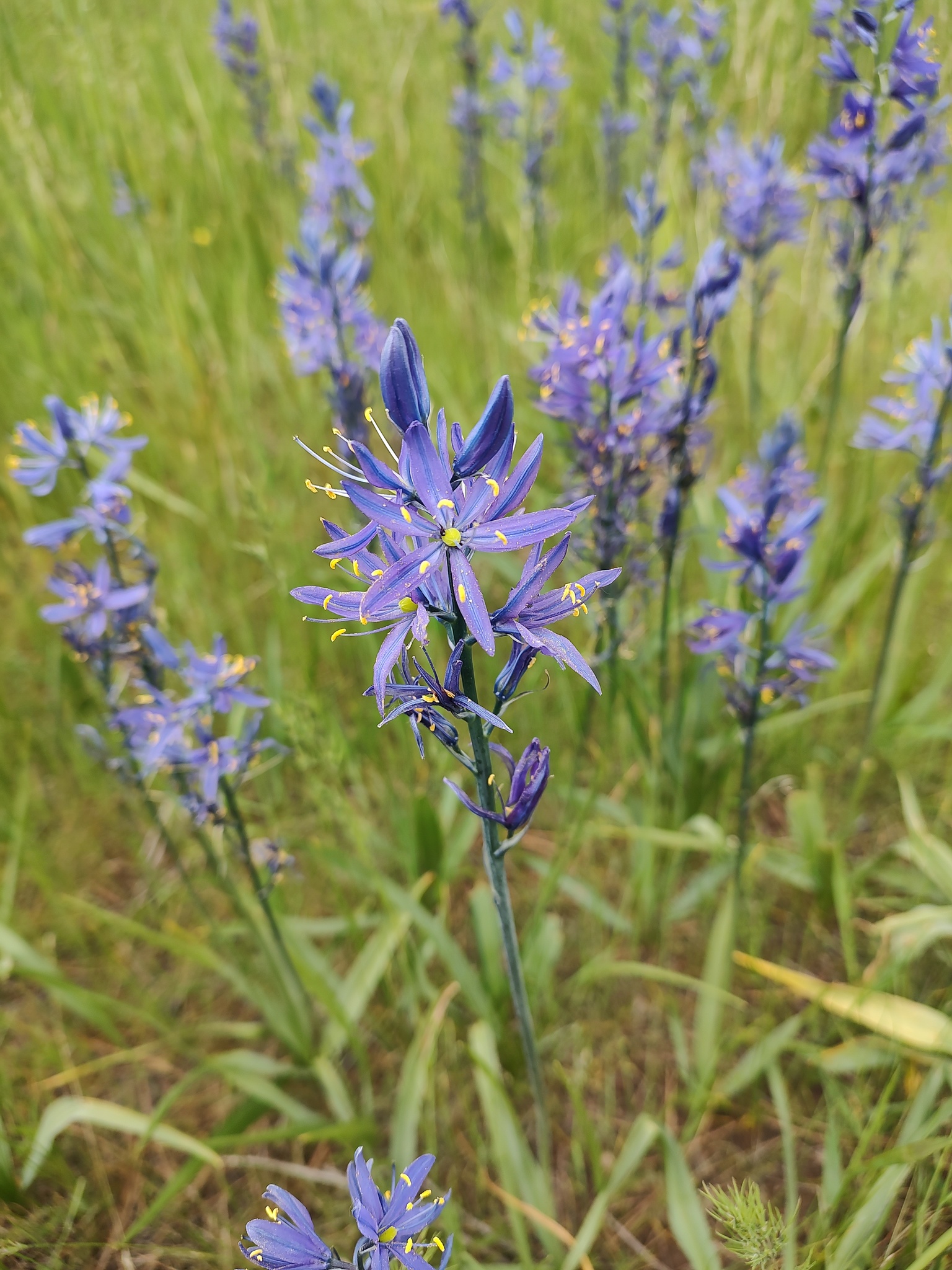
Camas
Camassia quamash
Also listed as Anthericum quamash, Phalangium quamash
Also known as Common Camas, Blue Camas, Quamash
Climate Match for your location
See how well Camas grows in your area.
Enter your ZIP code and we'll show you how this plant fits your local climate.
Camassia quamash is a spring-flowering bulb with striking blue-purple flower spikes that light up wet meadows and garden beds. Historically harvested and cultivated by Indigenous peoples of the Pacific Northwest for its nutritious bulbs, it thrives in moist conditions and makes an excellent pollinator plant.
Why grow it
Camas bulbs offer reliable spring color in wet meadows and rain gardens where many ornamental bulbs struggle, making it a practical choice for poorly drained sites. Compared to other moisture-loving spring bulbs, camas produces taller, more substantial flower spikes and establishes readily from bulbs without specialized chilling requirements in most climates. The edible bulbs also provide a dual-purpose harvest option for those interested in perennial food crops, though yields are modest.
Watch out for
Camas requires consistent moisture during its growing season and can decline in dry summers, so mulching helps retain soil moisture. Bulbs may take 2-3 years to reach flowering maturity from seed or small offsets, requiring patience before expecting full display. Division of established clumps is possible but often more effective done in late summer after foliage dies back.
Overview
- Form
- Growth Rate
- Size
- Dormancy
- Family
- Asparagaceae
Native to the United States
Native Range
Pacific Northwest North America
Native to: California, Idaho, Montana, Nevada, Oregon, Utah, Washington, Wyoming
Seasonality
Bloom Season
Harvest Season
Edible Parts
Season of Interest
Herb
Soft non-woody plants of the field layer.
Succession Role
Tolerances & Soil
Flood Tolerance
pH Range
Soil Texture
Establishment & Care
- Establishment
- Maintenance
- Years to Bearing
- Propagation
Camassia quamash is a spring-flowering bulb with striking blue-purple flower spikes that light up wet meadows and garden beds. Historically harvested and cultivated by Indigenous peoples of the Pacific Northwest for its nutritious bulbs, it thrives in moist conditions and makes an excellent pollinator plant.
Climate Match for your location
See how well Camas grows in your area.
Enter your ZIP code and we'll show you how this plant fits your local climate.
Why grow it
Camas bulbs offer reliable spring color in wet meadows and rain gardens where many ornamental bulbs struggle, making it a practical choice for poorly drained sites. Compared to other moisture-loving spring bulbs, camas produces taller, more substantial flower spikes and establishes readily from bulbs without specialized chilling requirements in most climates. The edible bulbs also provide a dual-purpose harvest option for those interested in perennial food crops, though yields are modest.
Watch out for
Camas requires consistent moisture during its growing season and can decline in dry summers, so mulching helps retain soil moisture. Bulbs may take 2-3 years to reach flowering maturity from seed or small offsets, requiring patience before expecting full display. Division of established clumps is possible but often more effective done in late summer after foliage dies back.
Overview
- Form
- Growth Rate
- Size
- Dormancy
- Family
- Asparagaceae
Native to the United States
Native Range
Pacific Northwest North America
Native to: California, Idaho, Montana, Nevada, Oregon, Utah, Washington, Wyoming
Seasonality
Bloom Season
Harvest Season
Edible Parts
Season of Interest
Herb
Soft non-woody plants of the field layer.
Succession Role
Tolerances & Soil
Flood Tolerance
pH Range
Soil Texture
Establishment & Care
- Establishment
- Maintenance
- Years to Bearing
- Propagation
Similar herbs you might consider:
Enter your ZIP code to see top native species and strong climate fits for you.