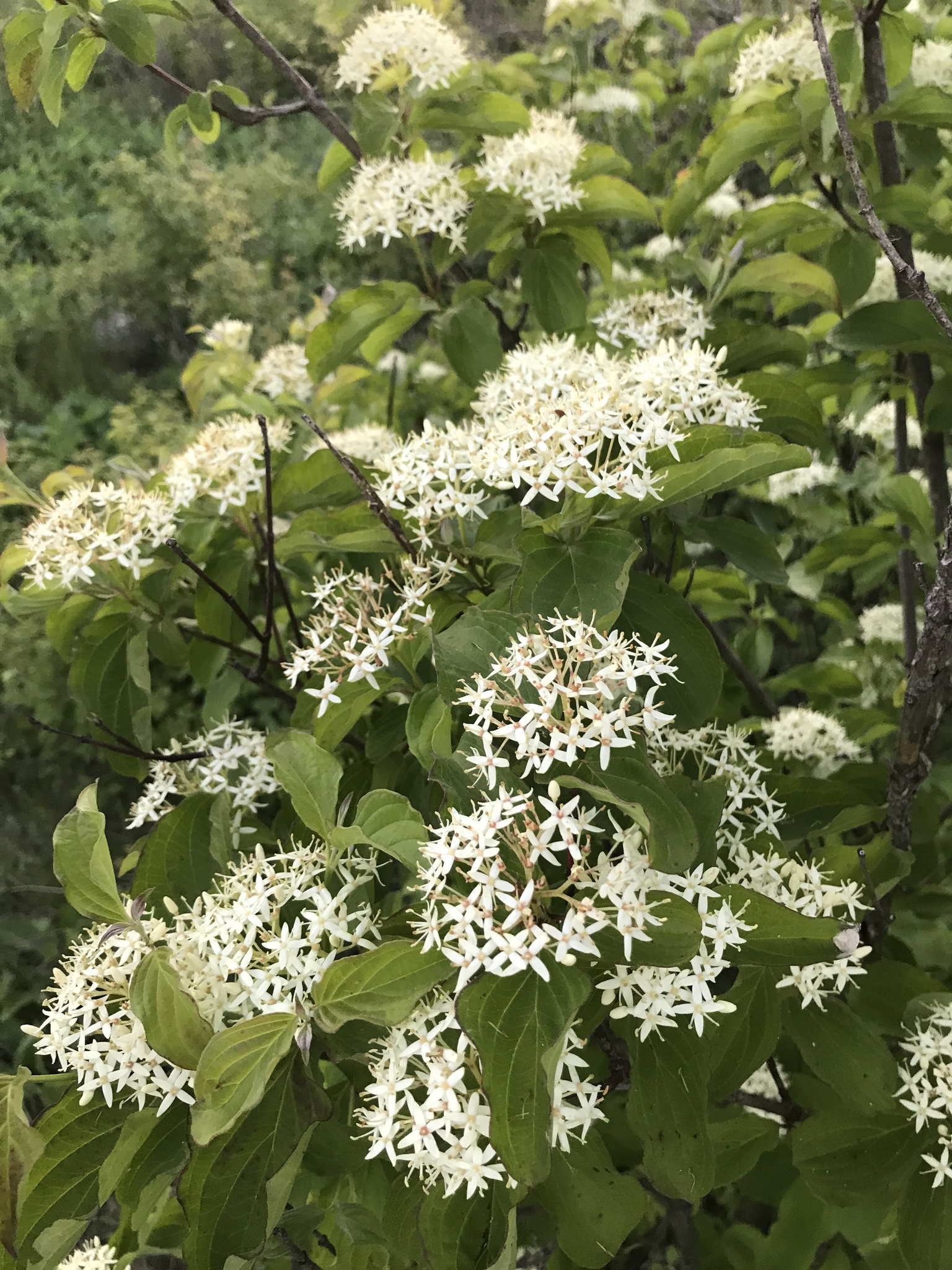
Common Dogwood
Cornus sanguinea
Also listed as Swida sanguinea, Thelycrania sanguinea
Also known as Bloodtwig Dogwood, Dogwood, Dogberry
Climate Match for your location
See how well Common Dogwood grows in your area.
Enter your ZIP code and we'll show you how this plant fits your local climate.
A deciduous shrub valued for its small white flowers in spring and vibrant red stems that provide winter interest. The dark red fruits attract birds and foliage turns deep purple-red in autumn.
Why grow it
Common dogwood offers reliable winter stem color without the size constraints of some ornamental dogwood varieties, making it suitable for hedging or mixed shrub borders. Unlike some Cornus species, it tolerates a wider range of soil conditions and establishes readily in European climates. The combination of spring flowers, summer foliage, autumn color, and persistent winter stems provides multi-season interest with minimal management.
Watch out for
Stem color is most vibrant on younger growth, so plants may benefit from occasional coppicing or selective pruning to maintain visual appeal over time. In very wet soils, it may develop fungal issues, though this is not a strong species vulnerability. Dense plantings can reduce air circulation, so spacing should account for mature width to support plant health.
Overview
- Form
- Growth Rate
- Size
- Dormancy
- Family
- Cornaceae
Native Range
Europe
Seasonality
Bloom Season
Season of Interest
Shrub
Woody multi-stem plants at eye level.
Succession Role
Tolerances & Soil
Establishment & Care
- Establishment
- Maintenance
- Propagation
A deciduous shrub valued for its small white flowers in spring and vibrant red stems that provide winter interest. The dark red fruits attract birds and foliage turns deep purple-red in autumn.
Climate Match for your location
See how well Common Dogwood grows in your area.
Enter your ZIP code and we'll show you how this plant fits your local climate.
Why grow it
Common dogwood offers reliable winter stem color without the size constraints of some ornamental dogwood varieties, making it suitable for hedging or mixed shrub borders. Unlike some Cornus species, it tolerates a wider range of soil conditions and establishes readily in European climates. The combination of spring flowers, summer foliage, autumn color, and persistent winter stems provides multi-season interest with minimal management.
Watch out for
Stem color is most vibrant on younger growth, so plants may benefit from occasional coppicing or selective pruning to maintain visual appeal over time. In very wet soils, it may develop fungal issues, though this is not a strong species vulnerability. Dense plantings can reduce air circulation, so spacing should account for mature width to support plant health.
Overview
- Form
- Growth Rate
- Size
- Dormancy
- Family
- Cornaceae
Native Range
Europe
Seasonality
Bloom Season
Season of Interest
Shrub
Woody multi-stem plants at eye level.
Succession Role
Tolerances & Soil
Establishment & Care
- Establishment
- Maintenance
- Propagation
Similar shrubs you might consider:
Enter your ZIP code to see top native species and strong climate fits for you.