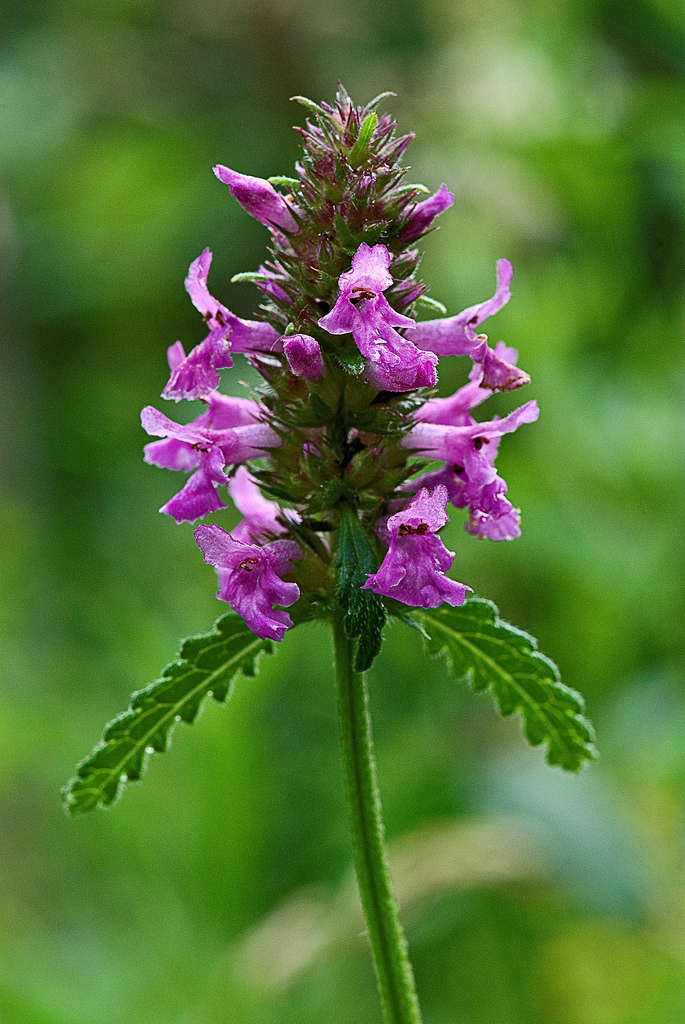
Common Hedge-nettle
Betonica officinalis
Also listed as Stachys officinalis
Also known as Betony, Wood Betony, Common Betony
Climate Match for your location
See how well Common Hedge-nettle grows in your area.
Enter your ZIP code and we'll show you how this plant fits your local climate.
A hardy herbaceous perennial with purple-pink flower spikes that bloom mid to late summer, attractive to bees and pollinators. Traditionally used in herbal medicine and valued for its ornamental appeal in cottage gardens.
Why grow it
Betonica officinalis establishes readily in partial shade to full sun with moderate moisture, making it a reliable choice where many ornamental perennials struggle. It differs from hybrid Stachys cultivars in its taller stature and traditional medicinal reputation, and from related Phlomis species in preferring cooler climates and less drought stress. The mid to late summer bloom window extends seasonal interest beyond spring-focused shade perennials.
Watch out for
This species self-seeds readily in favorable conditions and may appear in unintended garden areas, though seedlings are easy to remove when young. In very wet soils or poorly drained sites, it is prone to crown rot, so adequate winter drainage matters more than overall moisture during the growing season.
Overview
- Form
- Growth Rate
- Size
- Dormancy
- Family
- Lamiaceae
Native Range
Western Europe
Seasonality
Bloom Season
Harvest Season
Edible Parts
Season of Interest
Herb
Soft non-woody plants of the field layer.
Succession Role
Tolerances & Soil
Establishment & Care
- Establishment
- Maintenance
- Propagation
A hardy herbaceous perennial with purple-pink flower spikes that bloom mid to late summer, attractive to bees and pollinators. Traditionally used in herbal medicine and valued for its ornamental appeal in cottage gardens.
Climate Match for your location
See how well Common Hedge-nettle grows in your area.
Enter your ZIP code and we'll show you how this plant fits your local climate.
Why grow it
Betonica officinalis establishes readily in partial shade to full sun with moderate moisture, making it a reliable choice where many ornamental perennials struggle. It differs from hybrid Stachys cultivars in its taller stature and traditional medicinal reputation, and from related Phlomis species in preferring cooler climates and less drought stress. The mid to late summer bloom window extends seasonal interest beyond spring-focused shade perennials.
Watch out for
This species self-seeds readily in favorable conditions and may appear in unintended garden areas, though seedlings are easy to remove when young. In very wet soils or poorly drained sites, it is prone to crown rot, so adequate winter drainage matters more than overall moisture during the growing season.
Overview
- Form
- Growth Rate
- Size
- Dormancy
- Family
- Lamiaceae
Native Range
Western Europe
Seasonality
Bloom Season
Harvest Season
Edible Parts
Season of Interest
Herb
Soft non-woody plants of the field layer.
Succession Role
Tolerances & Soil
Establishment & Care
- Establishment
- Maintenance
- Propagation
Similar herbs you might consider:
Enter your ZIP code to see top native species and strong climate fits for you.