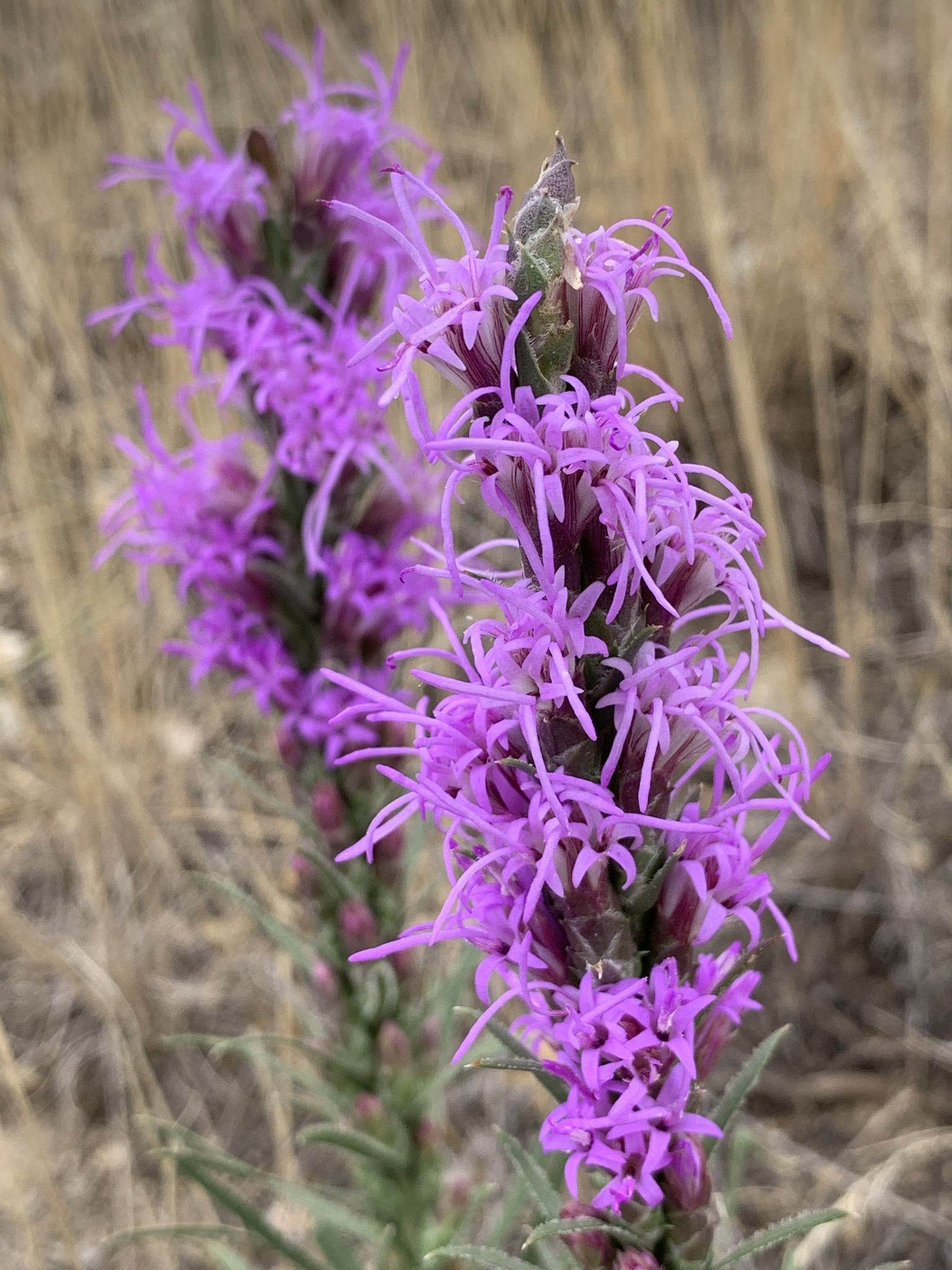
Dotted Gayfeather
Liatris punctata
Also known as Dotted Blazing Star, Nebraska Gayfeather, Plains Gayfeather
Climate Match for your location
See how well Dotted Gayfeather grows in your area.
Enter your ZIP code and we'll show you how this plant fits your local climate.
Dotted gayfeather is a drought-tolerant prairie native with slender upright stems topped by dense spikes of purple-pink flowers that bloom from summer into fall. It thrives in full sun and poor, dry soils, making it excellent for xeriscape gardens and prairie plantings.
Why grow it
Dotted gayfeather offers reliable late-season color in prairie and xeriscape settings where many ornamentals struggle. Compared to taller Liatris species, its compact growth (typically 12-24 inches) makes it useful for front-of-border placement and reduces staking needs. It flowers later than some native alternatives, extending bloom into fall when pollinator resources decline.
Watch out for
In areas with high summer humidity or poor drainage, plants may develop root rot or fungal issues despite drought tolerance in ideal conditions. Crowns can decline in heavy clay soils even with amended drainage, so site selection matters more than species choice alone.
Overview
- Form
- Growth Rate
- Size
- Dormancy
- Family
- Asteraceae
Native to the United States
Native Range
Great Plains and Rocky Mountains of North America
Native to: Arkansas, Colorado, Iowa, Illinois, Kansas, Louisiana, Michigan, Minnesota, Missouri, Montana, North Dakota, Nebraska, New Mexico, Ohio, Oklahoma, South Dakota, Texas, Wisconsin, Wyoming
Seasonality
Bloom Season
Season of Interest
Herb
Soft non-woody plants of the field layer.
Succession Role
Tolerances & Soil
Flood Tolerance
Deer Resistance
Inferred from USDA browse palatability
pH Range
Soil Texture
Establishment & Care
- Establishment
- Maintenance
- Propagation
Dotted gayfeather is a drought-tolerant prairie native with slender upright stems topped by dense spikes of purple-pink flowers that bloom from summer into fall. It thrives in full sun and poor, dry soils, making it excellent for xeriscape gardens and prairie plantings.
Climate Match for your location
See how well Dotted Gayfeather grows in your area.
Enter your ZIP code and we'll show you how this plant fits your local climate.
Why grow it
Dotted gayfeather offers reliable late-season color in prairie and xeriscape settings where many ornamentals struggle. Compared to taller Liatris species, its compact growth (typically 12-24 inches) makes it useful for front-of-border placement and reduces staking needs. It flowers later than some native alternatives, extending bloom into fall when pollinator resources decline.
Watch out for
In areas with high summer humidity or poor drainage, plants may develop root rot or fungal issues despite drought tolerance in ideal conditions. Crowns can decline in heavy clay soils even with amended drainage, so site selection matters more than species choice alone.
Overview
- Form
- Growth Rate
- Size
- Dormancy
- Family
- Asteraceae
Native to the United States
Native Range
Great Plains and Rocky Mountains of North America
Native to: Arkansas, Colorado, Iowa, Illinois, Kansas, Louisiana, Michigan, Minnesota, Missouri, Montana, North Dakota, Nebraska, New Mexico, Ohio, Oklahoma, South Dakota, Texas, Wisconsin, Wyoming
Seasonality
Bloom Season
Season of Interest
Herb
Soft non-woody plants of the field layer.
Succession Role
Tolerances & Soil
Flood Tolerance
Deer Resistance
Inferred from USDA browse palatability
pH Range
Soil Texture
Establishment & Care
- Establishment
- Maintenance
- Propagation
Similar herbs you might consider:
Enter your ZIP code to see top native species and strong climate fits for you.