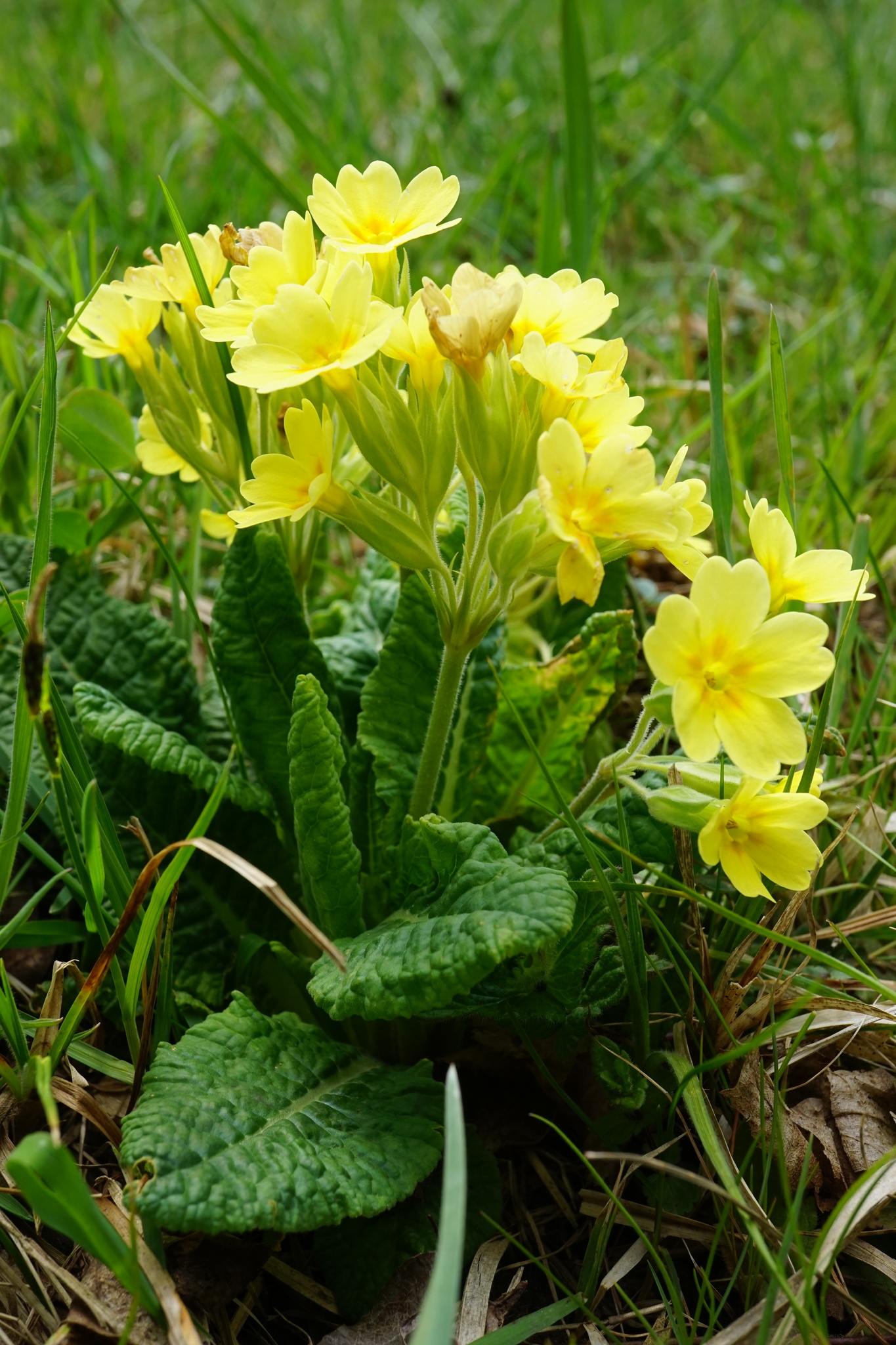
English Primrose
Primula polyantha
Also known as Polyanthus Primula, Elatior Hybrid Primroses, False Oxlip
Climate Match for your location
See how well English Primrose grows in your area.
Enter your ZIP code and we'll show you how this plant fits your local climate.
English Primrose is a cheerful spring-blooming perennial producing clusters of large, colorful flowers in nearly every hue. A classic cottage garden favorite, it naturalizes well in woodland edges and borders with consistent moisture.
Why grow it
English Primrose blooms earlier and produces larger flower clusters than many other Primula species, making it a reliable choice for late winter and early spring color in temperate gardens. It tolerates partial shade better than sun-loving alternatives and performs well in organically enriched soils with steady moisture, which fits most woodland and border settings without requiring specialized conditions.
Watch out for
Plants may decline or fail to flower in subsequent years if soil dries out during growth or if drainage is poor; consistent moisture without waterlogging supports longevity. In warmer zones, afternoon shade becomes increasingly important to prevent leaf scorch and premature flowering collapse during temperature fluctuations.
Overview
- Form
- Growth Rate
- Size
- Dormancy
- Family
- Primulaceae
Native Range
Europe
Seasonality
Bloom Season
Harvest Season
Edible Parts
Season of Interest
Notable Cultivars
Crescendo and Pacific Giant series are among the most popular, known for their exceptionally large flowers and wide color range including bicolors, providing bold early-season color for borders and containers.
Herb
Soft non-woody plants of the field layer.
Succession Role
Tolerances & Soil
Establishment & Care
- Establishment
- Maintenance
- Propagation
English Primrose is a cheerful spring-blooming perennial producing clusters of large, colorful flowers in nearly every hue. A classic cottage garden favorite, it naturalizes well in woodland edges and borders with consistent moisture.
Climate Match for your location
See how well English Primrose grows in your area.
Enter your ZIP code and we'll show you how this plant fits your local climate.
Why grow it
English Primrose blooms earlier and produces larger flower clusters than many other Primula species, making it a reliable choice for late winter and early spring color in temperate gardens. It tolerates partial shade better than sun-loving alternatives and performs well in organically enriched soils with steady moisture, which fits most woodland and border settings without requiring specialized conditions.
Watch out for
Plants may decline or fail to flower in subsequent years if soil dries out during growth or if drainage is poor; consistent moisture without waterlogging supports longevity. In warmer zones, afternoon shade becomes increasingly important to prevent leaf scorch and premature flowering collapse during temperature fluctuations.
Overview
- Form
- Growth Rate
- Size
- Dormancy
- Family
- Primulaceae
Native Range
Europe
Seasonality
Bloom Season
Harvest Season
Edible Parts
Season of Interest
Herb
Soft non-woody plants of the field layer.
Succession Role
Tolerances & Soil
Establishment & Care
- Establishment
- Maintenance
- Propagation
Similar herbs you might consider:
Enter your ZIP code to see top native species and strong climate fits for you.
Companion Planting
Plants well with
Notable Cultivars
Crescendo and Pacific Giant series are among the most popular, known for their exceptionally large flowers and wide color range including bicolors, providing bold early-season color for borders and containers.