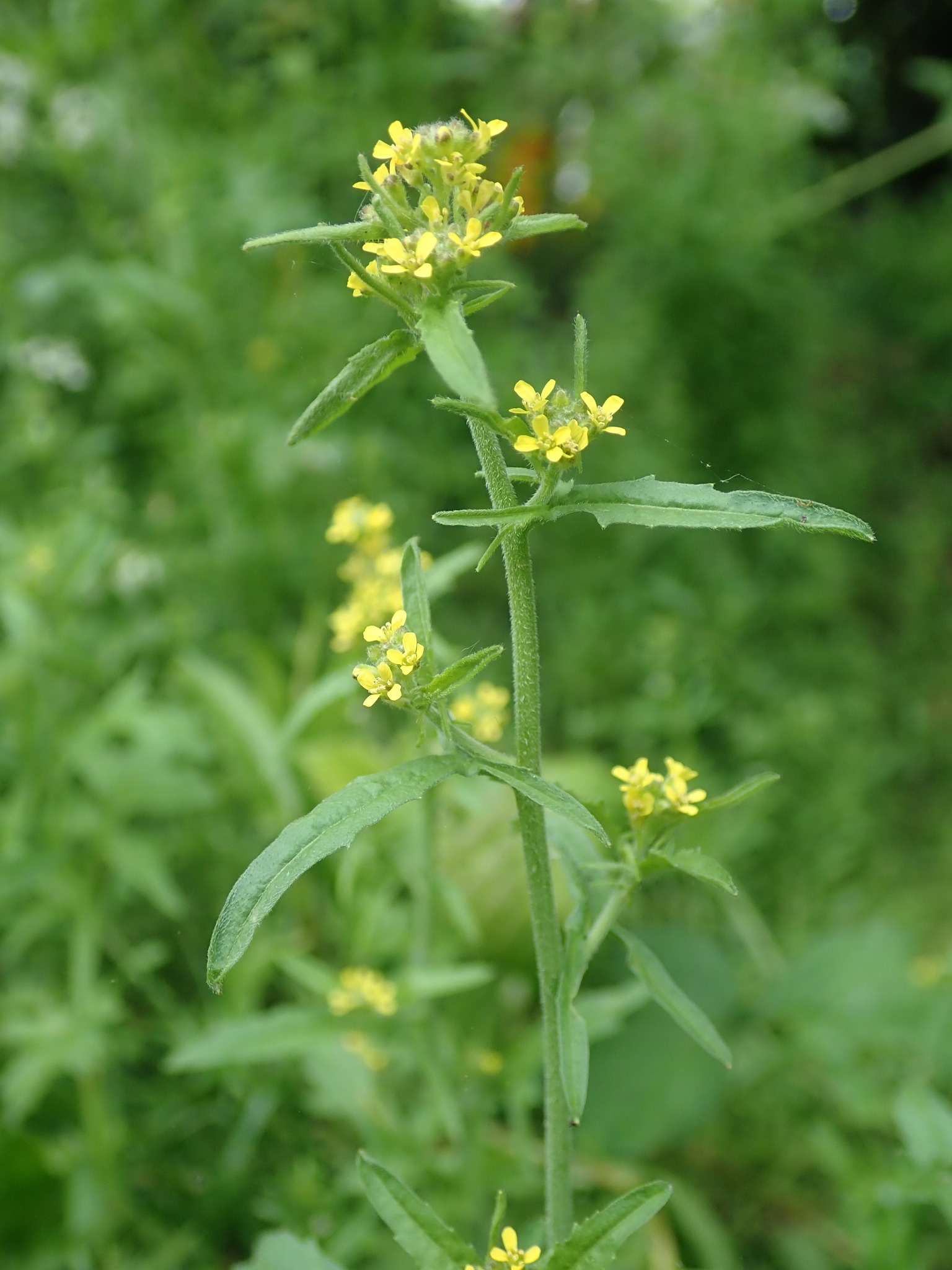
Hedge Mustard
Sisymbrium officinale
Also listed as Erysimum officinale, Chamaeplium officinale
Also known as Common Hedge Mustard, European Hedge Mustard, Hairy-pod Hedge Mustard
Climate Match for your location
See how well Hedge Mustard grows in your area.
Enter your ZIP code and we'll show you how this plant fits your local climate.
A slender, fast-growing weedy herb with small yellow flowers and distinctive elongated seed pods that give it a hedge-like appearance. Commonly found in disturbed areas and along roadsides, it tolerates poor soils and drought.
Why grow it
Hedge mustard establishes quickly in marginal soils where many culinary or medicinal herbs struggle, making it useful for rapid ground coverage in poor conditions. Its young leaves are edible with a peppery flavor similar to watercress, offering an alternative forage crop for low-input systems. The plant requires minimal fertility or water once established, distinguishing it from more demanding Brassica relatives.
Watch out for
Hedge mustard self-seeds prolifically, so deadheading spent flower clusters prevents unwanted spread into adjacent beds. The plant's vigor means it benefits from deliberate siting away from slower-growing perennials that might be outcompeted. Flavor intensity varies significantly with growing conditions and leaf maturity, so harvest timing requires experimentation to find your preferred taste profile.
Overview
- Form
- Growth Rate
- Size
- Dormancy
- Family
- Brassicaceae
Native Range
Mediterranean and Western Asia
Seasonality
Bloom Season
Harvest Season
Edible Parts
Season of Interest
Herb
Soft non-woody plants of the field layer.
Succession Role
Tolerances & Soil
Establishment & Care
- Establishment
- Maintenance
- Years to Bearing
- Propagation
A slender, fast-growing weedy herb with small yellow flowers and distinctive elongated seed pods that give it a hedge-like appearance. Commonly found in disturbed areas and along roadsides, it tolerates poor soils and drought.
Climate Match for your location
See how well Hedge Mustard grows in your area.
Enter your ZIP code and we'll show you how this plant fits your local climate.
Why grow it
Hedge mustard establishes quickly in marginal soils where many culinary or medicinal herbs struggle, making it useful for rapid ground coverage in poor conditions. Its young leaves are edible with a peppery flavor similar to watercress, offering an alternative forage crop for low-input systems. The plant requires minimal fertility or water once established, distinguishing it from more demanding Brassica relatives.
Watch out for
Hedge mustard self-seeds prolifically, so deadheading spent flower clusters prevents unwanted spread into adjacent beds. The plant's vigor means it benefits from deliberate siting away from slower-growing perennials that might be outcompeted. Flavor intensity varies significantly with growing conditions and leaf maturity, so harvest timing requires experimentation to find your preferred taste profile.
Overview
- Form
- Growth Rate
- Size
- Dormancy
- Family
- Brassicaceae
Native Range
Mediterranean and Western Asia
Seasonality
Bloom Season
Harvest Season
Edible Parts
Season of Interest
Herb
Soft non-woody plants of the field layer.
Succession Role
Tolerances & Soil
Establishment & Care
- Establishment
- Maintenance
- Years to Bearing
- Propagation
Similar herbs you might consider:
Enter your ZIP code to see top native species and strong climate fits for you.