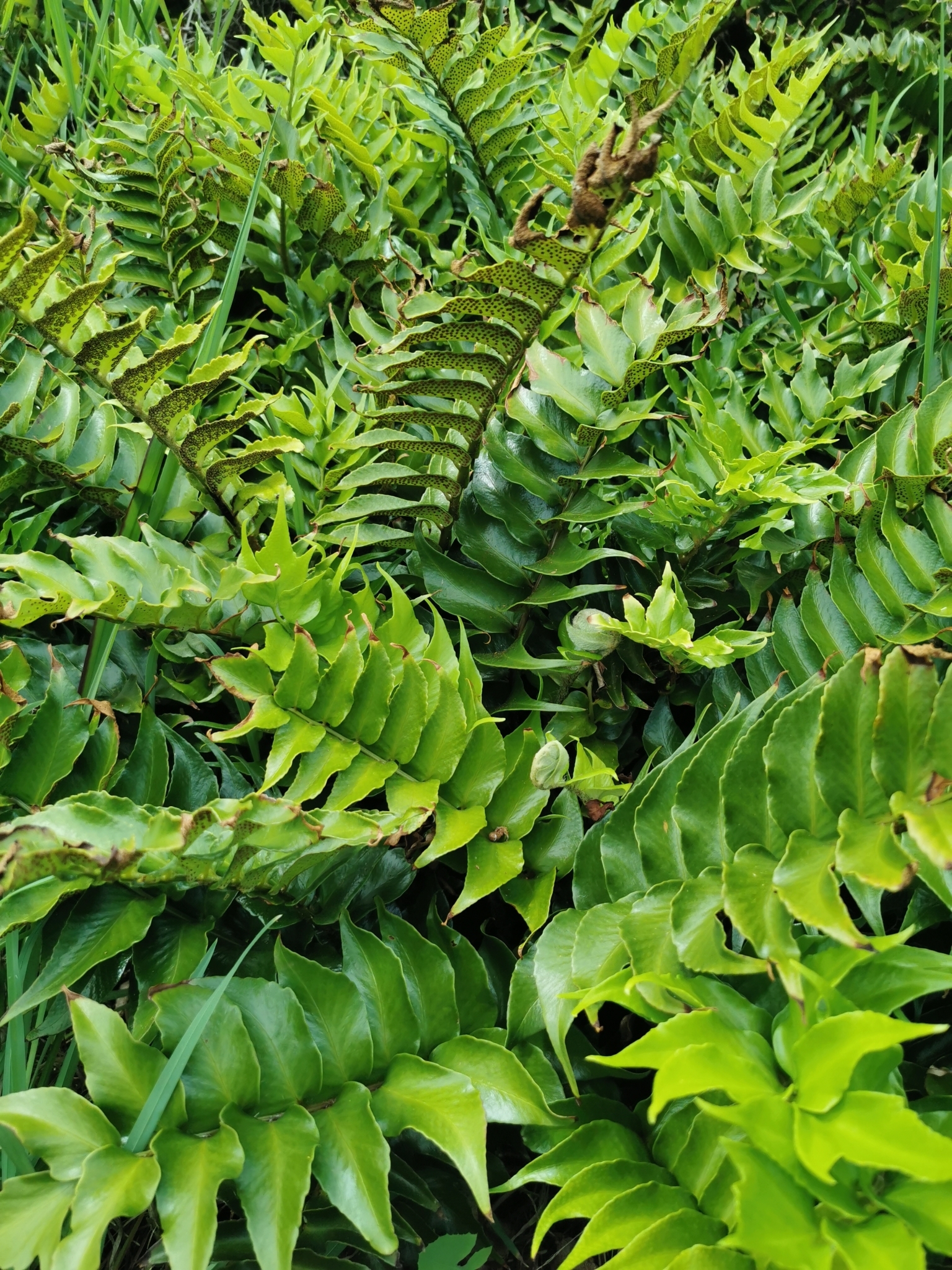
Holly Fern
Cyrtomium falcatum
Also listed as Polystichum falcatum, Aspidium falcatum
Also known as Japanese Holly-fern, House Holly-fern, Asian Hollyfern
Climate Match for your location
See how well Holly Fern grows in your area.
Enter your ZIP code and we'll show you how this plant fits your local climate.
Holly Fern is a hardy, evergreen fern with glossy, dark green fronds that resemble holly leaves, making it an attractive foliage plant for shaded gardens. It thrives in cool, humid conditions and adds year-round structure to shade borders and woodland gardens.
Why grow it
Holly Fern is more cold-hardy than many tropical fern species, tolerating temperatures down to around 10°F once established, making it useful in temperate zones where tender ferns struggle. Its glossy, deeply lobed fronds retain their appearance year-round without the brittleness common in deciduous ferns, providing consistent winter structure. Compared to similar evergreen ferns like autumn fern, it requires less light and adapts well to deep shade conditions typical of woodland understories.
Watch out for
Holly Fern prefers consistently moist soil and can decline in overly dry conditions, particularly if sited in full sun exposure. In regions with warm, dry summers, afternoon shade and supplemental moisture become especially important to prevent frond scorch. Young plants benefit from protection from strong winds until fully established, as the fronds can be damaged despite their leathery appearance.
Overview
- Form
- Growth Rate
- Size
- Dormancy
- Family
- Dryopteridaceae
Native Range
East Asia (Japan, China, Taiwan)
Seasonality
Season of Interest
Herb
Soft non-woody plants of the field layer.
Succession Role
Tolerances & Soil
pH Range
Establishment & Care
- Establishment
- Maintenance
- Propagation
Holly Fern is a hardy, evergreen fern with glossy, dark green fronds that resemble holly leaves, making it an attractive foliage plant for shaded gardens. It thrives in cool, humid conditions and adds year-round structure to shade borders and woodland gardens.
Climate Match for your location
See how well Holly Fern grows in your area.
Enter your ZIP code and we'll show you how this plant fits your local climate.
Why grow it
Holly Fern is more cold-hardy than many tropical fern species, tolerating temperatures down to around 10°F once established, making it useful in temperate zones where tender ferns struggle. Its glossy, deeply lobed fronds retain their appearance year-round without the brittleness common in deciduous ferns, providing consistent winter structure. Compared to similar evergreen ferns like autumn fern, it requires less light and adapts well to deep shade conditions typical of woodland understories.
Watch out for
Holly Fern prefers consistently moist soil and can decline in overly dry conditions, particularly if sited in full sun exposure. In regions with warm, dry summers, afternoon shade and supplemental moisture become especially important to prevent frond scorch. Young plants benefit from protection from strong winds until fully established, as the fronds can be damaged despite their leathery appearance.
Overview
- Form
- Growth Rate
- Size
- Dormancy
- Family
- Dryopteridaceae
Native Range
East Asia (Japan, China, Taiwan)
Seasonality
Season of Interest
Herb
Soft non-woody plants of the field layer.
Succession Role
Tolerances & Soil
pH Range
Establishment & Care
- Establishment
- Maintenance
- Propagation
Similar herbs you might consider:
Enter your ZIP code to see top native species and strong climate fits for you.