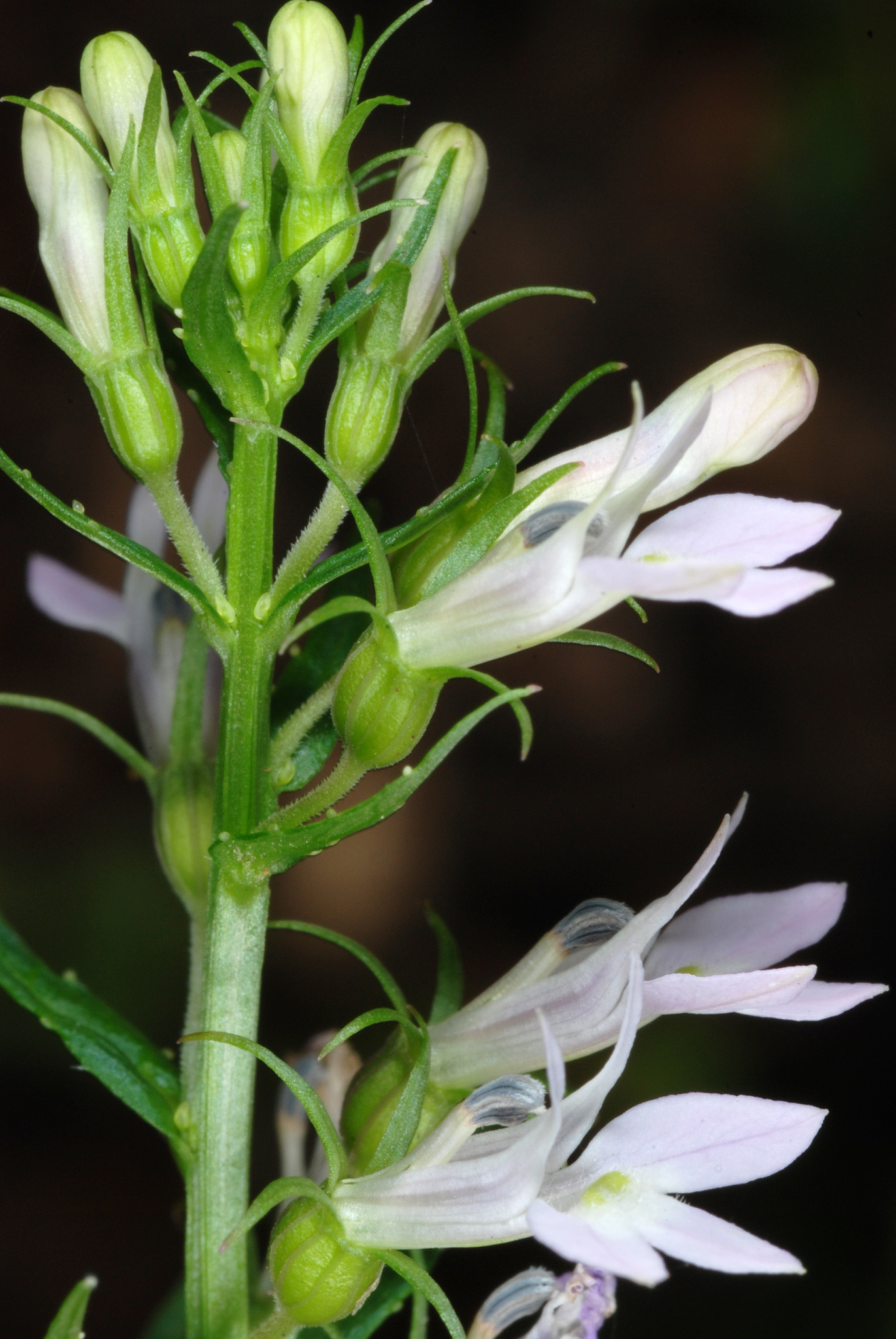
Indian Tobacco
Lobelia inflata
Also listed as Dortmanna inflata, Lobelia michauxii
Also known as Wild Tobacco, Inflated Tobacco, Inflated Lobelia
Climate Match for your location
See how well Indian Tobacco grows in your area.
Enter your ZIP code and we'll show you how this plant fits your local climate.
A delicate annual wildflower with small blue or purple flowers on thin stems, historically used in herbal medicine. It self-seeds readily and attracts pollinators to the garden.
Why grow it
Indian tobacco offers a compact source of early-season flowers for pollinators in spring gardens, filling a niche that larger Lobelia species may not suit in smaller spaces. Its reliable self-seeding habit reduces replanting labor compared to annual lobelias that require deadheading or annual sowing, though this also means monitoring is needed to prevent unwanted spread in adjacent plantings.
Watch out for
This species prefers consistent moisture and can struggle in dry spells, so supplemental watering during establishment supports better establishment than many native wildflowers. Seedlings may be slow to germinate and grow, requiring patience in the first six to eight weeks before visible growth appears.
Overview
- Form
- Growth Rate
- Size
- Dormancy
- Family
- Campanulaceae
Native to the United States
Native Range
Eastern North America
Native to: Alabama, Arkansas, Connecticut, Delaware, Georgia, Iowa, Illinois, Indiana, Kansas, Kentucky, Louisiana, Massachusetts, Maryland, Maine, Michigan, Minnesota, Missouri, Mississippi, North Carolina, Nebraska, New Hampshire, New Jersey, New York, Ohio, Oklahoma, Pennsylvania, Rhode Island, South Carolina, Tennessee, Virginia, Vermont, Wisconsin, West Virginia
Seasonality
Bloom Season
Season of Interest
Herb
Soft non-woody plants of the field layer.
Succession Role
Tolerances & Soil
Establishment & Care
- Establishment
- Maintenance
- Propagation
A delicate annual wildflower with small blue or purple flowers on thin stems, historically used in herbal medicine. It self-seeds readily and attracts pollinators to the garden.
Climate Match for your location
See how well Indian Tobacco grows in your area.
Enter your ZIP code and we'll show you how this plant fits your local climate.
Why grow it
Indian tobacco offers a compact source of early-season flowers for pollinators in spring gardens, filling a niche that larger Lobelia species may not suit in smaller spaces. Its reliable self-seeding habit reduces replanting labor compared to annual lobelias that require deadheading or annual sowing, though this also means monitoring is needed to prevent unwanted spread in adjacent plantings.
Watch out for
This species prefers consistent moisture and can struggle in dry spells, so supplemental watering during establishment supports better establishment than many native wildflowers. Seedlings may be slow to germinate and grow, requiring patience in the first six to eight weeks before visible growth appears.
Overview
- Form
- Growth Rate
- Size
- Dormancy
- Family
- Campanulaceae
Native to the United States
Native Range
Eastern North America
Native to: Alabama, Arkansas, Connecticut, Delaware, Georgia, Iowa, Illinois, Indiana, Kansas, Kentucky, Louisiana, Massachusetts, Maryland, Maine, Michigan, Minnesota, Missouri, Mississippi, North Carolina, Nebraska, New Hampshire, New Jersey, New York, Ohio, Oklahoma, Pennsylvania, Rhode Island, South Carolina, Tennessee, Virginia, Vermont, Wisconsin, West Virginia
Seasonality
Bloom Season
Season of Interest
Herb
Soft non-woody plants of the field layer.
Succession Role
Tolerances & Soil
Establishment & Care
- Establishment
- Maintenance
- Propagation
Similar herbs you might consider:
Enter your ZIP code to see top native species and strong climate fits for you.