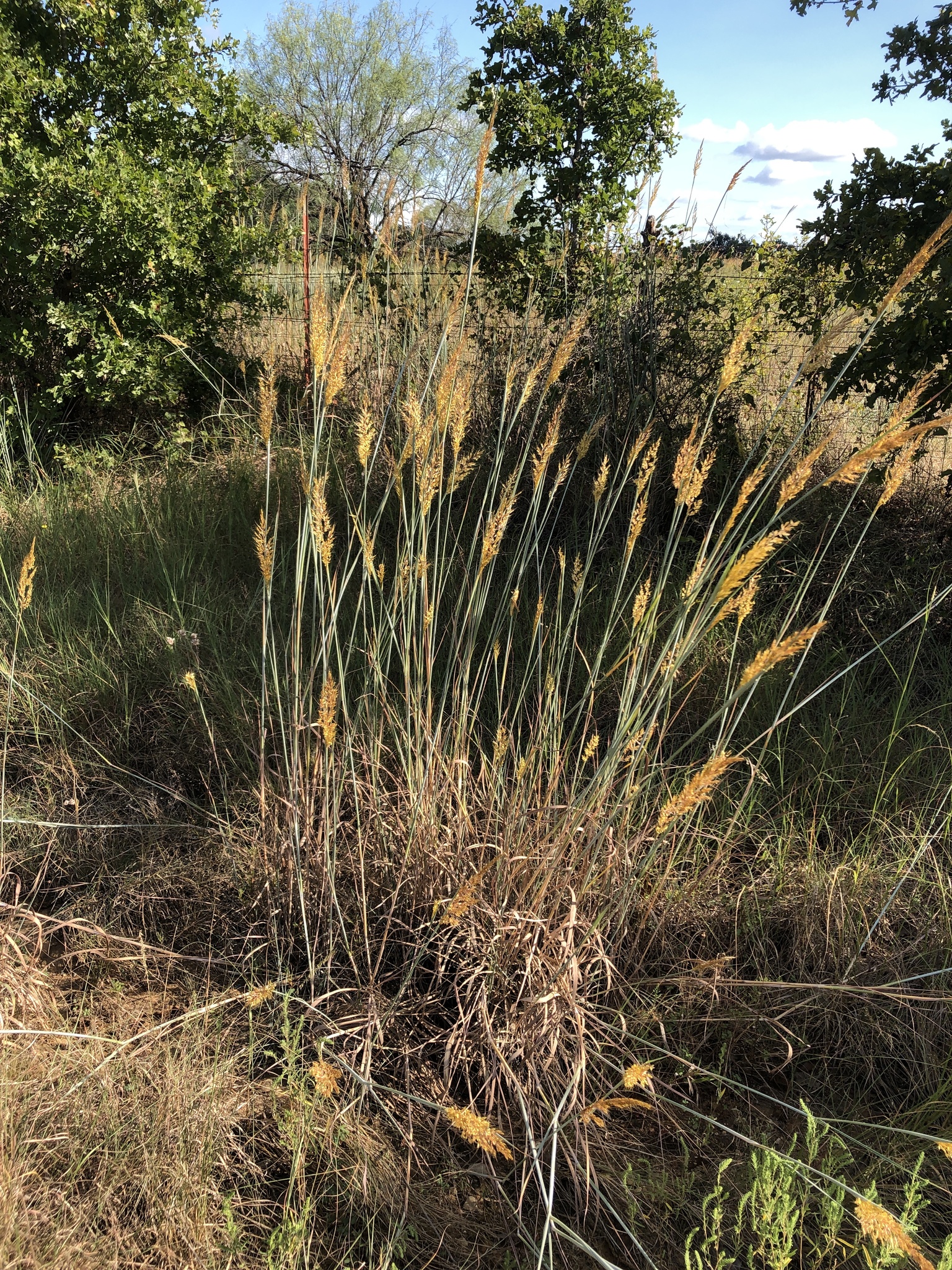
Indiangrass
Sorghastrum nutans
Also listed as Andropogon nutans, Andropogon linnaeanus
Also known as Yellow Indiangrass
Climate Match for your location
See how well Indiangrass grows in your area.
Enter your ZIP code and we'll show you how this plant fits your local climate.
A native North American warm-season grass with fine blue-green foliage that turns reddish-bronze in fall and produces attractive copper-colored seed heads. Indiangrass is drought-tolerant once established and provides excellent wildlife habitat and ornamental interest.
Why grow it
Indiangrass offers reliable summer color and structure in prairie and savanna plantings where it outperforms many ornamental grasses in drought tolerance after establishment. Compared to switchgrass or big bluestem, it produces notably finer foliage and earlier seed heads, making it useful where visual texture matters more than biomass. It establishes slowly from seed but requires minimal inputs once rooted, fitting well into low-maintenance native plantings across much of eastern and central North America.
Watch out for
Seedling establishment is slow and can take two to three growing seasons to reach full vigor, so competing vegetation control matters more in the establishment phase than with faster-growing warm-season grasses. In wetter climates or poorly drained soils, it may decline over time even if initially planted correctly, as it prefers well-drained sites.
Overview
- Form
- Growth Rate
- Size
- Dormancy
- Family
- Poaceae
Native to the United States
Native Range
North American prairie
Native to: Alabama, Arkansas, Arizona, Colorado, Connecticut, District of Columbia, Delaware, Florida, Georgia, Iowa, Illinois, Indiana, Kansas, Kentucky, Louisiana, Massachusetts, Maryland, Maine, Michigan, Minnesota, Missouri, Mississippi, Montana, North Carolina, North Dakota, Nebraska, New Hampshire, New Jersey, New Mexico, New York, Ohio, Oklahoma, Pennsylvania, Rhode Island, South Carolina, South Dakota, Tennessee, Texas, Utah, Virginia, Vermont, Wisconsin, West Virginia, Wyoming
Seasonality
Season of Interest
Herb
Soft non-woody plants of the field layer.
Succession Role
Tolerances & Soil
Flood Tolerance
Deer Resistance
Inferred from USDA browse palatability
pH Range
Soil Texture
Establishment & Care
- Establishment
- Maintenance
- Propagation
A native North American warm-season grass with fine blue-green foliage that turns reddish-bronze in fall and produces attractive copper-colored seed heads. Indiangrass is drought-tolerant once established and provides excellent wildlife habitat and ornamental interest.
Climate Match for your location
See how well Indiangrass grows in your area.
Enter your ZIP code and we'll show you how this plant fits your local climate.
Why grow it
Indiangrass offers reliable summer color and structure in prairie and savanna plantings where it outperforms many ornamental grasses in drought tolerance after establishment. Compared to switchgrass or big bluestem, it produces notably finer foliage and earlier seed heads, making it useful where visual texture matters more than biomass. It establishes slowly from seed but requires minimal inputs once rooted, fitting well into low-maintenance native plantings across much of eastern and central North America.
Watch out for
Seedling establishment is slow and can take two to three growing seasons to reach full vigor, so competing vegetation control matters more in the establishment phase than with faster-growing warm-season grasses. In wetter climates or poorly drained soils, it may decline over time even if initially planted correctly, as it prefers well-drained sites.
Overview
- Form
- Growth Rate
- Size
- Dormancy
- Family
- Poaceae
Native to the United States
Native Range
North American prairie
Native to: Alabama, Arkansas, Arizona, Colorado, Connecticut, District of Columbia, Delaware, Florida, Georgia, Iowa, Illinois, Indiana, Kansas, Kentucky, Louisiana, Massachusetts, Maryland, Maine, Michigan, Minnesota, Missouri, Mississippi, Montana, North Carolina, North Dakota, Nebraska, New Hampshire, New Jersey, New Mexico, New York, Ohio, Oklahoma, Pennsylvania, Rhode Island, South Carolina, South Dakota, Tennessee, Texas, Utah, Virginia, Vermont, Wisconsin, West Virginia, Wyoming
Seasonality
Season of Interest
Herb
Soft non-woody plants of the field layer.
Succession Role
Tolerances & Soil
Flood Tolerance
Deer Resistance
Inferred from USDA browse palatability
pH Range
Soil Texture
Establishment & Care
- Establishment
- Maintenance
- Propagation
Similar herbs you might consider:
Enter your ZIP code to see top native species and strong climate fits for you.