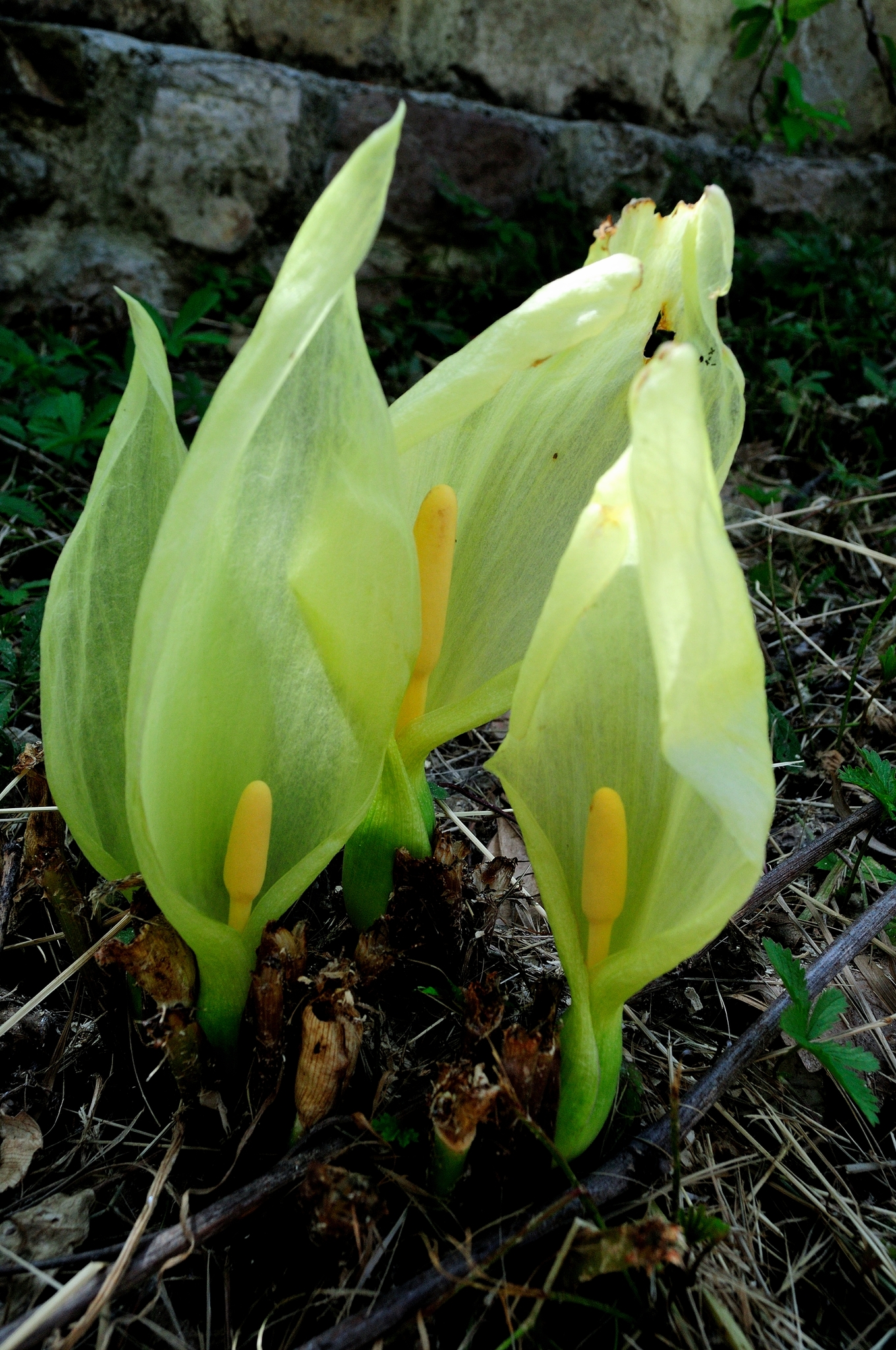
Italian Arum
Arum italicum
Also listed as Arisarum italicum
Also known as Italian Lords-and-ladies, Italian Cuckoo-pint
Climate Match for your location
See how well Italian Arum grows in your area.
Enter your ZIP code and we'll show you how this plant fits your local climate.
Italian arum is a tuberous perennial prized for its distinctive arrow-shaped leaves mottled with white or cream, and its striking spadix inflorescences in spring. It produces dramatic orange-red berries in fall that persist ornamentally on the plant.
Why grow it
Italian arum offers reliable winter and spring interest through variegated foliage that persists longer than many deciduous perennials, making it useful for adding structure to shaded garden spaces during dormant seasons. Unlike some tuberous arums, it produces ornamental fruit displays that extend visual appeal into fall. It thrives in partial shade with consistent moisture, suiting woodland gardens and areas where summer-dormant perennials are desired.
Watch out for
Italian arum prefers partial shade and consistently moist (but not waterlogged) soil, becoming stressed in dry conditions or full sun exposure. The tubers appreciate a winter chill period and may struggle in warm climates without adequate dormancy. Self-seeding can occur in favorable conditions, so deadheading spent flowers helps manage volunteer seedlings if desired.
Overview
- Form
- Growth Rate
- Size
- Dormancy
- Family
- Araceae
Native Range
Mediterranean
Seasonality
Bloom Season
Season of Interest
Herb
Soft non-woody plants of the field layer.
Succession Role
Tolerances & Soil
Establishment & Care
- Establishment
- Maintenance
- Propagation
Italian arum is a tuberous perennial prized for its distinctive arrow-shaped leaves mottled with white or cream, and its striking spadix inflorescences in spring. It produces dramatic orange-red berries in fall that persist ornamentally on the plant.
Climate Match for your location
See how well Italian Arum grows in your area.
Enter your ZIP code and we'll show you how this plant fits your local climate.
Why grow it
Italian arum offers reliable winter and spring interest through variegated foliage that persists longer than many deciduous perennials, making it useful for adding structure to shaded garden spaces during dormant seasons. Unlike some tuberous arums, it produces ornamental fruit displays that extend visual appeal into fall. It thrives in partial shade with consistent moisture, suiting woodland gardens and areas where summer-dormant perennials are desired.
Watch out for
Italian arum prefers partial shade and consistently moist (but not waterlogged) soil, becoming stressed in dry conditions or full sun exposure. The tubers appreciate a winter chill period and may struggle in warm climates without adequate dormancy. Self-seeding can occur in favorable conditions, so deadheading spent flowers helps manage volunteer seedlings if desired.
Overview
- Form
- Growth Rate
- Size
- Dormancy
- Family
- Araceae
Native Range
Mediterranean
Seasonality
Bloom Season
Season of Interest
Herb
Soft non-woody plants of the field layer.
Succession Role
Tolerances & Soil
Establishment & Care
- Establishment
- Maintenance
- Propagation
Similar herbs you might consider:
Enter your ZIP code to see top native species and strong climate fits for you.