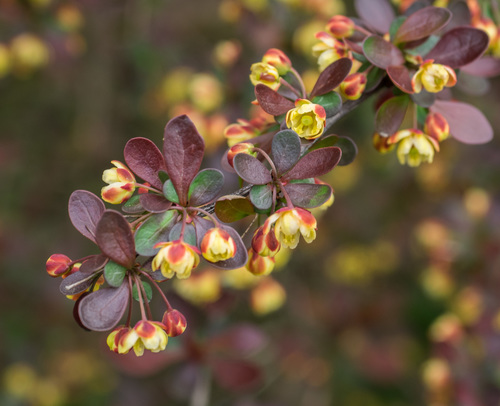
Japanese Barberry
Berberis thunbergii
Also known as Thunberg's Barberry, Japanese Berberis
Climate Match for your location
See how well Japanese Barberry grows in your area.
Enter your ZIP code and we'll show you how this plant fits your local climate.
A compact deciduous shrub prized for its small reddish or purple foliage that deepens in color through the growing season, with bright red berries persisting into winter. Extremely hardy and low-maintenance, it tolerates poor soils and drought once established.
Why grow it
Japanese barberry offers deciduous shrubs seeking compact form and persistent winter color a narrow alternative to larger ornamental species. Its tolerance for poor soils and established drought conditions suits sites where many landscape shrubs struggle, though similar cold-hardy, low-maintenance alternatives like Ilex verticillata (winterberry holly) or native Ilex decidua provide comparable benefits without the invasive concerns in many regions.
Watch out for
This shrub spreads via seed dispersal, particularly in disturbed areas and woodland edges, making it worth monitoring for volunteer seedlings on your property and nearby natural areas. Careful disposal of pruned material and spent berries reduces the likelihood of unintended spread to adjacent land.
Overview
- Form
- Growth Rate
- Size
- Dormancy
- Family
- Berberidaceae
Native Range
Eastern Asia
Seasonality
Bloom Season
Season of Interest
Shrub
Woody multi-stem plants at eye level.
Succession Role
Tolerances & Soil
Flood Tolerance
Deer Resistance
Inferred from USDA browse palatability
pH Range
Soil Texture
Establishment & Care
- Establishment
- Maintenance
- Propagation
A compact deciduous shrub prized for its small reddish or purple foliage that deepens in color through the growing season, with bright red berries persisting into winter. Extremely hardy and low-maintenance, it tolerates poor soils and drought once established.
Climate Match for your location
See how well Japanese Barberry grows in your area.
Enter your ZIP code and we'll show you how this plant fits your local climate.
Why grow it
Japanese barberry offers deciduous shrubs seeking compact form and persistent winter color a narrow alternative to larger ornamental species. Its tolerance for poor soils and established drought conditions suits sites where many landscape shrubs struggle, though similar cold-hardy, low-maintenance alternatives like Ilex verticillata (winterberry holly) or native Ilex decidua provide comparable benefits without the invasive concerns in many regions.
Watch out for
This shrub spreads via seed dispersal, particularly in disturbed areas and woodland edges, making it worth monitoring for volunteer seedlings on your property and nearby natural areas. Careful disposal of pruned material and spent berries reduces the likelihood of unintended spread to adjacent land.
Overview
- Form
- Growth Rate
- Size
- Dormancy
- Family
- Berberidaceae
Native Range
Eastern Asia
Seasonality
Bloom Season
Season of Interest
Shrub
Woody multi-stem plants at eye level.
Succession Role
Tolerances & Soil
Flood Tolerance
Deer Resistance
Inferred from USDA browse palatability
pH Range
Soil Texture
Establishment & Care
- Establishment
- Maintenance
- Propagation
Similar shrubs you might consider:
Enter your ZIP code to see top native species and strong climate fits for you.