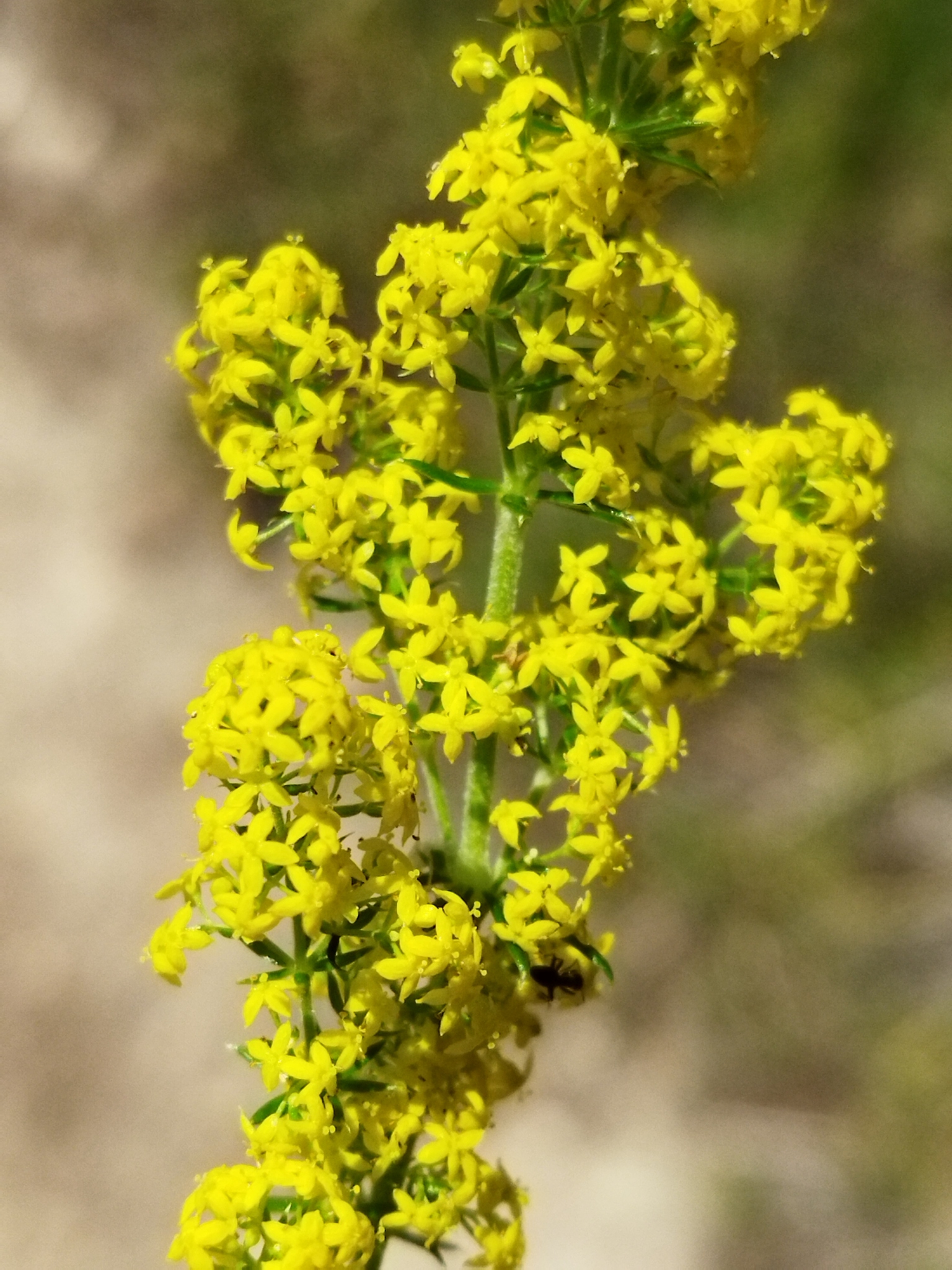
Lady's Bedstraw
Galium verum
Also listed as Asterophyllum galium, Galium floridum
Also known as Yellow Bedstraw, Yellow Spring Bedstraw
Climate Match for your location
See how well Lady's Bedstraw grows in your area.
Enter your ZIP code and we'll show you how this plant fits your local climate.
A low-growing perennial with needle-like foliage and tiny bright yellow flowers that bloom in summer. Historically used as a natural dye plant and attracts pollinators.
Why grow it
Lady's bedstraw offers a fine-textured ground cover alternative to coarser perennials, with a dense, low mound suitable for well-drained sites where taller plants would overwhelm the composition. Its historical use as a madder-family dye source (producing red and pink tones) appeals to makers interested in natural colorants, though yields are modest compared to dedicated dye plants. The flowers reliably attract small pollinators and beneficial insects throughout summer without requiring deadheading or fertilizer inputs.
Watch out for
While hardy, bedstraw can spread moderately in favorable conditions and may outcompete slower-establishing neighbors in loose or irrigated soils; division every few years helps manage spread. In very wet or heavy clay sites, the plant tends toward sparse growth and may not establish well, so amending for drainage pays dividends.
Overview
- Form
- Growth Rate
- Size
- Dormancy
- Family
- Rubiaceae
Native Range
Eurasian
Seasonality
Bloom Season
Season of Interest
Herb
Soft non-woody plants of the field layer.
Succession Role
Tolerances & Soil
Establishment & Care
- Establishment
- Maintenance
- Propagation
A low-growing perennial with needle-like foliage and tiny bright yellow flowers that bloom in summer. Historically used as a natural dye plant and attracts pollinators.
Climate Match for your location
See how well Lady's Bedstraw grows in your area.
Enter your ZIP code and we'll show you how this plant fits your local climate.
Why grow it
Lady's bedstraw offers a fine-textured ground cover alternative to coarser perennials, with a dense, low mound suitable for well-drained sites where taller plants would overwhelm the composition. Its historical use as a madder-family dye source (producing red and pink tones) appeals to makers interested in natural colorants, though yields are modest compared to dedicated dye plants. The flowers reliably attract small pollinators and beneficial insects throughout summer without requiring deadheading or fertilizer inputs.
Watch out for
While hardy, bedstraw can spread moderately in favorable conditions and may outcompete slower-establishing neighbors in loose or irrigated soils; division every few years helps manage spread. In very wet or heavy clay sites, the plant tends toward sparse growth and may not establish well, so amending for drainage pays dividends.
Overview
- Form
- Growth Rate
- Size
- Dormancy
- Family
- Rubiaceae
Native Range
Eurasian
Seasonality
Bloom Season
Season of Interest
Herb
Soft non-woody plants of the field layer.
Succession Role
Tolerances & Soil
Establishment & Care
- Establishment
- Maintenance
- Propagation
Similar herbs you might consider:
Enter your ZIP code to see top native species and strong climate fits for you.