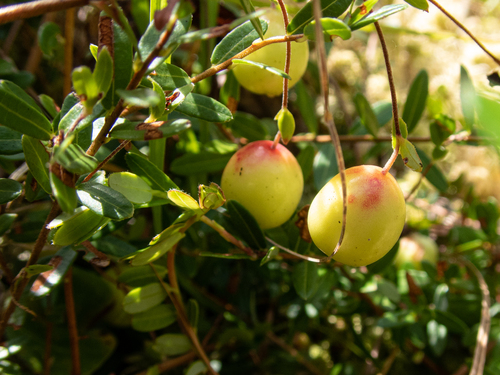
Lingonberry
Vaccinium vitis-idaea
Also listed as Myrtillus exigua, Rhodococcum minus
Also known as Cowberry, Mountain Cranberry, Lingberry
Climate Match for your location
See how well Lingonberry grows in your area.
Enter your ZIP code and we'll show you how this plant fits your local climate.
Lingonberry is a low-growing evergreen shrub prized for its small, tart red berries and attractive foliage that turns reddish in fall. It thrives in cool climates and acidic soils, making it excellent for groundcover or edging in woodland gardens.
Why grow it
Lingonberry outperforms most groundcovers in acidic, cool-climate sites where it establishes durable, year-round foliage with minimal maintenance. Unlike cranberries, which require waterlogged conditions, lingonberries tolerate well-drained acidic soils and produce harvestable fruit without specialized bog management. Its evergreen habit and compact growth (8–12 inches tall) make it useful for edging or understory planting where ornamental appeal and food production align.
Watch out for
Lingonberry establishment can be slow in the first year and benefits from consistent moisture until root systems mature. Plants may sulk or decline noticeably in neutral to alkaline soils, even with amendment, so soil pH testing is worth doing before planting. Fruit yield tends to be modest in warmer regions or with inconsistent cool-season chilling, so regional suitability varies more than the plant's range map suggests.
Overview
- Form
- Growth Rate
- Size
- Dormancy
- Family
- Ericaceae
Native to the United States
Native Range
Northern Europe and Asia
Native to: Alaska, Connecticut, Massachusetts, Maine, Michigan, Minnesota, New Hampshire, Vermont, Wisconsin
Seasonality
Bloom Season
Harvest Season
Edible Parts
Season of Interest
Shrub
Woody multi-stem plants at eye level.
Succession Role
Tolerances & Soil
Flood Tolerance
Deer Resistance
Inferred from USDA browse palatability
pH Range
Soil Texture
Establishment & Care
- Establishment
- Maintenance
- Years to Bearing
- Propagation
Lingonberry is a low-growing evergreen shrub prized for its small, tart red berries and attractive foliage that turns reddish in fall. It thrives in cool climates and acidic soils, making it excellent for groundcover or edging in woodland gardens.
Climate Match for your location
See how well Lingonberry grows in your area.
Enter your ZIP code and we'll show you how this plant fits your local climate.
Why grow it
Lingonberry outperforms most groundcovers in acidic, cool-climate sites where it establishes durable, year-round foliage with minimal maintenance. Unlike cranberries, which require waterlogged conditions, lingonberries tolerate well-drained acidic soils and produce harvestable fruit without specialized bog management. Its evergreen habit and compact growth (8–12 inches tall) make it useful for edging or understory planting where ornamental appeal and food production align.
Watch out for
Lingonberry establishment can be slow in the first year and benefits from consistent moisture until root systems mature. Plants may sulk or decline noticeably in neutral to alkaline soils, even with amendment, so soil pH testing is worth doing before planting. Fruit yield tends to be modest in warmer regions or with inconsistent cool-season chilling, so regional suitability varies more than the plant's range map suggests.
Overview
- Form
- Growth Rate
- Size
- Dormancy
- Family
- Ericaceae
Native to the United States
Native Range
Northern Europe and Asia
Native to: Alaska, Connecticut, Massachusetts, Maine, Michigan, Minnesota, New Hampshire, Vermont, Wisconsin
Seasonality
Bloom Season
Harvest Season
Edible Parts
Season of Interest
Shrub
Woody multi-stem plants at eye level.
Succession Role
Tolerances & Soil
Flood Tolerance
Deer Resistance
Inferred from USDA browse palatability
pH Range
Soil Texture
Establishment & Care
- Establishment
- Maintenance
- Years to Bearing
- Propagation
Similar shrubs you might consider:
Enter your ZIP code to see top native species and strong climate fits for you.