May Lily
Maianthemum bifolium
Also listed as Bifolium cordatum, Convallaria bifolia
Also known as False Lily of the Valley, Two-leaf Beadruby
Climate Match for your location
See how well May Lily grows in your area.
Enter your ZIP code and we'll show you how this plant fits your local climate.
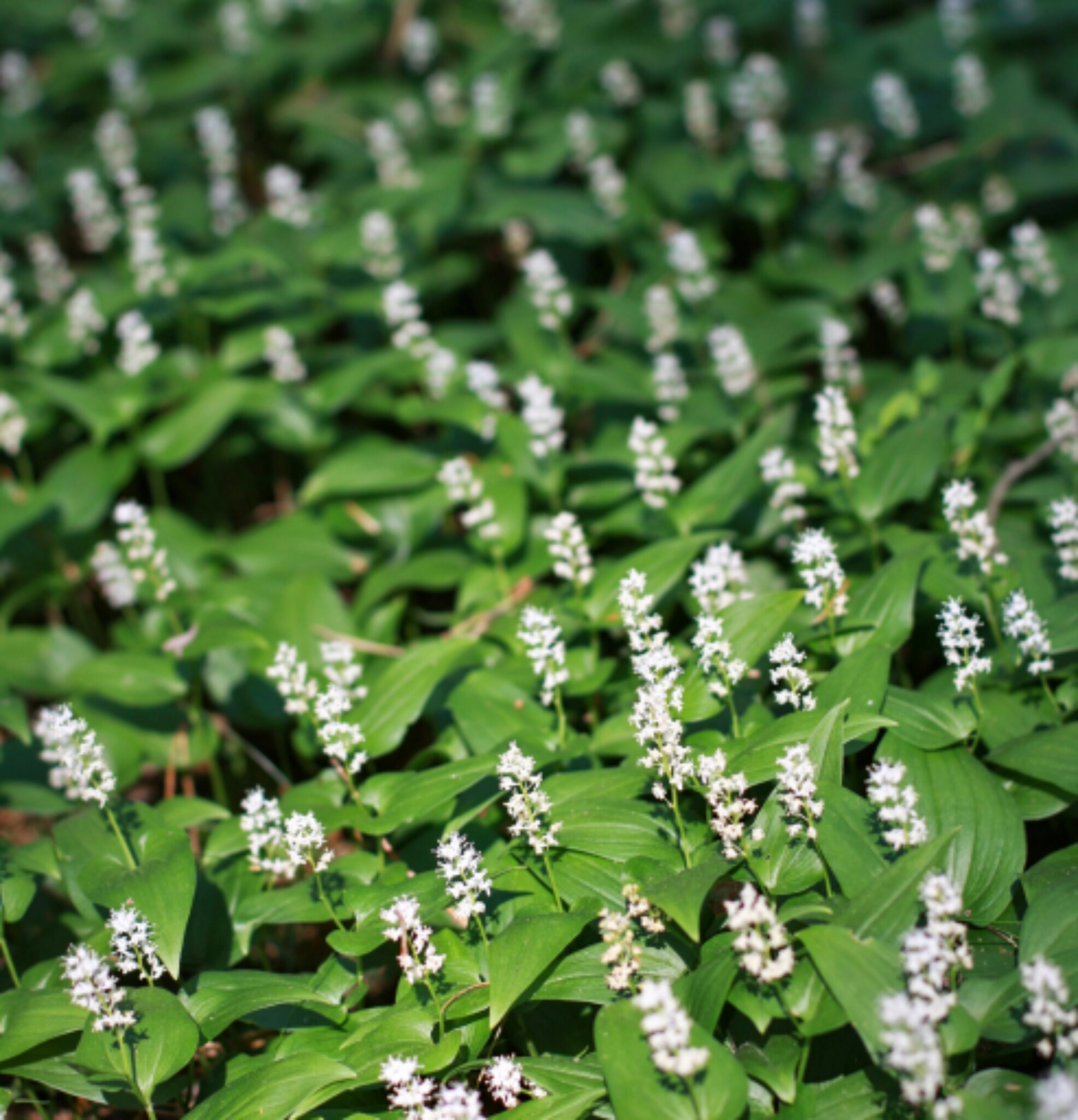
A delicate woodland groundcover with pairs of broad leaves and tiny white star-shaped flowers followed by red berries that turn dark blue-black. It spreads slowly via rhizomes and is ideal for shaded forest gardens.
Why grow it
May lily offers finer-textured foliage than many competing woodland groundcovers, with a more delicate appearance than native alternatives like false Solomon's seal. Its slow, steady spread via rhizomes makes it suitable for gardeners seeking gradual colonization rather than aggressive coverage. The ornamental progression from white flowers to colorful berries provides extended seasonal interest in shaded sites where many groundcover options offer limited visual appeal.
Watch out for
Establishment can be slow in the first year or two, so patience is needed before substantial coverage develops. Plants may decline or stagnate in poorly draining soils, particularly in heavy clay. Performance varies considerably depending on local climate and woodland conditions, so success is not guaranteed in all temperate regions.
Overview
- Form
- Growth Rate
- Size
- Dormancy
- Family
- Asparagaceae
Native Range
Northern Europe and Asia
Seasonality
Bloom Season
Harvest Season
Edible Parts
Season of Interest
Ground cover
Low spreading plants that carpet the soil.
Succession Role
Tolerances & Soil
Establishment & Care
- Establishment
- Maintenance
- Propagation
A delicate woodland groundcover with pairs of broad leaves and tiny white star-shaped flowers followed by red berries that turn dark blue-black. It spreads slowly via rhizomes and is ideal for shaded forest gardens.
Climate Match for your location
See how well May Lily grows in your area.
Enter your ZIP code and we'll show you how this plant fits your local climate.
Why grow it
May lily offers finer-textured foliage than many competing woodland groundcovers, with a more delicate appearance than native alternatives like false Solomon's seal. Its slow, steady spread via rhizomes makes it suitable for gardeners seeking gradual colonization rather than aggressive coverage. The ornamental progression from white flowers to colorful berries provides extended seasonal interest in shaded sites where many groundcover options offer limited visual appeal.
Watch out for
Establishment can be slow in the first year or two, so patience is needed before substantial coverage develops. Plants may decline or stagnate in poorly draining soils, particularly in heavy clay. Performance varies considerably depending on local climate and woodland conditions, so success is not guaranteed in all temperate regions.
Overview
- Form
- Growth Rate
- Size
- Dormancy
- Family
- Asparagaceae
Native Range
Northern Europe and Asia
Seasonality
Bloom Season
Harvest Season
Edible Parts
Season of Interest
Ground cover
Low spreading plants that carpet the soil.
Succession Role
Tolerances & Soil
Establishment & Care
- Establishment
- Maintenance
- Propagation
Similar ground covers you might consider:
Enter your ZIP code to see top native species and strong climate fits for you.