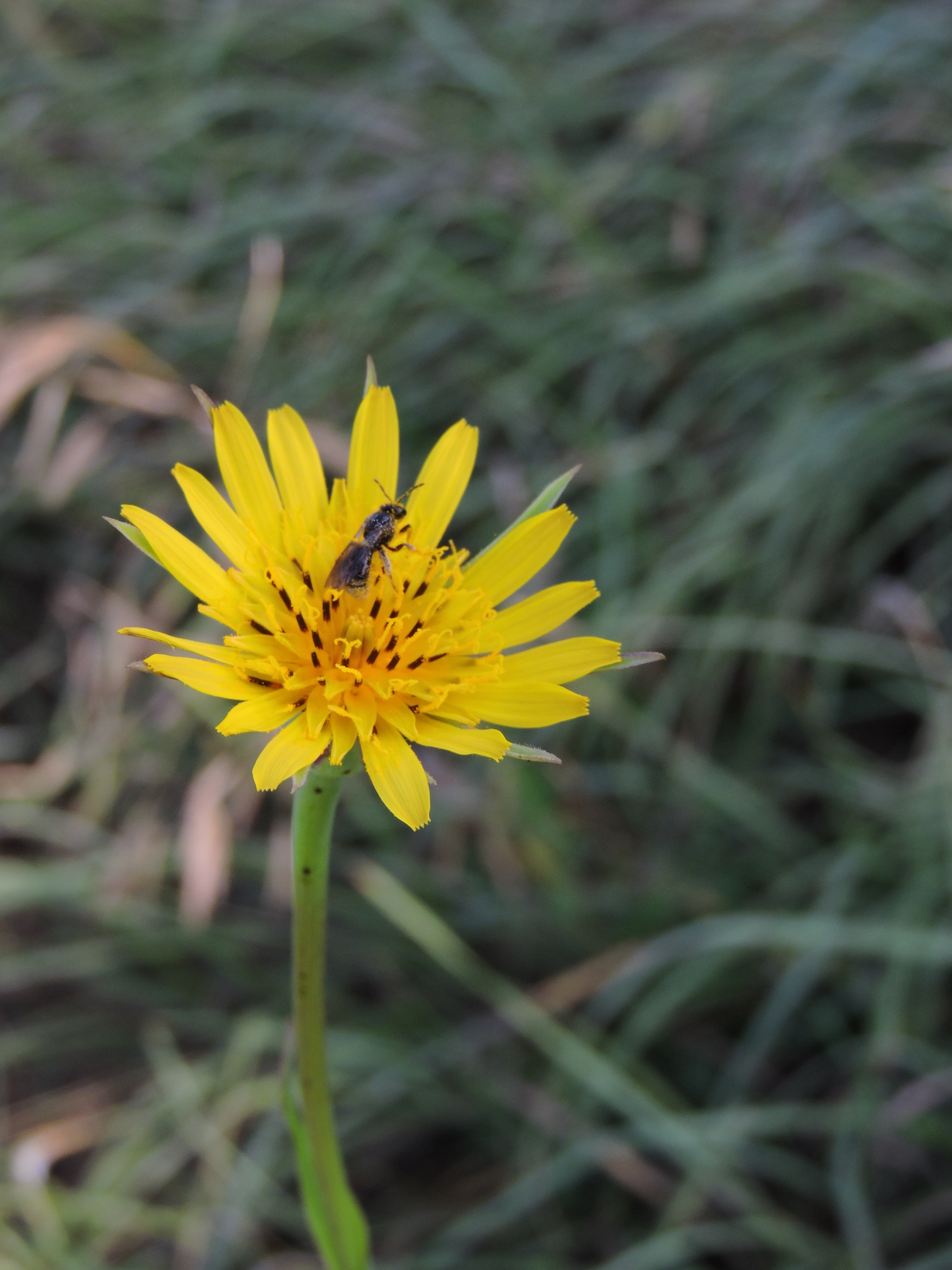
Meadow Salsify
Tragopogon pratensis
Also listed as Hieracium tragopogon, Tragopogon carinatus
Also known as Goat's-beard, Meadow Goatsbeard, Jack-go-to-bed-at-noon
Climate Match for your location
See how well Meadow Salsify grows in your area.
Enter your ZIP code and we'll show you how this plant fits your local climate.
A wispy perennial wildflower with thin, grass-like foliage and delicate yellow flowers that close by afternoon. It self-seeds readily and is attractive to pollinators.
Why grow it
Meadow salsify offers a finer textural alternative to coarser wildflower mixes, with a longer bloom window than many spring ephemerals. It establishes readily from seed in well-drained soils and supports early-season pollinators when forage is still limited. Compared to cultivated ornamentals, it requires minimal inputs once established and integrates well into naturalized meadow plantings.
Watch out for
The plant's prolific self-seeding can lead to dense populations that may outcompete less vigorous neighbors in small spaces, so deadheading spent flowers helps manage spread. It prefers full sun and lean soils; overly fertile conditions or shade typically result in weak, floppy growth that flops over easily.
Overview
- Form
- Growth Rate
- Size
- Dormancy
- Family
- Asteraceae
Native Range
Europe and Western Asia
Seasonality
Bloom Season
Harvest Season
Edible Parts
Season of Interest
Herb
Soft non-woody plants of the field layer.
Succession Role
Tolerances & Soil
Flood Tolerance
pH Range
Soil Texture
Establishment & Care
- Establishment
- Maintenance
- Years to Bearing
- Propagation
A wispy perennial wildflower with thin, grass-like foliage and delicate yellow flowers that close by afternoon. It self-seeds readily and is attractive to pollinators.
Climate Match for your location
See how well Meadow Salsify grows in your area.
Enter your ZIP code and we'll show you how this plant fits your local climate.
Why grow it
Meadow salsify offers a finer textural alternative to coarser wildflower mixes, with a longer bloom window than many spring ephemerals. It establishes readily from seed in well-drained soils and supports early-season pollinators when forage is still limited. Compared to cultivated ornamentals, it requires minimal inputs once established and integrates well into naturalized meadow plantings.
Watch out for
The plant's prolific self-seeding can lead to dense populations that may outcompete less vigorous neighbors in small spaces, so deadheading spent flowers helps manage spread. It prefers full sun and lean soils; overly fertile conditions or shade typically result in weak, floppy growth that flops over easily.
Overview
- Form
- Growth Rate
- Size
- Dormancy
- Family
- Asteraceae
Native Range
Europe and Western Asia
Seasonality
Bloom Season
Harvest Season
Edible Parts
Season of Interest
Herb
Soft non-woody plants of the field layer.
Succession Role
Tolerances & Soil
Flood Tolerance
pH Range
Soil Texture
Establishment & Care
- Establishment
- Maintenance
- Years to Bearing
- Propagation
Similar herbs you might consider:
Enter your ZIP code to see top native species and strong climate fits for you.