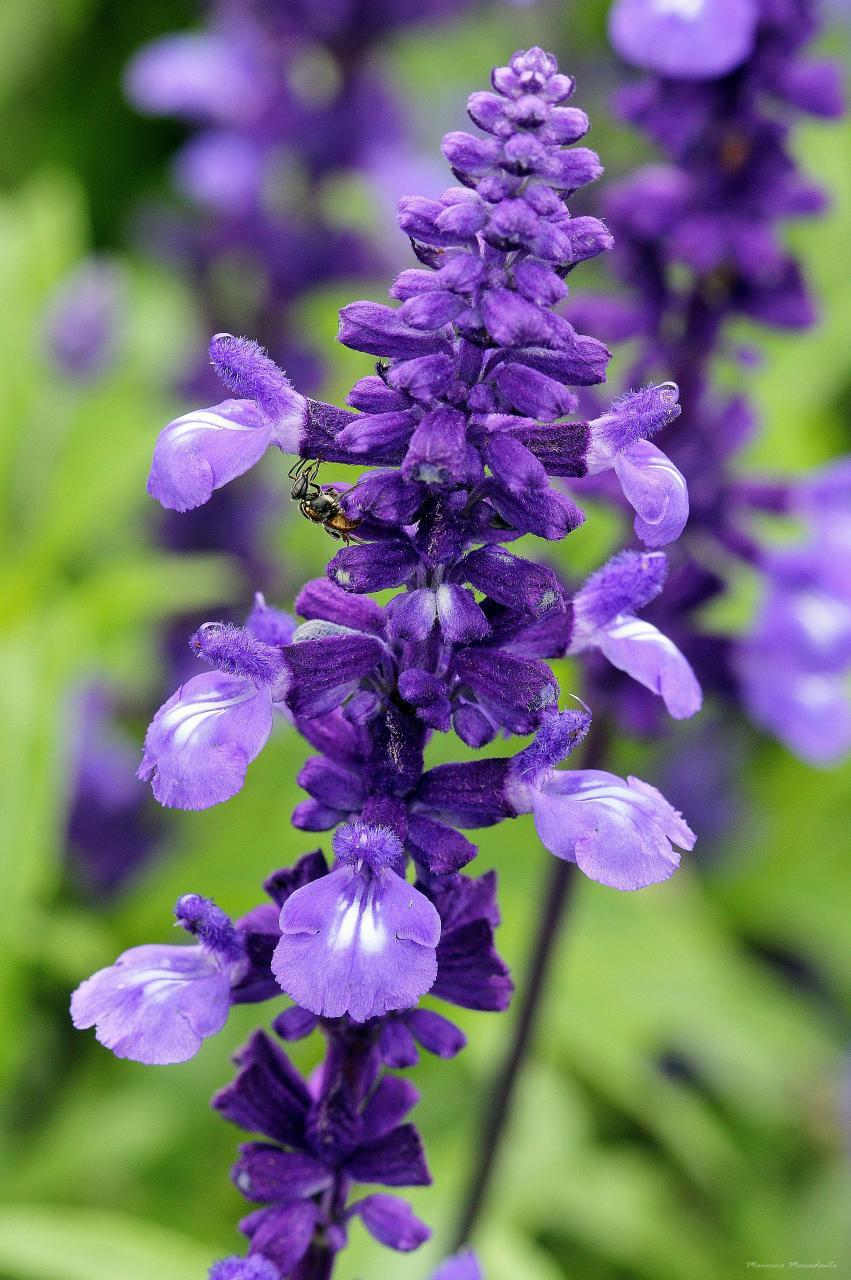
Mealy Blue Sage
Salvia farinacea
Also listed as Salvia earlei, Salvia amabilis
Also known as Mealycup Sage, Mealy Sage, Blue Sage
Climate Match for your location
See how well Mealy Blue Sage grows in your area.
Enter your ZIP code and we'll show you how this plant fits your local climate.
Mealy Blue Sage is a drought-tolerant perennial with slender spikes of blue-purple flowers dusted with white powder, blooming prolifically in summer heat. It thrives in dry, sunny locations and requires minimal water once established.
Why grow it
Mealy Blue Sage offers reliable mid-summer to fall color in xeric landscapes where many perennials struggle, with a more compact habit than taller sage species like S. guarantica. Its long blooming window and minimal fertility requirements make it practical for low-maintenance borders or pollinator plantings in arid climates. It tolerates poor soils better than most ornamental salvias, though it will perform adequately in average garden conditions with moderate water.
Watch out for
In humid climates or poorly draining soils, this species becomes prone to root rot and powdery mildew, reducing its lifespan. Established plants respond well to hard pruning in late winter or early spring, but young plants need a full first season before cutting back hard. In some regions it may self-seed readily, so deadheading spent flower spikes can prevent volunteer seedlings if desired.
Overview
- Form
- Growth Rate
- Size
- Dormancy
- Family
- Lamiaceae
Native to the United States
Native Range
Texas native
Native to: New Mexico, Texas
Seasonality
Bloom Season
Season of Interest
Herb
Soft non-woody plants of the field layer.
Succession Role
Tolerances & Soil
Establishment & Care
- Establishment
- Maintenance
- Propagation
Mealy Blue Sage is a drought-tolerant perennial with slender spikes of blue-purple flowers dusted with white powder, blooming prolifically in summer heat. It thrives in dry, sunny locations and requires minimal water once established.
Climate Match for your location
See how well Mealy Blue Sage grows in your area.
Enter your ZIP code and we'll show you how this plant fits your local climate.
Why grow it
Mealy Blue Sage offers reliable mid-summer to fall color in xeric landscapes where many perennials struggle, with a more compact habit than taller sage species like S. guarantica. Its long blooming window and minimal fertility requirements make it practical for low-maintenance borders or pollinator plantings in arid climates. It tolerates poor soils better than most ornamental salvias, though it will perform adequately in average garden conditions with moderate water.
Watch out for
In humid climates or poorly draining soils, this species becomes prone to root rot and powdery mildew, reducing its lifespan. Established plants respond well to hard pruning in late winter or early spring, but young plants need a full first season before cutting back hard. In some regions it may self-seed readily, so deadheading spent flower spikes can prevent volunteer seedlings if desired.
Overview
- Form
- Growth Rate
- Size
- Dormancy
- Family
- Lamiaceae
Native to the United States
Native Range
Texas native
Native to: New Mexico, Texas
Seasonality
Bloom Season
Season of Interest
Herb
Soft non-woody plants of the field layer.
Succession Role
Tolerances & Soil
Establishment & Care
- Establishment
- Maintenance
- Propagation
Similar herbs you might consider:
Enter your ZIP code to see top native species and strong climate fits for you.