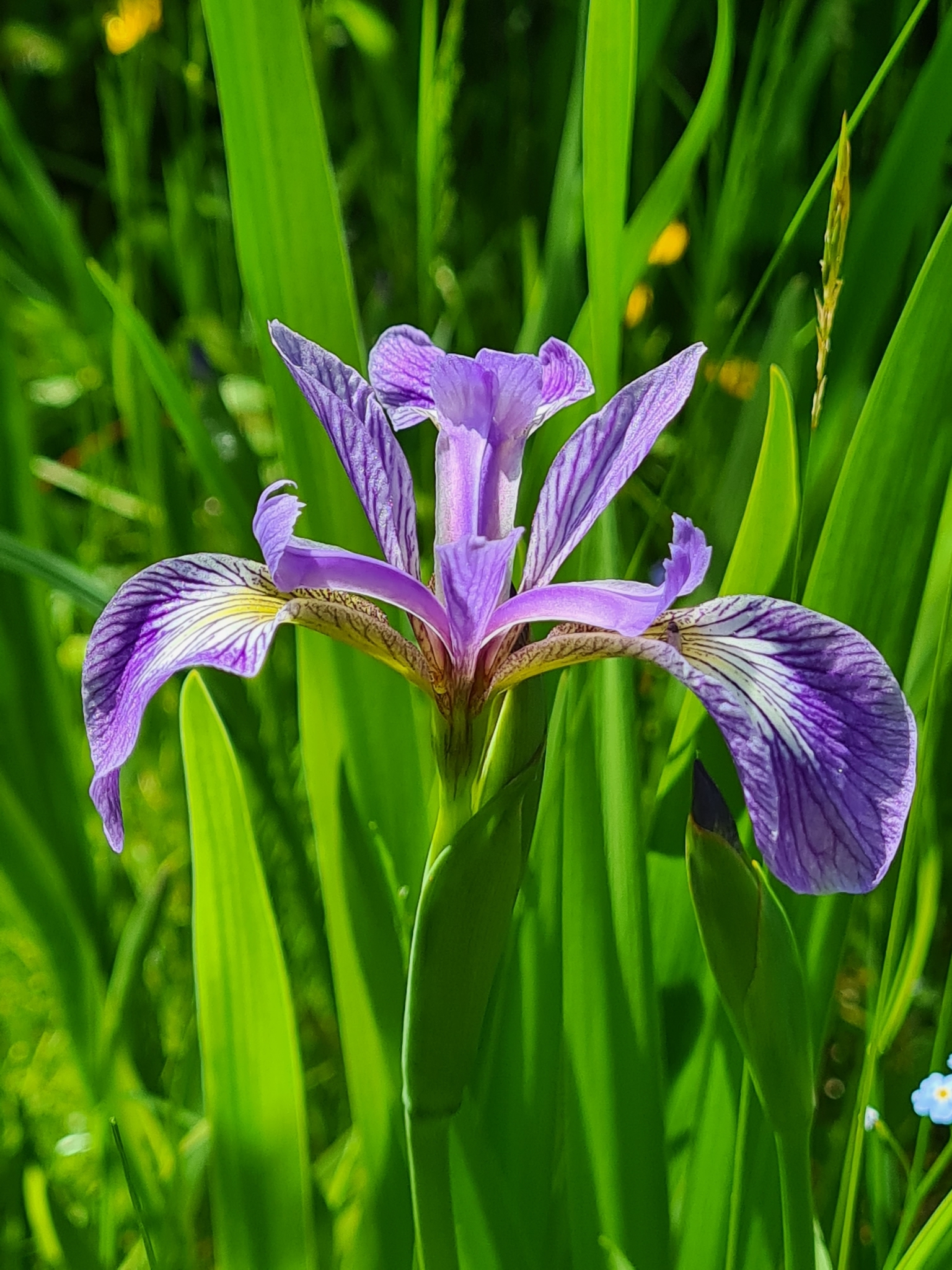
Northern Blue Flag
Iris versicolor
Also listed as Iris boltoniana, Iris caurina
Also known as Northern Blue Flag Iris, Blue Flag, Harlequin Blue Flag
Climate Match for your location
See how well Northern Blue Flag grows in your area.
Enter your ZIP code and we'll show you how this plant fits your local climate.
A native wetland iris with striking blue-purple flowers and sword-like foliage that adds vertical interest to bog gardens and water features. Thrives in consistently moist to wet conditions and is excellent for naturalizing along pond edges.
Why grow it
Northern blue flag offers reliable performance in poorly drained soils where many ornamental irises fail, making it a practical choice for rain gardens and constructed wetlands. Compared to Siberian iris or Japanese iris, it tolerates longer periods of standing water and requires no drainage amendment. Its rhizomatous spread provides erosion control along water margins while supporting native wetland wildlife.
Watch out for
Plants may take 2-3 years to establish a substantial flowering display from divisions or young specimens. Rhizomes can become crowded over time, which may reduce vigor and flowering, so division every 4-5 years is typical maintenance. In areas with hot, dry summers, consistent moisture during establishment improves survival rates.
Overview
- Form
- Growth Rate
- Size
- Dormancy
- Family
- Iridaceae
Native to the United States
Native Range
Eastern North America
Native to: Connecticut, Delaware, Illinois, Massachusetts, Maryland, Maine, Michigan, Minnesota, New Hampshire, New Jersey, New York, Ohio, Pennsylvania, Rhode Island, Virginia, Vermont, Wisconsin
Seasonality
Bloom Season
Season of Interest
Herb
Soft non-woody plants of the field layer.
Succession Role
Tolerances & Soil
Establishment & Care
- Establishment
- Maintenance
- Propagation
A native wetland iris with striking blue-purple flowers and sword-like foliage that adds vertical interest to bog gardens and water features. Thrives in consistently moist to wet conditions and is excellent for naturalizing along pond edges.
Climate Match for your location
See how well Northern Blue Flag grows in your area.
Enter your ZIP code and we'll show you how this plant fits your local climate.
Why grow it
Northern blue flag offers reliable performance in poorly drained soils where many ornamental irises fail, making it a practical choice for rain gardens and constructed wetlands. Compared to Siberian iris or Japanese iris, it tolerates longer periods of standing water and requires no drainage amendment. Its rhizomatous spread provides erosion control along water margins while supporting native wetland wildlife.
Watch out for
Plants may take 2-3 years to establish a substantial flowering display from divisions or young specimens. Rhizomes can become crowded over time, which may reduce vigor and flowering, so division every 4-5 years is typical maintenance. In areas with hot, dry summers, consistent moisture during establishment improves survival rates.
Overview
- Form
- Growth Rate
- Size
- Dormancy
- Family
- Iridaceae
Native to the United States
Native Range
Eastern North America
Native to: Connecticut, Delaware, Illinois, Massachusetts, Maryland, Maine, Michigan, Minnesota, New Hampshire, New Jersey, New York, Ohio, Pennsylvania, Rhode Island, Virginia, Vermont, Wisconsin
Seasonality
Bloom Season
Season of Interest
Herb
Soft non-woody plants of the field layer.
Succession Role
Tolerances & Soil
Establishment & Care
- Establishment
- Maintenance
- Propagation
Similar herbs you might consider:
Enter your ZIP code to see top native species and strong climate fits for you.