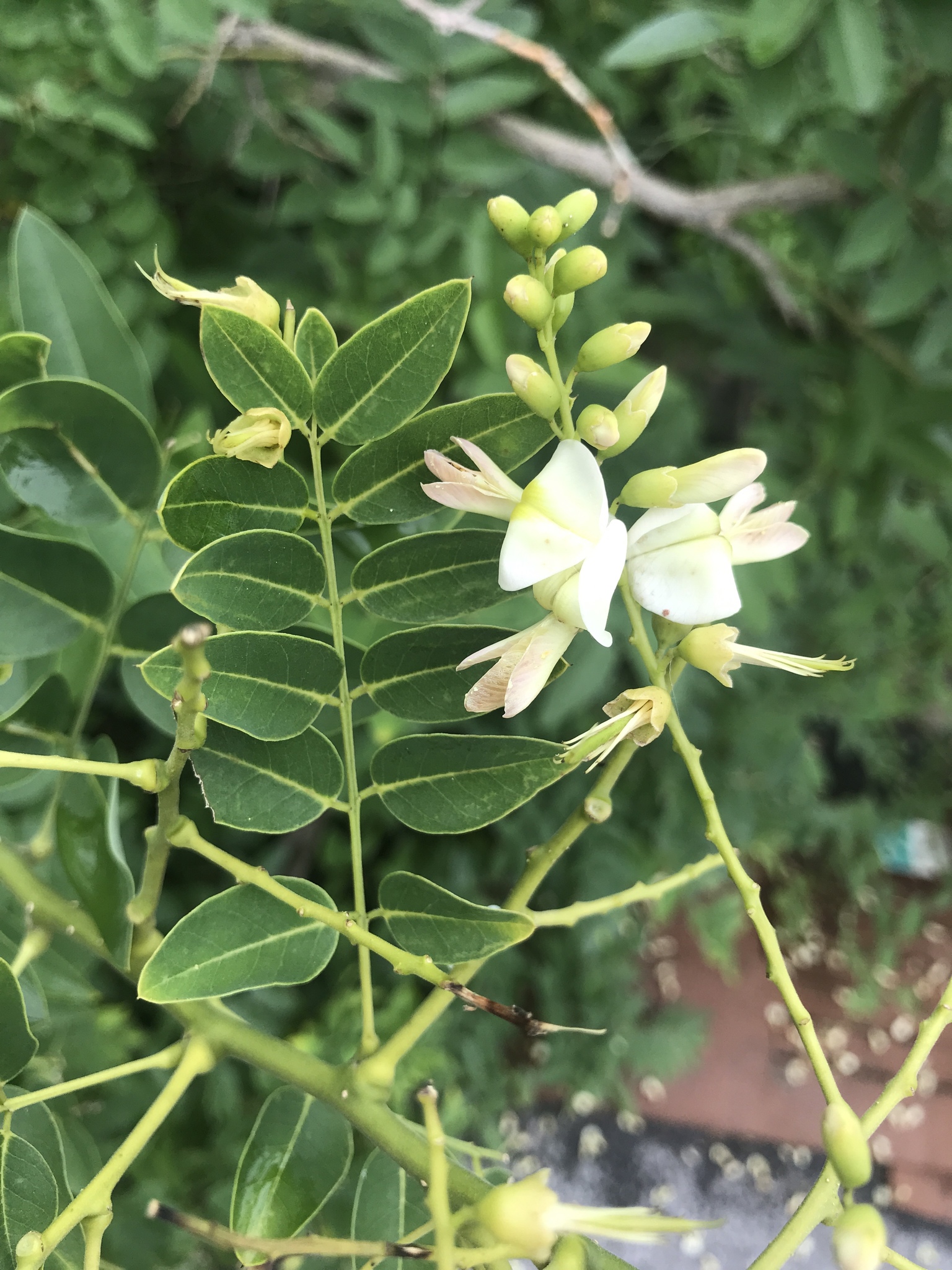
Pagoda Tree
Styphnolobium japonicum
Also listed as Sophora japonica, Anagyris chinensis
Also known as Japanese Pagoda Tree, Chinese Scholar Tree, Scholar Tree
Climate Match for your location
See how well Pagoda Tree grows in your area.
Enter your ZIP code and we'll show you how this plant fits your local climate.
A hardy, ornamental shade tree with delicate compound leaves and fragrant cream-colored flower panicles in late summer, followed by unusual bean-like seed pods. Extremely tough and drought-tolerant once established, making it ideal for difficult urban or dry sites.
Why grow it
Styphnolobium japonicum offers reliable late-season flowering when many shade trees have finished blooming, with fragrant panicles that attract pollinators. Compared to native alternatives like black locust, it tolerates urban compaction and air pollution better while producing a more refined ornamental form. Its established drought tolerance and minimal pest pressure make it practical for sites where irrigation is limited or regular maintenance unlikely.
Watch out for
Young trees benefit from consistent moisture during their first growing season despite eventual drought tolerance. The wood is brittle and prone to storm damage in exposed locations, so site selection in wind-protected areas reduces maintenance needs. Volunteer seedlings may appear in favorable climates, requiring periodic monitoring if self-seeding becomes unwanted.
Overview
- Form
- Growth Rate
- Size
- Dormancy
- Family
- Fabaceae
Native Range
China, Japan
Seasonality
Bloom Season
Season of Interest
Canopy
The tallest trees that form the overstory.
Sub-canopy
Smaller trees living beneath the canopy.
Succession Role
Tolerances & Soil
pH Range
Establishment & Care
- Establishment
- Maintenance
- Propagation
A hardy, ornamental shade tree with delicate compound leaves and fragrant cream-colored flower panicles in late summer, followed by unusual bean-like seed pods. Extremely tough and drought-tolerant once established, making it ideal for difficult urban or dry sites.
Climate Match for your location
See how well Pagoda Tree grows in your area.
Enter your ZIP code and we'll show you how this plant fits your local climate.
Why grow it
Styphnolobium japonicum offers reliable late-season flowering when many shade trees have finished blooming, with fragrant panicles that attract pollinators. Compared to native alternatives like black locust, it tolerates urban compaction and air pollution better while producing a more refined ornamental form. Its established drought tolerance and minimal pest pressure make it practical for sites where irrigation is limited or regular maintenance unlikely.
Watch out for
Young trees benefit from consistent moisture during their first growing season despite eventual drought tolerance. The wood is brittle and prone to storm damage in exposed locations, so site selection in wind-protected areas reduces maintenance needs. Volunteer seedlings may appear in favorable climates, requiring periodic monitoring if self-seeding becomes unwanted.
Overview
- Form
- Growth Rate
- Size
- Dormancy
- Family
- Fabaceae
Native Range
China, Japan
Seasonality
Bloom Season
Season of Interest
Canopy
The tallest trees that form the overstory.
Sub-canopy
Smaller trees living beneath the canopy.
Succession Role
Tolerances & Soil
pH Range
Establishment & Care
- Establishment
- Maintenance
- Propagation
Similar canopy trees you might consider:
Enter your ZIP code to see top native species and strong climate fits for you.