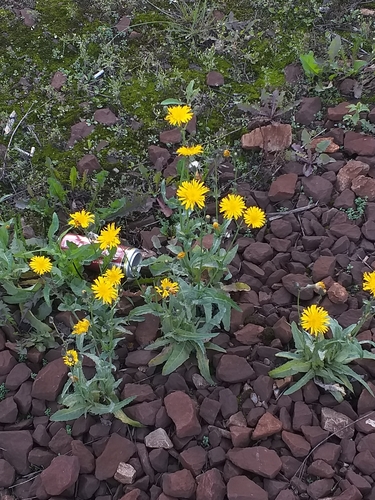
Perennial Sow Thistle
Sonchus arvensis
Also known as Field Sow Thistle, Corn Sow Thistle, Creeping Sowthistle
Climate Match for your location
See how well Perennial Sow Thistle grows in your area.
Enter your ZIP code and we'll show you how this plant fits your local climate.
A tall perennial weed with yellow dandelion-like flowers and milky sap, commonly found in disturbed areas and fields. Often considered invasive due to its deep taproot and ability to spread vegetatively.
Why grow it
Perennial sow thistle is occasionally retained in permaculture systems as a dynamic accumulator and fodder plant, though it offers less nutritional density than intentional forage species like alfalfa or comfrey. Its deep taproot can break compacted soil, and the plant produces copious seed that attracts birds. In managed contexts, it may serve as a pioneer species in soil building, but conventional alternatives are typically more reliable for dedicated cultivation.
Watch out for
Perennial sow thistle can be difficult to manage once established due to its deep taproot and regenerative capacity from root fragments. Hand pulling is often ineffective and may leave behind root pieces that sprout new plants. Repeated cultivation or targeted herbicide application over multiple seasons is typically needed for effective control in gardens or managed areas.
Overview
- Form
- Growth Rate
- Size
- Dormancy
- Family
- Asteraceae
Native Range
Europe and western Asia
Seasonality
Bloom Season
Harvest Season
Edible Parts
Season of Interest
Herb
Soft non-woody plants of the field layer.
Succession Role
Tolerances & Soil
Establishment & Care
- Establishment
- Maintenance
- Years to Bearing
- Propagation
A tall perennial weed with yellow dandelion-like flowers and milky sap, commonly found in disturbed areas and fields. Often considered invasive due to its deep taproot and ability to spread vegetatively.
Climate Match for your location
See how well Perennial Sow Thistle grows in your area.
Enter your ZIP code and we'll show you how this plant fits your local climate.
Why grow it
Perennial sow thistle is occasionally retained in permaculture systems as a dynamic accumulator and fodder plant, though it offers less nutritional density than intentional forage species like alfalfa or comfrey. Its deep taproot can break compacted soil, and the plant produces copious seed that attracts birds. In managed contexts, it may serve as a pioneer species in soil building, but conventional alternatives are typically more reliable for dedicated cultivation.
Watch out for
Perennial sow thistle can be difficult to manage once established due to its deep taproot and regenerative capacity from root fragments. Hand pulling is often ineffective and may leave behind root pieces that sprout new plants. Repeated cultivation or targeted herbicide application over multiple seasons is typically needed for effective control in gardens or managed areas.
Overview
- Form
- Growth Rate
- Size
- Dormancy
- Family
- Asteraceae
Native Range
Europe and western Asia
Seasonality
Bloom Season
Harvest Season
Edible Parts
Season of Interest
Herb
Soft non-woody plants of the field layer.
Succession Role
Tolerances & Soil
Establishment & Care
- Establishment
- Maintenance
- Years to Bearing
- Propagation
Similar herbs you might consider:
Enter your ZIP code to see top native species and strong climate fits for you.