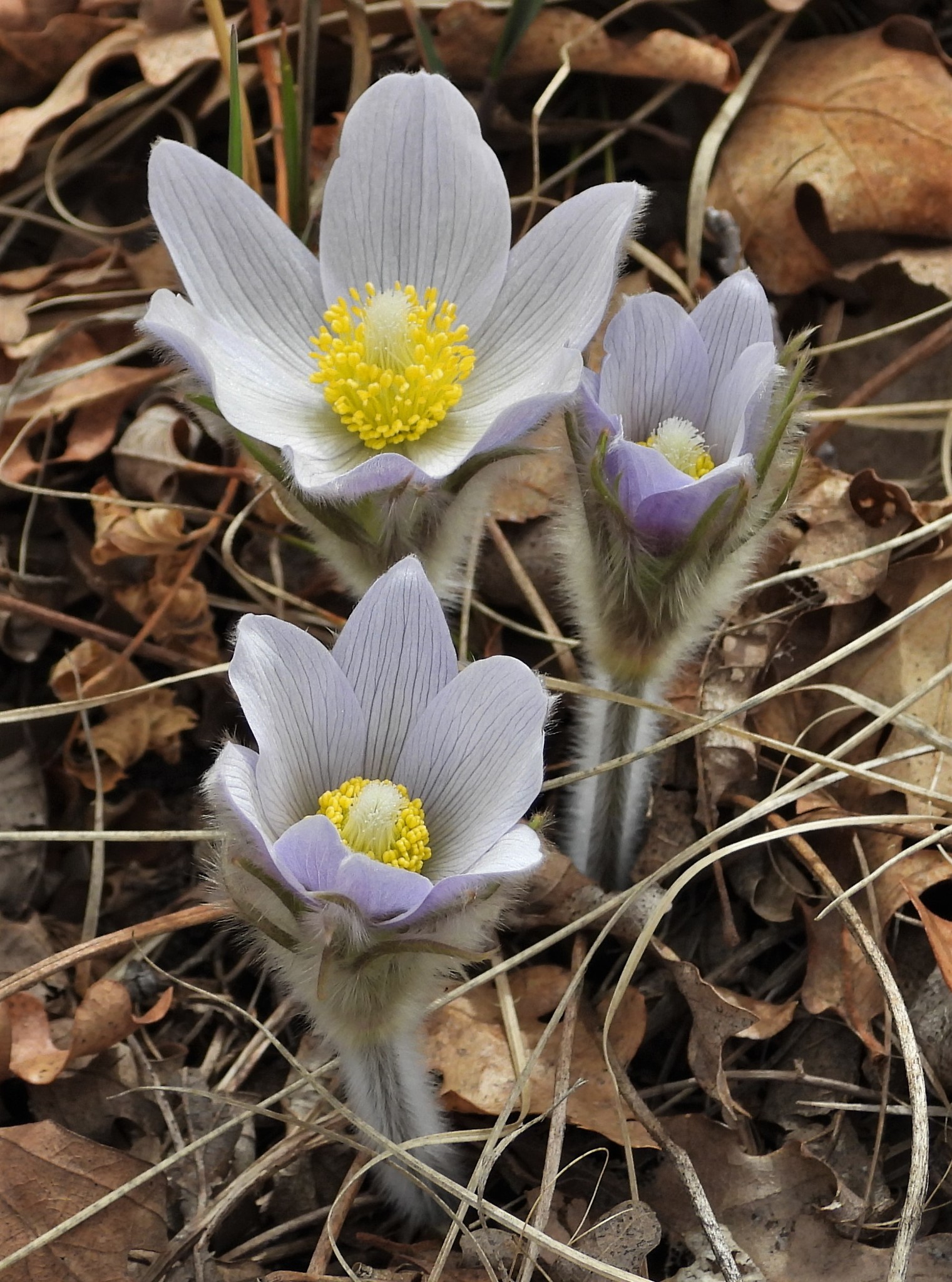
Prairie Pasqueflower
Pulsatilla nuttalliana
Also listed as Anemone nuttalliana
Also known as Prairie Crocus, American Pasqueflower, Prairie Smoke
Climate Match for your location
See how well Prairie Pasqueflower grows in your area.
Enter your ZIP code and we'll show you how this plant fits your local climate.
A delicate spring wildflower with silky, nodding purple flowers and feathery seedheads. Native to western prairies and grasslands, it thrives in dry, sunny locations with minimal water once established.
Why grow it
Prairie pasqueflower blooms earlier in spring than most native wildflowers, making it useful for extending the seasonal interest of prairie plantings. It requires less water and maintenance than many ornamental alternatives once established, and its distinctive nodding flowers and feathery seed dispersal structures offer visual appeal across multiple seasons. The species supports early-season pollinators when few other nectar sources are available.
Watch out for
This species has a deep taproot and resents disturbance or transplanting after establishment, so site selection and initial placement matter considerably. It prefers very well-draining soil and may struggle or decline in heavy clay or poorly drained conditions. Plants may take two to three years to reach flowering maturity from seed.
Overview
- Form
- Growth Rate
- Size
- Dormancy
- Family
- Ranunculaceae
Native to the United States
Native Range
Western North America
Native to: Alaska, Colorado, Iowa, Idaho, Illinois, Minnesota, Montana, North Dakota, Nebraska, New Mexico, South Dakota, Utah, Wisconsin, Wyoming
Seasonality
Bloom Season
Season of Interest
Herb
Soft non-woody plants of the field layer.
Succession Role
Tolerances & Soil
Establishment & Care
- Establishment
- Maintenance
- Propagation
A delicate spring wildflower with silky, nodding purple flowers and feathery seedheads. Native to western prairies and grasslands, it thrives in dry, sunny locations with minimal water once established.
Climate Match for your location
See how well Prairie Pasqueflower grows in your area.
Enter your ZIP code and we'll show you how this plant fits your local climate.
Why grow it
Prairie pasqueflower blooms earlier in spring than most native wildflowers, making it useful for extending the seasonal interest of prairie plantings. It requires less water and maintenance than many ornamental alternatives once established, and its distinctive nodding flowers and feathery seed dispersal structures offer visual appeal across multiple seasons. The species supports early-season pollinators when few other nectar sources are available.
Watch out for
This species has a deep taproot and resents disturbance or transplanting after establishment, so site selection and initial placement matter considerably. It prefers very well-draining soil and may struggle or decline in heavy clay or poorly drained conditions. Plants may take two to three years to reach flowering maturity from seed.
Overview
- Form
- Growth Rate
- Size
- Dormancy
- Family
- Ranunculaceae
Native to the United States
Native Range
Western North America
Native to: Alaska, Colorado, Iowa, Idaho, Illinois, Minnesota, Montana, North Dakota, Nebraska, New Mexico, South Dakota, Utah, Wisconsin, Wyoming
Seasonality
Bloom Season
Season of Interest
Herb
Soft non-woody plants of the field layer.
Succession Role
Tolerances & Soil
Establishment & Care
- Establishment
- Maintenance
- Propagation
Similar herbs you might consider:
Enter your ZIP code to see top native species and strong climate fits for you.