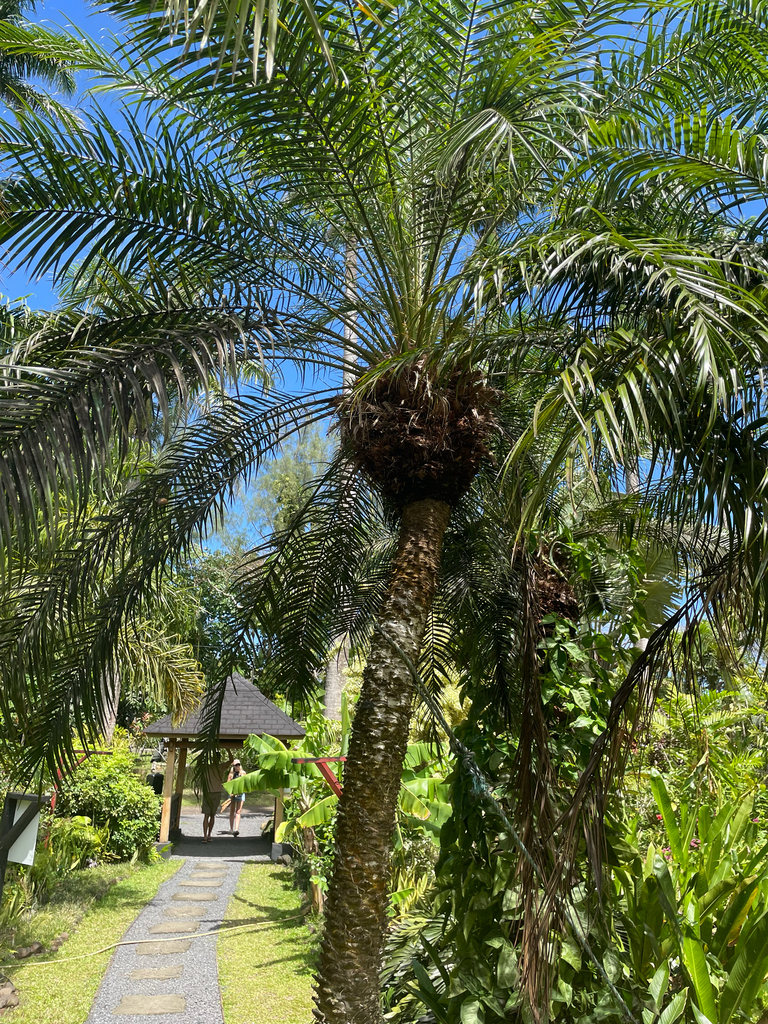
Pygmy Date Palm
Phoenix roebelenii
Also known as Dwarf Date Palm, Roebelin Palm, Miniature Date Palm
Climate Match for your location
See how well Pygmy Date Palm grows in your area.
Enter your ZIP code and we'll show you how this plant fits your local climate.
A compact palm tree with delicate, feathery fronds that makes an excellent houseplant or tropical accent in warm climates. It prefers indirect light, moderate humidity, and consistent moisture without waterlogging.
Why grow it
Phoenix roebelenii is notably more compact than larger date palm species, making it suitable for smaller indoor spaces and container cultivation where other palms would outgrow their setting. It tolerates moderate indoor light conditions better than many tropical palms, though growth will be slower than in brighter environments. Relative to other houseplant palms, it establishes fairly quickly and responds well to consistent care, making it a reasonable choice for growers seeking a palm that won't demand exceptional light or humidity.
Watch out for
Indoor specimens may develop spider mites or scale insects if humidity drifts too low for extended periods, requiring periodic monitoring. Overwatering is a common failure point despite the plant's preference for consistent moisture, as standing water around the roots invites fungal issues. Growth rate indoors is genuinely slow, so growers expecting rapid development may find the plant unrewarding within a typical season or two.
Overview
- Form
- Growth Rate
- Size
- Dormancy
- Family
- Arecaceae
Native Range
Southeast Asia (Laos)
Seasonality
Season of Interest
Canopy
The tallest trees that form the overstory.
Tolerances & Soil
Establishment & Care
- Establishment
- Maintenance
- Years to Bearing
- Propagation
A compact palm tree with delicate, feathery fronds that makes an excellent houseplant or tropical accent in warm climates. It prefers indirect light, moderate humidity, and consistent moisture without waterlogging.
Climate Match for your location
See how well Pygmy Date Palm grows in your area.
Enter your ZIP code and we'll show you how this plant fits your local climate.
Why grow it
Phoenix roebelenii is notably more compact than larger date palm species, making it suitable for smaller indoor spaces and container cultivation where other palms would outgrow their setting. It tolerates moderate indoor light conditions better than many tropical palms, though growth will be slower than in brighter environments. Relative to other houseplant palms, it establishes fairly quickly and responds well to consistent care, making it a reasonable choice for growers seeking a palm that won't demand exceptional light or humidity.
Watch out for
Indoor specimens may develop spider mites or scale insects if humidity drifts too low for extended periods, requiring periodic monitoring. Overwatering is a common failure point despite the plant's preference for consistent moisture, as standing water around the roots invites fungal issues. Growth rate indoors is genuinely slow, so growers expecting rapid development may find the plant unrewarding within a typical season or two.
Overview
- Form
- Growth Rate
- Size
- Dormancy
- Family
- Arecaceae
Native Range
Southeast Asia (Laos)
Seasonality
Season of Interest
Canopy
The tallest trees that form the overstory.
Tolerances & Soil
Establishment & Care
- Establishment
- Maintenance
- Years to Bearing
- Propagation
Similar canopy trees you might consider:
Enter your ZIP code to see top native species and strong climate fits for you.