Rubber Rabbitbrush
Ericameria nauseosa
Also listed as Bigelowia nauseosa, Chondrophora nauseosa
Also known as Rabbitbrush, Chamisa, Stinking Rabbitbrush
Climate Match for your location
See how well Rubber Rabbitbrush grows in your area.
Enter your ZIP code and we'll show you how this plant fits your local climate.
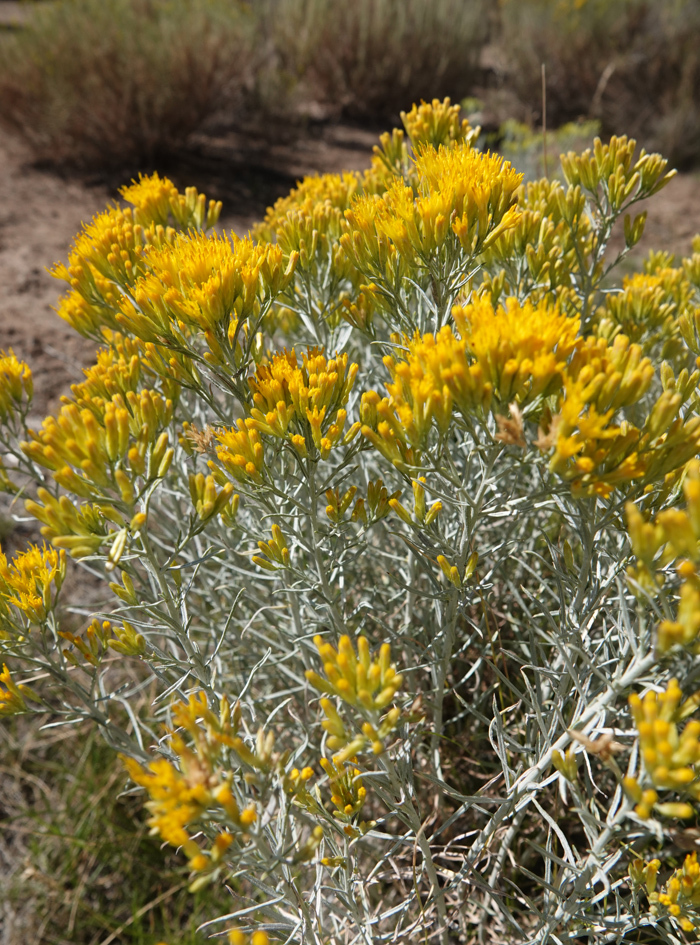
A drought-tolerant shrub native to western North America, producing small yellow flowers in late summer and fall. It thrives in arid conditions and requires minimal water once established.
Why grow it
Rubber rabbitbrush outperforms many native shrubs in extreme drought and poor soil conditions once established, requiring significantly less supplemental water than similar ornamental species. Its late-season yellow flowers provide late nectar for pollinators when other forage is scarce, making it valuable in arid and semi-arid permaculture systems. Compared to non-native drought-tolerant ornamentals, it supports local insect communities and integrates readily into native plant communities.
Watch out for
The plant produces a strong, resinous scent that some find unpleasant, particularly when foliage is brushed or crushed. In areas where it is not native, monitor for any volunteer seedlings beyond your intended planting zone, as it can spread into adjacent disturbed areas. Extended periods of high humidity or poor drainage may stress the plant despite its drought tolerance.
Overview
- Form
- Growth Rate
- Size
- Dormancy
- Family
- Asteraceae
Native to the United States
Native Range
Western United States
Native to: Arizona, California, Colorado, Idaho, Kansas, Montana, North Dakota, Nebraska, New Mexico, Nevada, Oklahoma, Oregon, South Dakota, Texas, Utah, Washington, Wyoming
Seasonality
Bloom Season
Season of Interest
Shrub
Woody multi-stem plants at eye level.
Succession Role
Tolerances & Soil
Flood Tolerance
Deer Resistance
Inferred from USDA browse palatability
pH Range
Soil Texture
Establishment & Care
- Establishment
- Maintenance
- Propagation
A drought-tolerant shrub native to western North America, producing small yellow flowers in late summer and fall. It thrives in arid conditions and requires minimal water once established.
Climate Match for your location
See how well Rubber Rabbitbrush grows in your area.
Enter your ZIP code and we'll show you how this plant fits your local climate.
Why grow it
Rubber rabbitbrush outperforms many native shrubs in extreme drought and poor soil conditions once established, requiring significantly less supplemental water than similar ornamental species. Its late-season yellow flowers provide late nectar for pollinators when other forage is scarce, making it valuable in arid and semi-arid permaculture systems. Compared to non-native drought-tolerant ornamentals, it supports local insect communities and integrates readily into native plant communities.
Watch out for
The plant produces a strong, resinous scent that some find unpleasant, particularly when foliage is brushed or crushed. In areas where it is not native, monitor for any volunteer seedlings beyond your intended planting zone, as it can spread into adjacent disturbed areas. Extended periods of high humidity or poor drainage may stress the plant despite its drought tolerance.
Overview
- Form
- Growth Rate
- Size
- Dormancy
- Family
- Asteraceae
Native to the United States
Native Range
Western United States
Native to: Arizona, California, Colorado, Idaho, Kansas, Montana, North Dakota, Nebraska, New Mexico, Nevada, Oklahoma, Oregon, South Dakota, Texas, Utah, Washington, Wyoming
Seasonality
Bloom Season
Season of Interest
Shrub
Woody multi-stem plants at eye level.
Succession Role
Tolerances & Soil
Flood Tolerance
Deer Resistance
Inferred from USDA browse palatability
pH Range
Soil Texture
Establishment & Care
- Establishment
- Maintenance
- Propagation
Similar shrubs you might consider:
Enter your ZIP code to see top native species and strong climate fits for you.