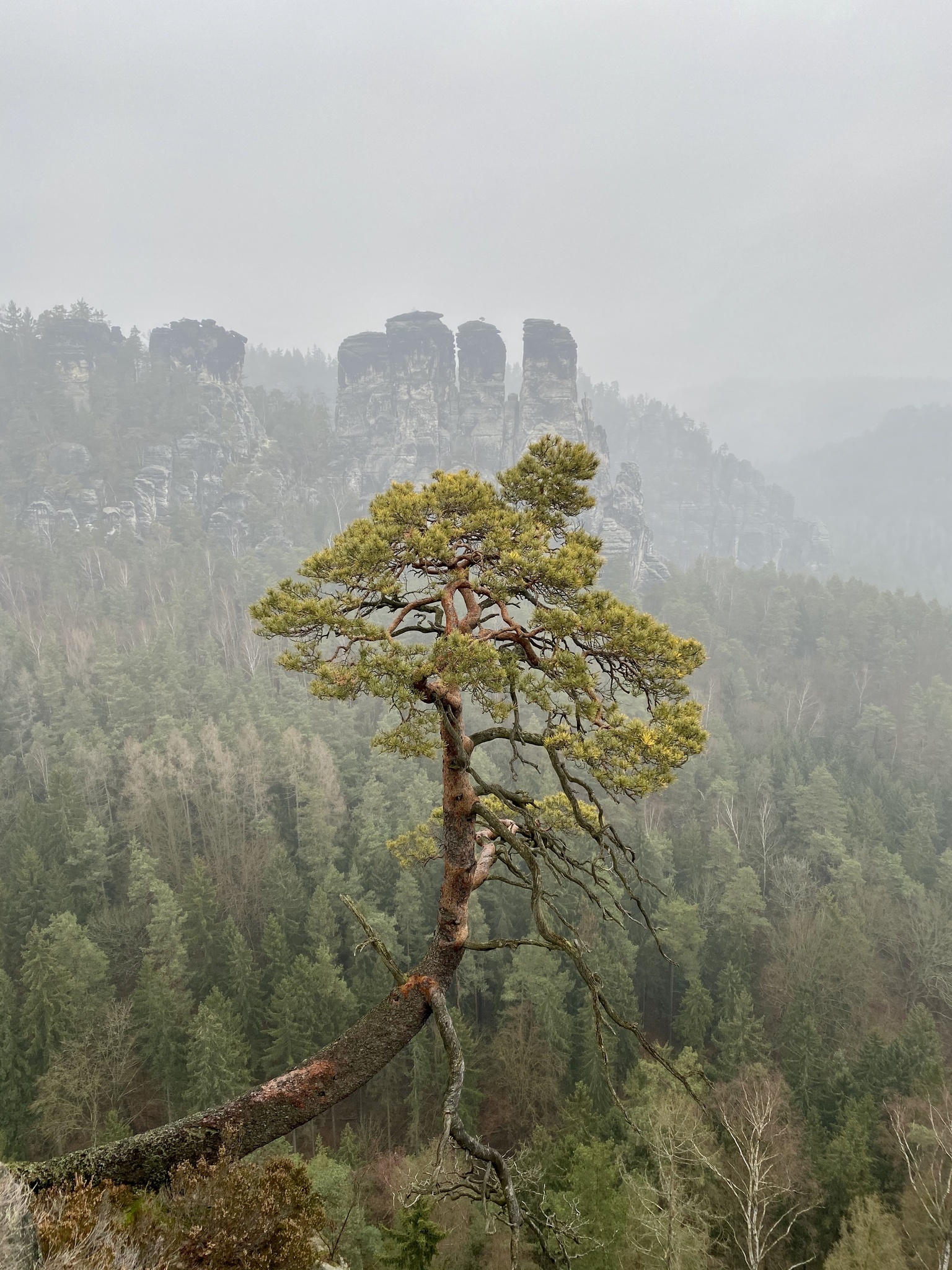
Scots Pine
Pinus sylvestris
Also known as Scotch Pine, Scotch Fir, Eurasian Red Pine
Climate Match for your location
See how well Scots Pine grows in your area.
Enter your ZIP code and we'll show you how this plant fits your local climate.
A hardy evergreen conifer with blue-green needles and reddish-brown bark, native to northern Europe and Asia. Scots pine is drought-tolerant once established and adapts well to poor soils, making it excellent for windbreaks and naturalistic landscapes.
Why grow it
Scots pine establishes faster and tolerates poorer, sandier soils more consistently than many native conifers, making it practical for stabilizing marginal ground or creating shelter in exposed sites. It matures to a more open, naturalistic form than denser alternatives like Norway spruce, offering clearer sight lines and better light penetration to understory plantings in temperate zones.
Watch out for
Young trees benefit from protection against wind rock in loose soils during their first few years, and crowns can become leggy or asymmetrical if shaded from the side once established. In areas with mild, wet winters, fungal needle cast diseases occasionally appear on stressed plants, though this is rarely severe enough to warrant intervention.
Overview
- Form
- Growth Rate
- Size
- Dormancy
- Family
- Pinaceae
Native Range
Northern Europe and Asia
Seasonality
Season of Interest
Canopy
The tallest trees that form the overstory.
Succession Role
Tolerances & Soil
Flood Tolerance
Deer Resistance
Inferred from USDA browse palatability
pH Range
Soil Texture
Establishment & Care
- Establishment
- Maintenance
- Propagation
A hardy evergreen conifer with blue-green needles and reddish-brown bark, native to northern Europe and Asia. Scots pine is drought-tolerant once established and adapts well to poor soils, making it excellent for windbreaks and naturalistic landscapes.
Climate Match for your location
See how well Scots Pine grows in your area.
Enter your ZIP code and we'll show you how this plant fits your local climate.
Why grow it
Scots pine establishes faster and tolerates poorer, sandier soils more consistently than many native conifers, making it practical for stabilizing marginal ground or creating shelter in exposed sites. It matures to a more open, naturalistic form than denser alternatives like Norway spruce, offering clearer sight lines and better light penetration to understory plantings in temperate zones.
Watch out for
Young trees benefit from protection against wind rock in loose soils during their first few years, and crowns can become leggy or asymmetrical if shaded from the side once established. In areas with mild, wet winters, fungal needle cast diseases occasionally appear on stressed plants, though this is rarely severe enough to warrant intervention.
Overview
- Form
- Growth Rate
- Size
- Dormancy
- Family
- Pinaceae
Native Range
Northern Europe and Asia
Seasonality
Season of Interest
Canopy
The tallest trees that form the overstory.
Succession Role
Tolerances & Soil
Flood Tolerance
Deer Resistance
Inferred from USDA browse palatability
pH Range
Soil Texture
Establishment & Care
- Establishment
- Maintenance
- Propagation
Similar canopy trees you might consider:
Enter your ZIP code to see top native species and strong climate fits for you.