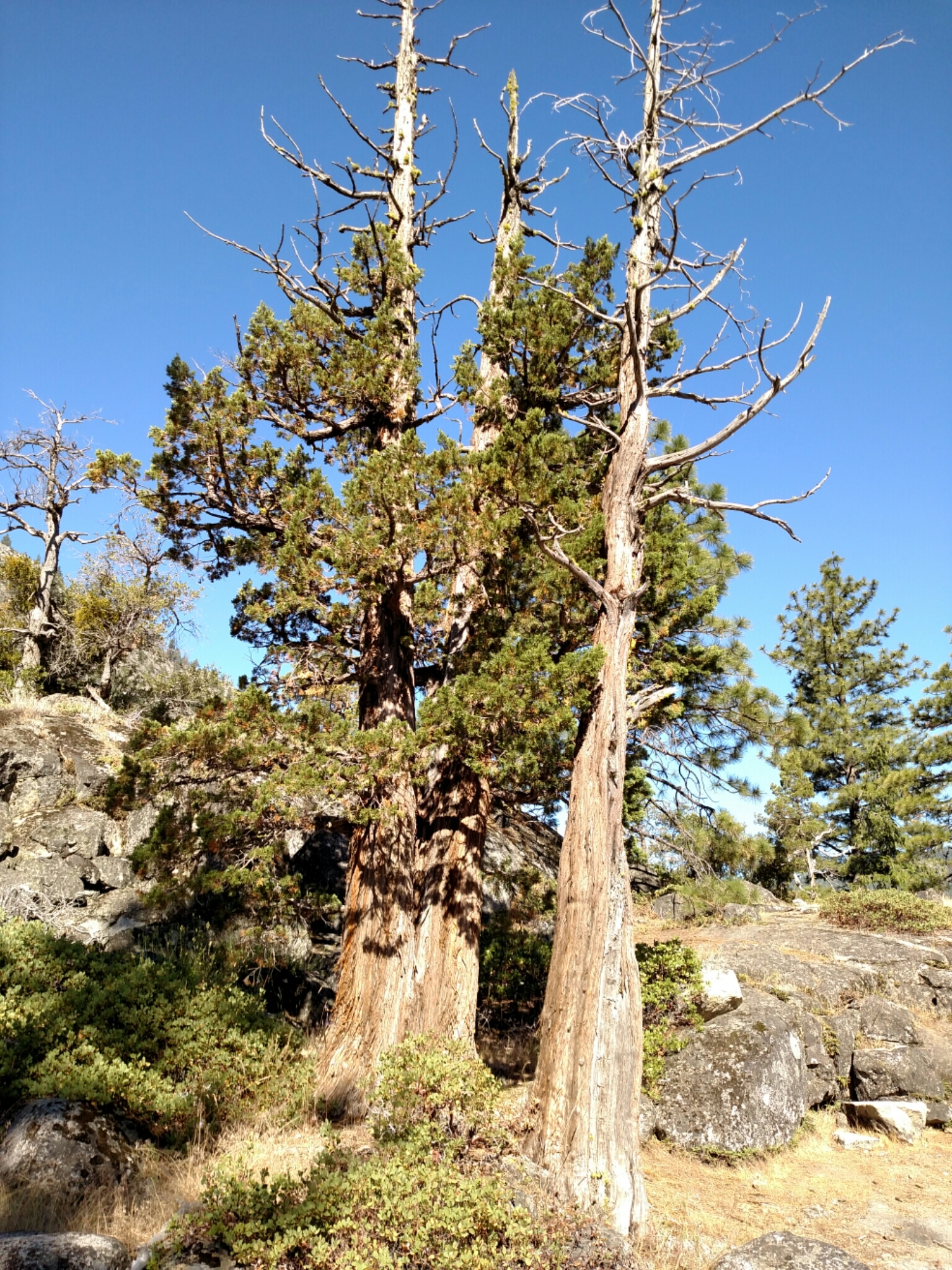
Sierra Juniper
Juniperus grandis
Also known as Grand Juniper
Climate Match for your location
See how well Sierra Juniper grows in your area.
Enter your ZIP code and we'll show you how this plant fits your local climate.
A native Sierra Nevada conifer with soft, feathery blue-green foliage that develops purplish tones in winter. Extremely drought-tolerant and cold-hardy, ideal for high-elevation gardens.
Why grow it
Sierra juniper offers a narrower, more columnar form than many native western junipers, making it useful where vertical accent is needed in drought-prone landscapes. Its cold hardiness to high elevations and minimal water requirements once established make it a lower-maintenance alternative to ornamental conifers that demand more irrigation in arid regions.
Watch out for
This species prefers well-draining soil and can struggle in poorly drained sites or areas with summer humidity. Young plants benefit from moderate water during establishment, typically one to two years, before becoming fully self-sufficient in appropriate climates.
Overview
- Form
- Growth Rate
- Size
- Dormancy
- Family
- Cupressaceae
Native to the United States
Native Range
Sierra Nevada mountains, California
Native to: California, Nevada
Seasonality
Bloom Season
Season of Interest
Canopy
The tallest trees that form the overstory.
Sub-canopy
Smaller trees living beneath the canopy.
Succession Role
Tolerances & Soil
Flood Tolerance
pH Range
Soil Texture
Establishment & Care
- Establishment
- Maintenance
- Propagation
A native Sierra Nevada conifer with soft, feathery blue-green foliage that develops purplish tones in winter. Extremely drought-tolerant and cold-hardy, ideal for high-elevation gardens.
Climate Match for your location
See how well Sierra Juniper grows in your area.
Enter your ZIP code and we'll show you how this plant fits your local climate.
Why grow it
Sierra juniper offers a narrower, more columnar form than many native western junipers, making it useful where vertical accent is needed in drought-prone landscapes. Its cold hardiness to high elevations and minimal water requirements once established make it a lower-maintenance alternative to ornamental conifers that demand more irrigation in arid regions.
Watch out for
This species prefers well-draining soil and can struggle in poorly drained sites or areas with summer humidity. Young plants benefit from moderate water during establishment, typically one to two years, before becoming fully self-sufficient in appropriate climates.
Overview
- Form
- Growth Rate
- Size
- Dormancy
- Family
- Cupressaceae
Native to the United States
Native Range
Sierra Nevada mountains, California
Native to: California, Nevada
Seasonality
Bloom Season
Season of Interest
Canopy
The tallest trees that form the overstory.
Sub-canopy
Smaller trees living beneath the canopy.
Succession Role
Tolerances & Soil
Flood Tolerance
pH Range
Soil Texture
Establishment & Care
- Establishment
- Maintenance
- Propagation
Similar sub-canopy trees you might consider:
Enter your ZIP code to see top native species and strong climate fits for you.