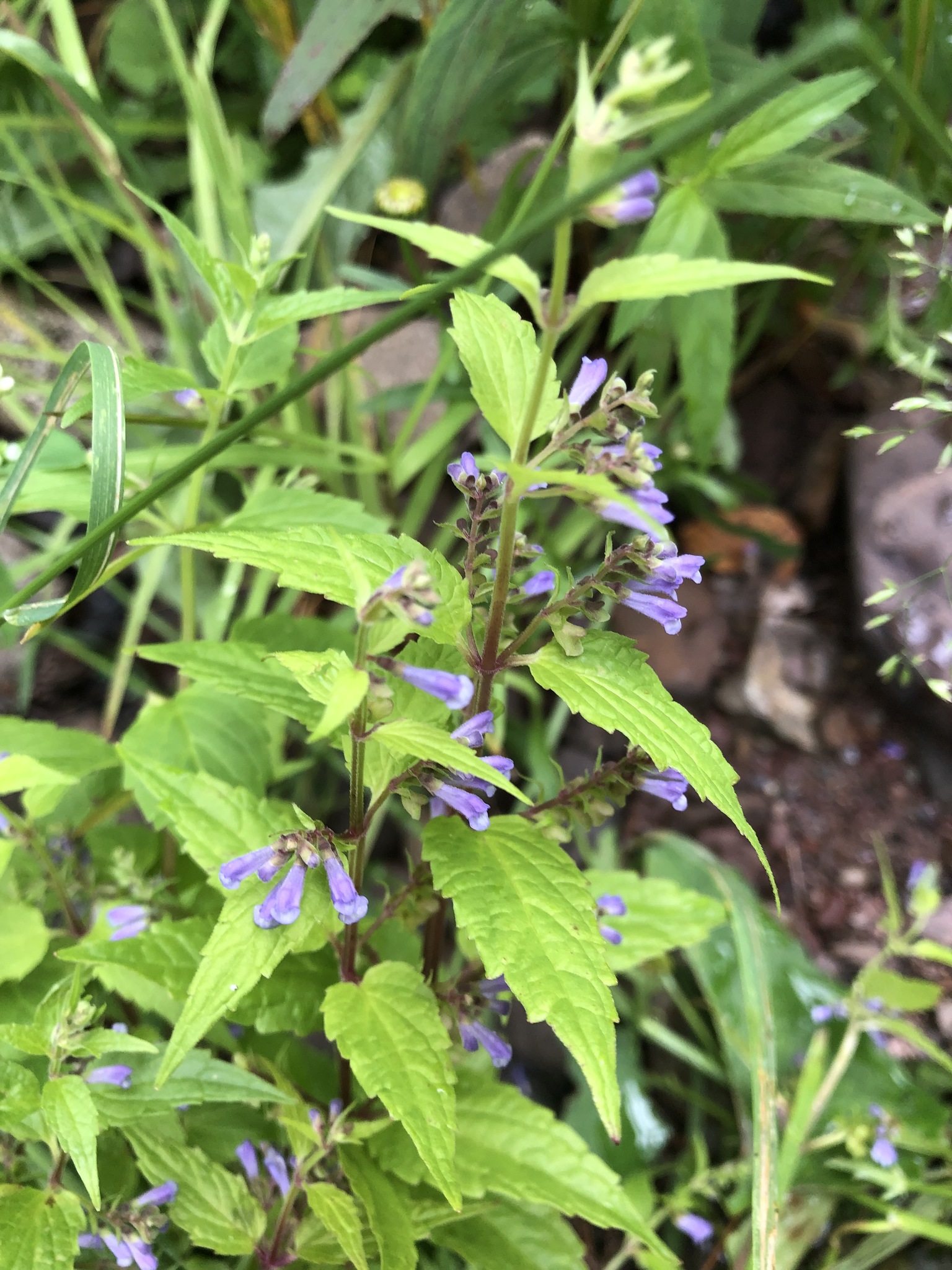
Skullcap
Scutellaria lateriflora
Also listed as Cassida lateriflora, Scutellaria polybotrya
Also known as Side-flowering Skullcap, Mad Dog Skullcap, Madweed
Climate Match for your location
See how well Skullcap grows in your area.
Enter your ZIP code and we'll show you how this plant fits your local climate.
A native North American perennial herb with delicate blue-purple flowers and a long history of use in traditional herbal medicine, particularly for nervous tension and sleep support. It grows as an upright, branching plant ideal for woodland gardens, herb gardens, and permaculture systems.
Why grow it
Skullcap offers reliable hardiness and modest size compared to other native nervine herbs, making it suitable for smaller garden spaces and woodland edges. Its preference for partial shade and moist soil distinguishes it from sun-demanding medicinal herbs, allowing integration into forest garden layers. The plant establishes readily from seed or division, providing a self-sustaining perennial option for permaculture systems focused on native species.
Watch out for
Skullcap can spread vigorously through self-seeding in ideal conditions, requiring deadheading or containment planning if you wish to limit its footprint. The plant prefers consistently moist soil and may decline or become stressed during extended drought periods without supplemental water. Flower production depends heavily on adequate light, so plants grown in deep shade may flower sparsely despite healthy vegetative growth.
Overview
- Form
- Growth Rate
- Size
- Dormancy
- Family
- Lamiaceae
Native to the United States
Native Range
Eastern North America
Native to: Alabama, Arkansas, Arizona, California, Colorado, Connecticut, District of Columbia, Delaware, Florida, Georgia, Iowa, Idaho, Illinois, Indiana, Kansas, Kentucky, Louisiana, Massachusetts, Maryland, Maine, Michigan, Minnesota, Missouri, Mississippi, North Carolina, North Dakota, Nebraska, New Hampshire, New Jersey, New Mexico, New York, Ohio, Oklahoma, Oregon, Pennsylvania, Rhode Island, South Carolina, South Dakota, Tennessee, Texas, Virginia, Vermont, Washington, Wisconsin, West Virginia
Seasonality
Bloom Season
Harvest Season
Edible Parts
Season of Interest
Herb
Soft non-woody plants of the field layer.
Succession Role
Tolerances & Soil
Establishment & Care
- Establishment
- Maintenance
- Years to Bearing
- Propagation
A native North American perennial herb with delicate blue-purple flowers and a long history of use in traditional herbal medicine, particularly for nervous tension and sleep support. It grows as an upright, branching plant ideal for woodland gardens, herb gardens, and permaculture systems.
Climate Match for your location
See how well Skullcap grows in your area.
Enter your ZIP code and we'll show you how this plant fits your local climate.
Why grow it
Skullcap offers reliable hardiness and modest size compared to other native nervine herbs, making it suitable for smaller garden spaces and woodland edges. Its preference for partial shade and moist soil distinguishes it from sun-demanding medicinal herbs, allowing integration into forest garden layers. The plant establishes readily from seed or division, providing a self-sustaining perennial option for permaculture systems focused on native species.
Watch out for
Skullcap can spread vigorously through self-seeding in ideal conditions, requiring deadheading or containment planning if you wish to limit its footprint. The plant prefers consistently moist soil and may decline or become stressed during extended drought periods without supplemental water. Flower production depends heavily on adequate light, so plants grown in deep shade may flower sparsely despite healthy vegetative growth.
Overview
- Form
- Growth Rate
- Size
- Dormancy
- Family
- Lamiaceae
Native to the United States
Native Range
Eastern North America
Native to: Alabama, Arkansas, Arizona, California, Colorado, Connecticut, District of Columbia, Delaware, Florida, Georgia, Iowa, Idaho, Illinois, Indiana, Kansas, Kentucky, Louisiana, Massachusetts, Maryland, Maine, Michigan, Minnesota, Missouri, Mississippi, North Carolina, North Dakota, Nebraska, New Hampshire, New Jersey, New Mexico, New York, Ohio, Oklahoma, Oregon, Pennsylvania, Rhode Island, South Carolina, South Dakota, Tennessee, Texas, Virginia, Vermont, Washington, Wisconsin, West Virginia
Seasonality
Bloom Season
Harvest Season
Edible Parts
Season of Interest
Herb
Soft non-woody plants of the field layer.
Succession Role
Tolerances & Soil
Establishment & Care
- Establishment
- Maintenance
- Years to Bearing
- Propagation
Similar herbs you might consider:
Enter your ZIP code to see top native species and strong climate fits for you.