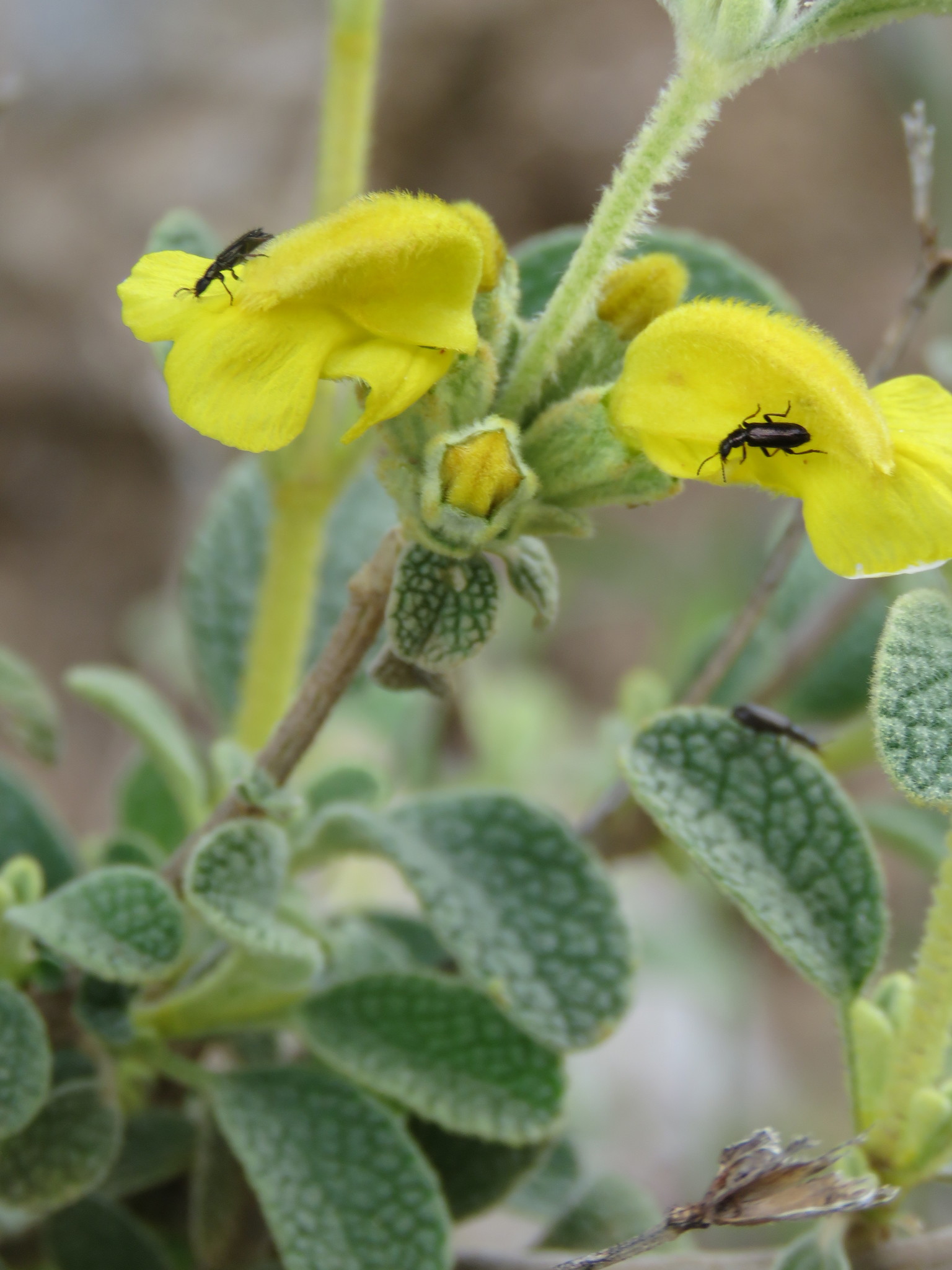
Small Jerusalem Sage
Phlomis lanata
Also listed as Phlomis microphylla, Phlomis parvifolia
Also known as Wooly Lampwick
Climate Match for your location
See how well Small Jerusalem Sage grows in your area.
Enter your ZIP code and we'll show you how this plant fits your local climate.
A compact, silvery-leaved Mediterranean shrub valued for its soft, woolly foliage and pale yellow flower spikes. Extremely drought-tolerant and low-maintenance once established, making it ideal for arid gardens and xeriscaping.
Why grow it
Phlomis lanata offers a more compact alternative to common Jerusalem sage (Phlomis fruticosa) where space is limited, while maintaining similar drought tolerance and silvery foliage. Its pale yellow flowers provide subtle color interest in xeric plantings without the visual intensity of brighter ornamentals. Like other Mediterranean salvias and artemisias, it performs reliably in poor, well-drained soils where many conventional shrubs struggle, making it useful for water-conscious landscape design.
Watch out for
Although drought-tolerant once established, young plants benefit from regular watering during their first growing season until roots develop fully. The woolly foliage, while attractive, can trap moisture in humid climates and may lead to fungal issues if air circulation is poor. Overly rich or amended soil can promote leggy growth and reduce the plant's characteristic compact habit.
Overview
- Form
- Growth Rate
- Size
- Dormancy
- Family
- Lamiaceae
Native Range
Mediterranean (Greece, Turkey)
Seasonality
Bloom Season
Season of Interest
Shrub
Woody multi-stem plants at eye level.
Succession Role
Tolerances & Soil
Establishment & Care
- Establishment
- Maintenance
- Propagation
A compact, silvery-leaved Mediterranean shrub valued for its soft, woolly foliage and pale yellow flower spikes. Extremely drought-tolerant and low-maintenance once established, making it ideal for arid gardens and xeriscaping.
Climate Match for your location
See how well Small Jerusalem Sage grows in your area.
Enter your ZIP code and we'll show you how this plant fits your local climate.
Why grow it
Phlomis lanata offers a more compact alternative to common Jerusalem sage (Phlomis fruticosa) where space is limited, while maintaining similar drought tolerance and silvery foliage. Its pale yellow flowers provide subtle color interest in xeric plantings without the visual intensity of brighter ornamentals. Like other Mediterranean salvias and artemisias, it performs reliably in poor, well-drained soils where many conventional shrubs struggle, making it useful for water-conscious landscape design.
Watch out for
Although drought-tolerant once established, young plants benefit from regular watering during their first growing season until roots develop fully. The woolly foliage, while attractive, can trap moisture in humid climates and may lead to fungal issues if air circulation is poor. Overly rich or amended soil can promote leggy growth and reduce the plant's characteristic compact habit.
Overview
- Form
- Growth Rate
- Size
- Dormancy
- Family
- Lamiaceae
Native Range
Mediterranean (Greece, Turkey)
Seasonality
Bloom Season
Season of Interest
Shrub
Woody multi-stem plants at eye level.
Succession Role
Tolerances & Soil
Establishment & Care
- Establishment
- Maintenance
- Propagation
Similar shrubs you might consider:
Enter your ZIP code to see top native species and strong climate fits for you.