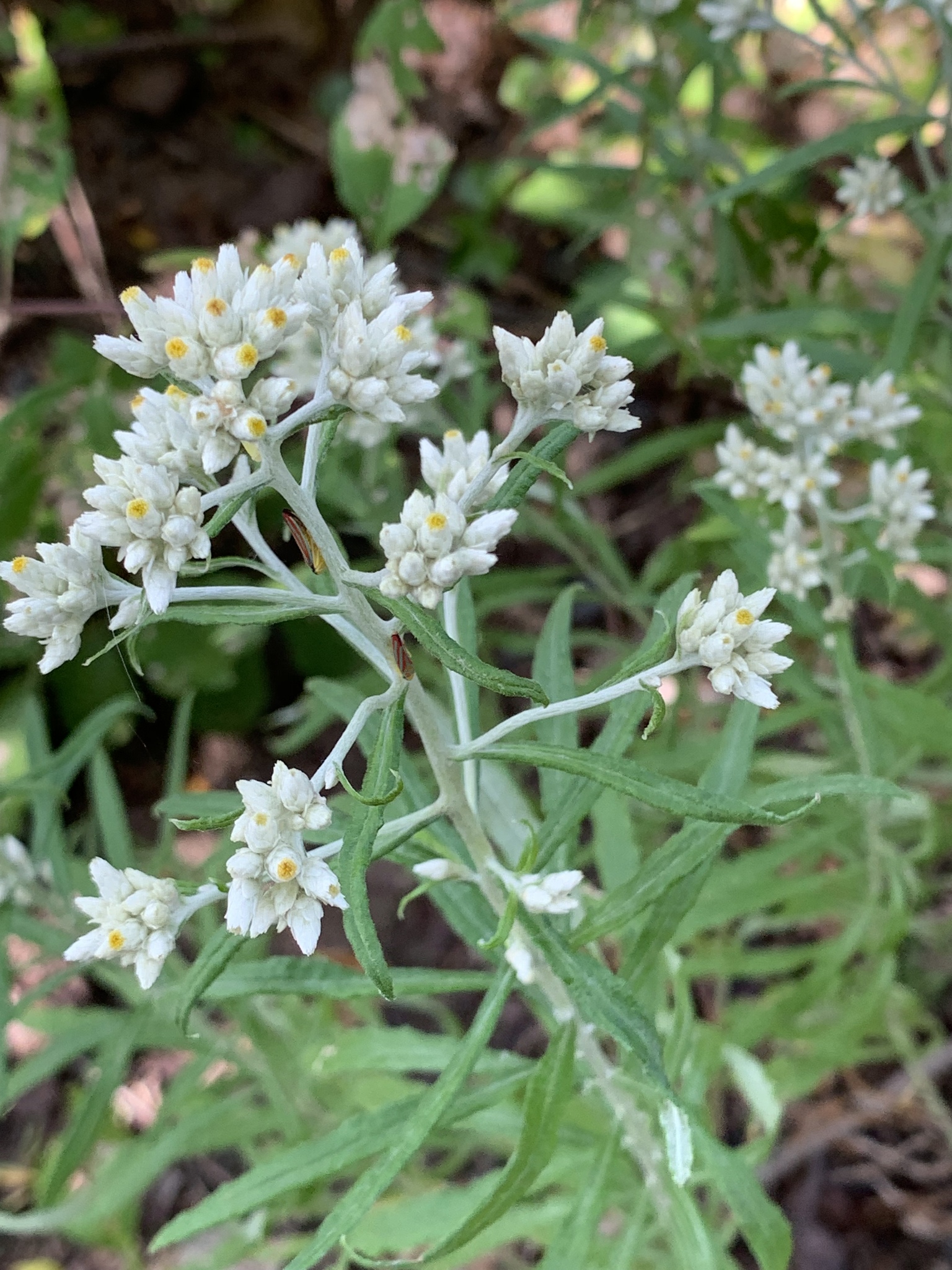
Sweet Everlasting
Pseudognaphalium obtusifolium
Also listed as Gnaphalium conoideum, Gnaphalium obtusifolium
Also known as Rabbit Tobacco, Fragrant Everlasting, Fragrant Cudweed
Climate Match for your location
See how well Sweet Everlasting grows in your area.
Enter your ZIP code and we'll show you how this plant fits your local climate.
Sweet everlasting is a native wildflower with small, papery white or pale pink flowers that bloom in late summer and are prized for dried arrangements. It thrives in poor, dry soils and requires minimal maintenance once established.
Why grow it
Sweet everlasting distinguishes itself among native wildflowers through exceptional drought tolerance and minimal soil fertility requirements, making it useful for stabilizing poor or degraded sites where many ornamentals struggle. Unlike some everlastings that require deadheading to prevent unwanted self-seeding, this species is generally well-behaved in established plantings. Its papery flowers retain color and structure through winter, offering extended visual interest compared to species that deteriorate quickly after frost.
Watch out for
In regions with high humidity, the plant may experience fungal issues if air circulation is poor, so spacing and site selection matter more than in arid climates. Container-grown specimens sometimes struggle with the transition to field conditions if they have been kept consistently moist in nursery conditions, requiring an adjustment period in dry soils.
Overview
- Form
- Growth Rate
- Size
- Dormancy
- Family
- Asteraceae
Native to the United States
Native Range
Eastern North America
Native to: Alabama, Arkansas, Connecticut, Delaware, Florida, Georgia, Iowa, Illinois, Indiana, Kansas, Kentucky, Louisiana, Massachusetts, Maryland, Maine, Michigan, Minnesota, Missouri, Mississippi, North Carolina, Nebraska, New Hampshire, New Jersey, New York, Ohio, Oklahoma, Pennsylvania, Rhode Island, South Carolina, Tennessee, Texas, Virginia, Vermont, Wisconsin, West Virginia
Seasonality
Bloom Season
Harvest Season
Edible Parts
Season of Interest
Herb
Soft non-woody plants of the field layer.
Succession Role
Tolerances & Soil
Establishment & Care
- Establishment
- Maintenance
- Propagation
Sweet everlasting is a native wildflower with small, papery white or pale pink flowers that bloom in late summer and are prized for dried arrangements. It thrives in poor, dry soils and requires minimal maintenance once established.
Climate Match for your location
See how well Sweet Everlasting grows in your area.
Enter your ZIP code and we'll show you how this plant fits your local climate.
Why grow it
Sweet everlasting distinguishes itself among native wildflowers through exceptional drought tolerance and minimal soil fertility requirements, making it useful for stabilizing poor or degraded sites where many ornamentals struggle. Unlike some everlastings that require deadheading to prevent unwanted self-seeding, this species is generally well-behaved in established plantings. Its papery flowers retain color and structure through winter, offering extended visual interest compared to species that deteriorate quickly after frost.
Watch out for
In regions with high humidity, the plant may experience fungal issues if air circulation is poor, so spacing and site selection matter more than in arid climates. Container-grown specimens sometimes struggle with the transition to field conditions if they have been kept consistently moist in nursery conditions, requiring an adjustment period in dry soils.
Overview
- Form
- Growth Rate
- Size
- Dormancy
- Family
- Asteraceae
Native to the United States
Native Range
Eastern North America
Native to: Alabama, Arkansas, Connecticut, Delaware, Florida, Georgia, Iowa, Illinois, Indiana, Kansas, Kentucky, Louisiana, Massachusetts, Maryland, Maine, Michigan, Minnesota, Missouri, Mississippi, North Carolina, Nebraska, New Hampshire, New Jersey, New York, Ohio, Oklahoma, Pennsylvania, Rhode Island, South Carolina, Tennessee, Texas, Virginia, Vermont, Wisconsin, West Virginia
Seasonality
Bloom Season
Harvest Season
Edible Parts
Season of Interest
Herb
Soft non-woody plants of the field layer.
Succession Role
Tolerances & Soil
Establishment & Care
- Establishment
- Maintenance
- Propagation
Similar herbs you might consider:
Enter your ZIP code to see top native species and strong climate fits for you.