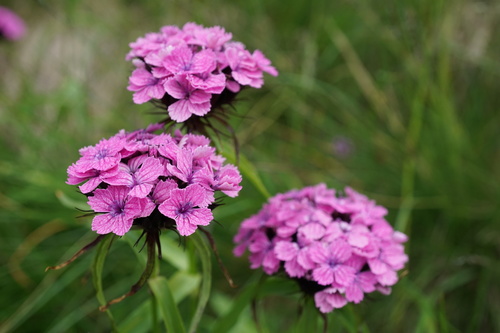
Sweet-William
Dianthus barbatus
Climate Match for your location
See how well Sweet-William grows in your area.
Enter your ZIP code and we'll show you how this plant fits your local climate.
Sweet-William produces dense clusters of fragrant, colorful flowers in shades of red, pink, white, and bicolor combinations. This classic cottage garden flower attracts pollinators and makes an excellent cut flower.
Overview
- Form
- Growth Rate
- Size
- Dormancy
- Family
Native Range
Southern Europe
Seasonality
Bloom Season
Harvest Season
Season of Interest
Herb
Soft non-woody plants of the field layer.
Succession Role
Tolerances & Soil
Function & Care
Edible Parts
Establishment & Care
- Establishment
- Maintenance
- Propagation
Sweet-William produces dense clusters of fragrant, colorful flowers in shades of red, pink, white, and bicolor combinations. This classic cottage garden flower attracts pollinators and makes an excellent cut flower.
Climate Match for your location
See how well Sweet-William grows in your area.
Enter your ZIP code and we'll show you how this plant fits your local climate.
Overview
- Form
- Growth Rate
- Size
- Dormancy
- Family
Native Range
Southern Europe
Seasonality
Bloom Season
Harvest Season
Season of Interest
Herb
Soft non-woody plants of the field layer.
Succession Role
Tolerances & Soil
Function & Care
Edible Parts
Establishment & Care
- Establishment
- Maintenance
- Propagation