Tea
Camellia sinensis
Climate Match for your location
See how well Tea grows in your area.
Enter your ZIP code and we'll show you how this plant fits your local climate.
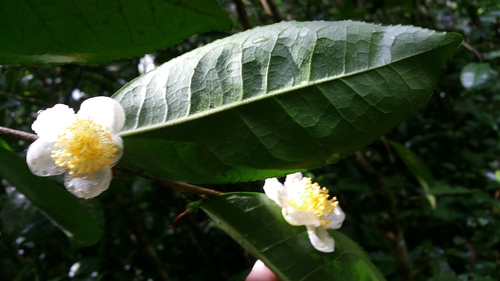
An evergreen shrub cultivated for centuries for its leaves, which are processed into tea. Produces small white flowers in autumn and prefers cool, humid climates with consistent moisture.
Overview
- Form
- Growth Rate
- Size
- Dormancy
- Family
Native Range
East and Southeast Asia (China, Japan, Northeast India)
Seasonality
Bloom Season
Harvest Season
Season of Interest
Notable Cultivars
Assamica and Sinensis are the two main botanical varieties; Assamica (grown in India and Africa) is larger-leafed and robust, while Sinensis (grown in China and Japan) is smaller and produces more delicate, nuanced teas.
Shrub
Woody multi-stem plants at eye level.
Succession Role
Tolerances & Soil
Function & Care
Edible Parts
Establishment & Care
- Establishment
- Maintenance
- Years to Bearing
- Propagation
An evergreen shrub cultivated for centuries for its leaves, which are processed into tea. Produces small white flowers in autumn and prefers cool, humid climates with consistent moisture.
Climate Match for your location
See how well Tea grows in your area.
Enter your ZIP code and we'll show you how this plant fits your local climate.
Overview
- Form
- Growth Rate
- Size
- Dormancy
- Family
Native Range
East and Southeast Asia (China, Japan, Northeast India)
Seasonality
Bloom Season
Harvest Season
Season of Interest
Shrub
Woody multi-stem plants at eye level.
Succession Role
Tolerances & Soil
Function & Care
Edible Parts
Establishment & Care
- Establishment
- Maintenance
- Years to Bearing
- Propagation
Companion Planting
Plants well with
Notable Cultivars
Assamica and Sinensis are the two main botanical varieties; Assamica (grown in India and Africa) is larger-leafed and robust, while Sinensis (grown in China and Japan) is smaller and produces more delicate, nuanced teas.