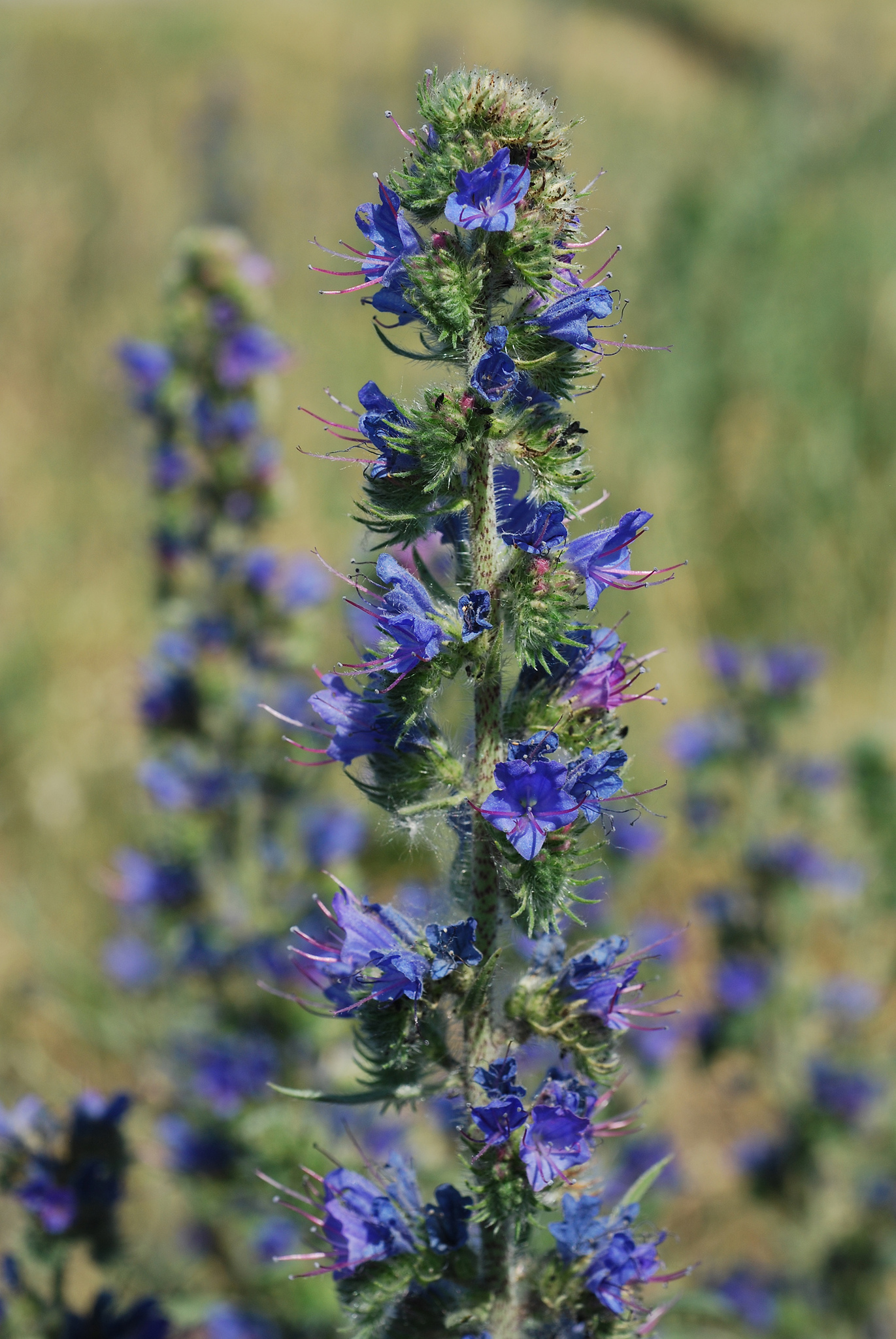
Viper's-bugloss
Echium vulgare
Also known as Common Viper's Bugloss, Blueweed, Blue-devil
Climate Match for your location
See how well Viper's-bugloss grows in your area.
Enter your ZIP code and we'll show you how this plant fits your local climate.
A showy biennial or short-lived perennial with bristly stems and vibrant blue, purple, pink, or white flowers that attract pollinators. Thrives in dry, rocky sites and self-seeds readily.
Why grow it
Viper's-bugloss is notably drought-tolerant once established and requires minimal soil preparation compared to many ornamental wildflowers, making it useful for low-input permaculture systems on marginal land. It provides reliable early-season nectar and pollen for a broad range of pollinators, including native bees and hoverflies. The bristly foliage and upright growth habit offer textural contrast in mixed perennial plantings without competing heavily for water or nutrients.
Watch out for
Viper's-bugloss can be slow to establish in the first year, so consistent moisture during the growing season helps seedlings develop stronger root systems. The bristly hairs on stems and leaves may irritate sensitive skin during handling, so gloves are recommended for prolonged contact. In areas with cool, wet summers, fungal diseases like powdery mildew may develop if air circulation is poor, so avoid crowding plants.
Overview
- Form
- Growth Rate
- Size
- Dormancy
- Family
- Boraginaceae
Native Range
Mediterranean and Central Asia
Seasonality
Bloom Season
Season of Interest
Herb
Soft non-woody plants of the field layer.
Succession Role
Tolerances & Soil
Establishment & Care
- Establishment
- Maintenance
- Propagation
A showy biennial or short-lived perennial with bristly stems and vibrant blue, purple, pink, or white flowers that attract pollinators. Thrives in dry, rocky sites and self-seeds readily.
Climate Match for your location
See how well Viper's-bugloss grows in your area.
Enter your ZIP code and we'll show you how this plant fits your local climate.
Why grow it
Viper's-bugloss is notably drought-tolerant once established and requires minimal soil preparation compared to many ornamental wildflowers, making it useful for low-input permaculture systems on marginal land. It provides reliable early-season nectar and pollen for a broad range of pollinators, including native bees and hoverflies. The bristly foliage and upright growth habit offer textural contrast in mixed perennial plantings without competing heavily for water or nutrients.
Watch out for
Viper's-bugloss can be slow to establish in the first year, so consistent moisture during the growing season helps seedlings develop stronger root systems. The bristly hairs on stems and leaves may irritate sensitive skin during handling, so gloves are recommended for prolonged contact. In areas with cool, wet summers, fungal diseases like powdery mildew may develop if air circulation is poor, so avoid crowding plants.
Overview
- Form
- Growth Rate
- Size
- Dormancy
- Family
- Boraginaceae
Native Range
Mediterranean and Central Asia
Seasonality
Bloom Season
Season of Interest
Herb
Soft non-woody plants of the field layer.
Succession Role
Tolerances & Soil
Establishment & Care
- Establishment
- Maintenance
- Propagation
Similar herbs you might consider:
Enter your ZIP code to see top native species and strong climate fits for you.