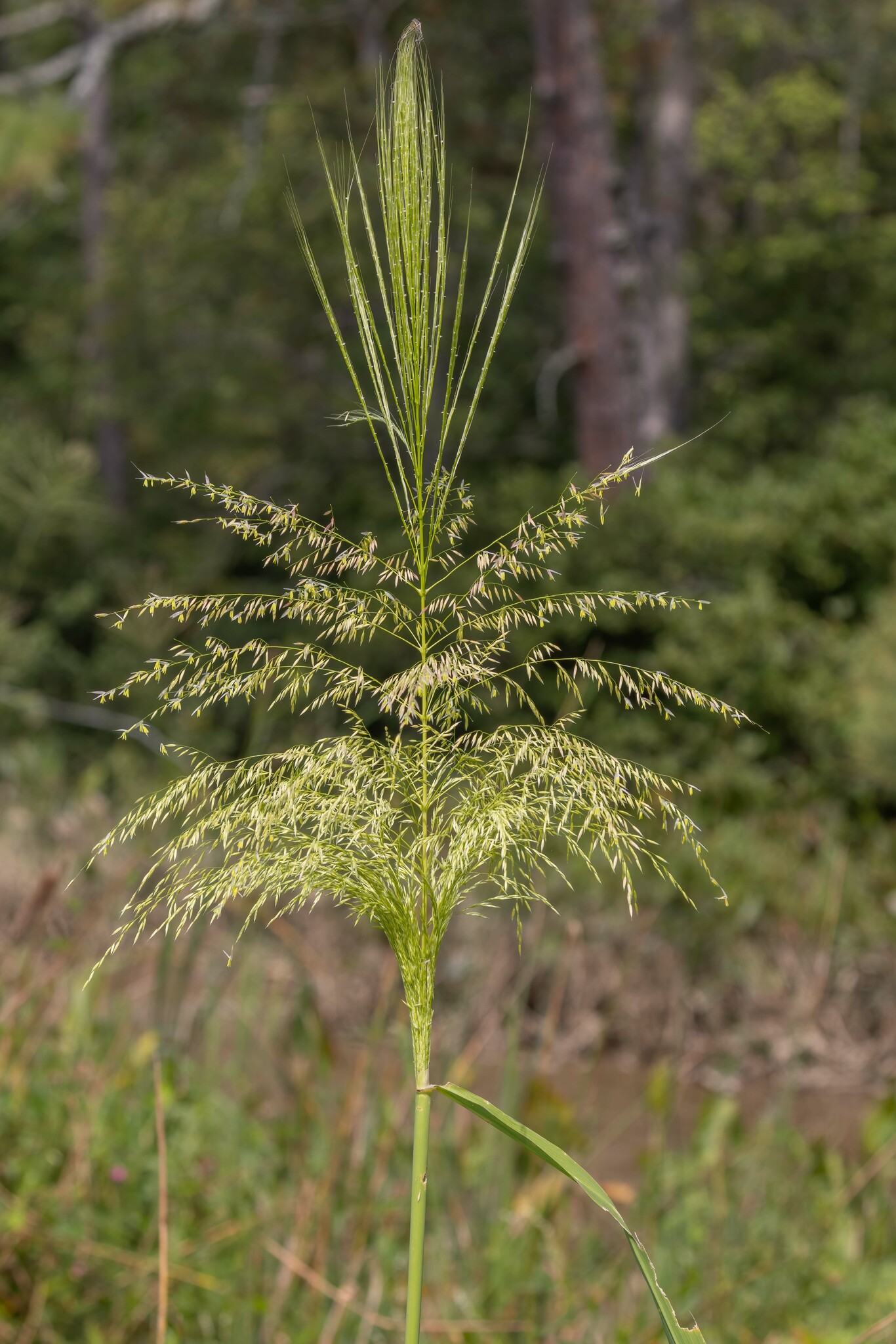
Wild Rice
Zizania aquatica
Also listed as Ceratochaete aquatica
Also known as Annual Wild Rice, Eastern Wildrice, Southern Wildrice
Climate Match for your location
See how well Wild Rice grows in your area.
Enter your ZIP code and we'll show you how this plant fits your local climate.
Wild rice is a tall native aquatic grass that grows in shallow wetlands and produces edible grains prized for their nutritional value and nutty flavor. It is an excellent choice for rain gardens, ponds, and wetland restoration projects.
Why grow it
Wild rice fills an ecological niche in shallow freshwater wetlands where few other food crops can establish, making it valuable for integrated water management and habitat restoration. Compared to cultivated rice varieties, it tolerates cooler climates and fluctuating water levels typical of natural wetlands, though harvest yields are generally lower and more variable. Its value lies primarily in supporting wildlife populations and watershed function rather than as a primary grain staple.
Watch out for
Wild rice establishment can be slow and unpredictable, often requiring multiple growing seasons to develop stable stands. Water depth management is critical; both excessive fluctuation and stagnant conditions can inhibit growth or encourage competing vegetation. Some regional populations have specific cold-stratification requirements that may not be met in warmer climates, resulting in poor germination.
Overview
- Form
- Growth Rate
- Size
- Dormancy
- Family
- Poaceae
Native to the United States
Native Range
North America, particularly Great Lakes and northern regions
Native to: Alabama, Connecticut, District of Columbia, Delaware, Florida, Georgia, Iowa, Illinois, Indiana, Louisiana, Massachusetts, Maryland, Maine, Michigan, Minnesota, Mississippi, North Carolina, New Hampshire, New Jersey, New York, Ohio, Pennsylvania, Rhode Island, South Carolina, Virginia, Vermont, Wisconsin
Seasonality
Harvest Season
Edible Parts
Season of Interest
Notable Cultivars
Northern and Southern cultivars are available, selected for adaptation to their respective climate zones; seed strains are typically regionally sourced rather than named cultivars.
Herb
Soft non-woody plants of the field layer.
Succession Role
Tolerances & Soil
Flood Tolerance
Deer Resistance
Inferred from USDA browse palatability
pH Range
Soil Texture
Establishment & Care
- Establishment
- Maintenance
- Years to Bearing
- Propagation
Wild rice is a tall native aquatic grass that grows in shallow wetlands and produces edible grains prized for their nutritional value and nutty flavor. It is an excellent choice for rain gardens, ponds, and wetland restoration projects.
Climate Match for your location
See how well Wild Rice grows in your area.
Enter your ZIP code and we'll show you how this plant fits your local climate.
Why grow it
Wild rice fills an ecological niche in shallow freshwater wetlands where few other food crops can establish, making it valuable for integrated water management and habitat restoration. Compared to cultivated rice varieties, it tolerates cooler climates and fluctuating water levels typical of natural wetlands, though harvest yields are generally lower and more variable. Its value lies primarily in supporting wildlife populations and watershed function rather than as a primary grain staple.
Watch out for
Wild rice establishment can be slow and unpredictable, often requiring multiple growing seasons to develop stable stands. Water depth management is critical; both excessive fluctuation and stagnant conditions can inhibit growth or encourage competing vegetation. Some regional populations have specific cold-stratification requirements that may not be met in warmer climates, resulting in poor germination.
Overview
- Form
- Growth Rate
- Size
- Dormancy
- Family
- Poaceae
Native to the United States
Native Range
North America, particularly Great Lakes and northern regions
Native to: Alabama, Connecticut, District of Columbia, Delaware, Florida, Georgia, Iowa, Illinois, Indiana, Louisiana, Massachusetts, Maryland, Maine, Michigan, Minnesota, Mississippi, North Carolina, New Hampshire, New Jersey, New York, Ohio, Pennsylvania, Rhode Island, South Carolina, Virginia, Vermont, Wisconsin
Seasonality
Harvest Season
Edible Parts
Season of Interest
Herb
Soft non-woody plants of the field layer.
Succession Role
Tolerances & Soil
Flood Tolerance
Deer Resistance
Inferred from USDA browse palatability
pH Range
Soil Texture
Establishment & Care
- Establishment
- Maintenance
- Years to Bearing
- Propagation
Similar herbs you might consider:
Enter your ZIP code to see top native species and strong climate fits for you.
Companion Planting
Plants well with
Notable Cultivars
Northern and Southern cultivars are available, selected for adaptation to their respective climate zones; seed strains are typically regionally sourced rather than named cultivars.