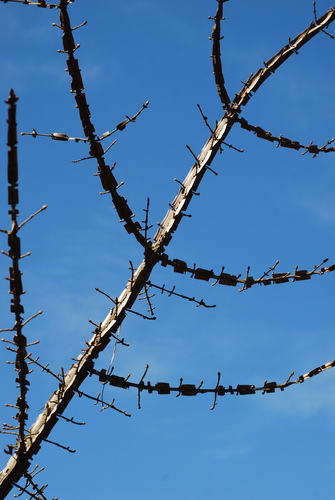
Winged Euonymus
Euonymus alatus
Also listed as Celastrus alatus, Euonymus sacrosanctus
Also known as Burning Bush, Winged Burning Bush, Winged Spindletree
Climate Match for your location
See how well Winged Euonymus grows in your area.
Enter your ZIP code and we'll show you how this plant fits your local climate.
A deciduous shrub prized for its brilliant red-purple fall foliage and distinctive corky winged branches. Its compact, rounded form and easy care make it a popular ornamental for landscapes.
Why grow it
Winged euonymus offers reliable fall color and architectural interest through its distinctive corky branch wings, which remain visible after leaf drop. Among deciduous ornamental shrubs, it tolerates a broad range of soil conditions and requires minimal pruning or pest management once established. Its compact mature size makes it suitable for smaller landscapes where larger shrubs would overwhelm the space.
Watch out for
This shrub can spread vigorously by seed in favorable conditions, so monitor for volunteer seedlings in nearby garden beds and natural areas. Some cultivars may sucker from the base if damaged, requiring patience or repeated removal if this growth pattern is undesirable in your planting scheme.
Overview
- Form
- Growth Rate
- Size
- Dormancy
- Family
- Celastraceae
Native Range
Eastern Asia
Seasonality
Season of Interest
Shrub
Woody multi-stem plants at eye level.
Succession Role
Tolerances & Soil
Flood Tolerance
Deer Resistance
Inferred from USDA browse palatability
pH Range
Soil Texture
Establishment & Care
- Establishment
- Maintenance
- Propagation
A deciduous shrub prized for its brilliant red-purple fall foliage and distinctive corky winged branches. Its compact, rounded form and easy care make it a popular ornamental for landscapes.
Climate Match for your location
See how well Winged Euonymus grows in your area.
Enter your ZIP code and we'll show you how this plant fits your local climate.
Why grow it
Winged euonymus offers reliable fall color and architectural interest through its distinctive corky branch wings, which remain visible after leaf drop. Among deciduous ornamental shrubs, it tolerates a broad range of soil conditions and requires minimal pruning or pest management once established. Its compact mature size makes it suitable for smaller landscapes where larger shrubs would overwhelm the space.
Watch out for
This shrub can spread vigorously by seed in favorable conditions, so monitor for volunteer seedlings in nearby garden beds and natural areas. Some cultivars may sucker from the base if damaged, requiring patience or repeated removal if this growth pattern is undesirable in your planting scheme.
Overview
- Form
- Growth Rate
- Size
- Dormancy
- Family
- Celastraceae
Native Range
Eastern Asia
Seasonality
Season of Interest
Shrub
Woody multi-stem plants at eye level.
Succession Role
Tolerances & Soil
Flood Tolerance
Deer Resistance
Inferred from USDA browse palatability
pH Range
Soil Texture
Establishment & Care
- Establishment
- Maintenance
- Propagation
Similar shrubs you might consider:
Enter your ZIP code to see top native species and strong climate fits for you.