Yarrow
Achillea millefolium
Also listed as Achillea dentifera, Alitubus millefolium
Also known as Common Yarrow, Milfoil, Bloodwort
Climate Match for your location
See how well Yarrow grows in your area.
Enter your ZIP code and we'll show you how this plant fits your local climate.
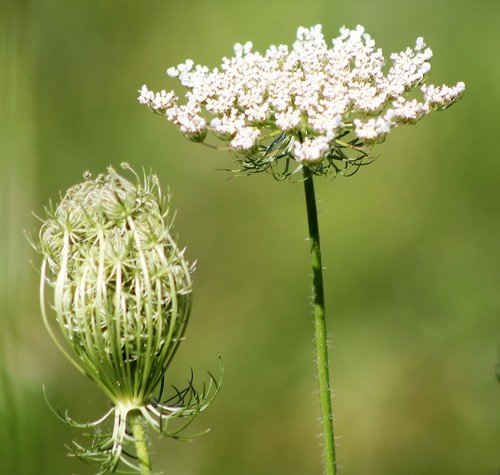
Yarrow is a hardy perennial with feathery, finely divided foliage and dense, flat-topped flower clusters in shades of pink, red, yellow, or white. It thrives in lean, dry conditions and attracts butterflies and pollinators.
Why grow it
Yarrow establishes readily in poor, well-draining soils where many ornamentals struggle, making it useful for erosion control and naturalized plantings. Compared to other pollinator-attracting perennials, it requires minimal fertility and water once established, reducing management inputs. The flat flower clusters appeal to a broader range of beneficial insects than clustered or tubular flowers, and the foliage remains attractive even when not in bloom.
Watch out for
Yarrow spreads vigorously by seed and rhizomes in ideal conditions; deadheading spent flowers or containing plants in garden beds helps manage spread. Some cultivars may self-seed prolifically; select named varieties if you prefer more predictable spacing. In very humid climates, powdery mildew can affect foliage, particularly on plants in poor air circulation.
Overview
- Form
- Growth Rate
- Size
- Dormancy
- Family
- Asteraceae
Native to the United States
Native Range
Circumboreal, native across most of temperate Eurasia and North America per USDA PLANTS distribution data, which does not separate the native and introduced North American populations.
Native to: Alaska, Alabama, Arkansas, Arizona, California, Colorado, Connecticut, District of Columbia, Delaware, Florida, Georgia, Iowa, Idaho, Illinois, Indiana, Kansas, Kentucky, Louisiana, Massachusetts, Maryland, Maine, Michigan, Minnesota, Missouri, Mississippi, Montana, North Carolina, North Dakota, Nebraska, New Hampshire, New Jersey, New Mexico, Nevada, New York, Ohio, Oklahoma, Oregon, Pennsylvania, Rhode Island, South Carolina, South Dakota, Tennessee, Texas, Utah, Virginia, Vermont, Washington, Wisconsin, West Virginia, Wyoming
Seasonality
Bloom Season
Harvest Season
Edible Parts
Season of Interest
Notable Cultivars
Popular cultivars include 'Moonshine' (pale yellow flowers), 'Paprika' (deep red), and 'Summer Pastels' (mixed soft colors). These are bred for extended bloom and compact growth.
Herb
Soft non-woody plants of the field layer.
Succession Role
Tolerances & Soil
Flood Tolerance
Deer Resistance
Inferred from USDA browse palatability
pH Range
Soil Texture
Establishment & Care
- Establishment
- Maintenance
- Propagation
Yarrow is a hardy perennial with feathery, finely divided foliage and dense, flat-topped flower clusters in shades of pink, red, yellow, or white. It thrives in lean, dry conditions and attracts butterflies and pollinators.
Climate Match for your location
See how well Yarrow grows in your area.
Enter your ZIP code and we'll show you how this plant fits your local climate.
Why grow it
Yarrow establishes readily in poor, well-draining soils where many ornamentals struggle, making it useful for erosion control and naturalized plantings. Compared to other pollinator-attracting perennials, it requires minimal fertility and water once established, reducing management inputs. The flat flower clusters appeal to a broader range of beneficial insects than clustered or tubular flowers, and the foliage remains attractive even when not in bloom.
Watch out for
Yarrow spreads vigorously by seed and rhizomes in ideal conditions; deadheading spent flowers or containing plants in garden beds helps manage spread. Some cultivars may self-seed prolifically; select named varieties if you prefer more predictable spacing. In very humid climates, powdery mildew can affect foliage, particularly on plants in poor air circulation.
Overview
- Form
- Growth Rate
- Size
- Dormancy
- Family
- Asteraceae
Native to the United States
Native Range
Circumboreal, native across most of temperate Eurasia and North America per USDA PLANTS distribution data, which does not separate the native and introduced North American populations.
Native to: Alaska, Alabama, Arkansas, Arizona, California, Colorado, Connecticut, District of Columbia, Delaware, Florida, Georgia, Iowa, Idaho, Illinois, Indiana, Kansas, Kentucky, Louisiana, Massachusetts, Maryland, Maine, Michigan, Minnesota, Missouri, Mississippi, Montana, North Carolina, North Dakota, Nebraska, New Hampshire, New Jersey, New Mexico, Nevada, New York, Ohio, Oklahoma, Oregon, Pennsylvania, Rhode Island, South Carolina, South Dakota, Tennessee, Texas, Utah, Virginia, Vermont, Washington, Wisconsin, West Virginia, Wyoming
Seasonality
Bloom Season
Harvest Season
Edible Parts
Season of Interest
Herb
Soft non-woody plants of the field layer.
Succession Role
Tolerances & Soil
Flood Tolerance
Deer Resistance
Inferred from USDA browse palatability
pH Range
Soil Texture
Establishment & Care
- Establishment
- Maintenance
- Propagation
Similar herbs you might consider:
Enter your ZIP code to see top native species and strong climate fits for you.
Companion Planting
Plants well with
8

Avoid near
Notable Cultivars
Popular cultivars include 'Moonshine' (pale yellow flowers), 'Paprika' (deep red), and 'Summer Pastels' (mixed soft colors). These are bred for extended bloom and compact growth.