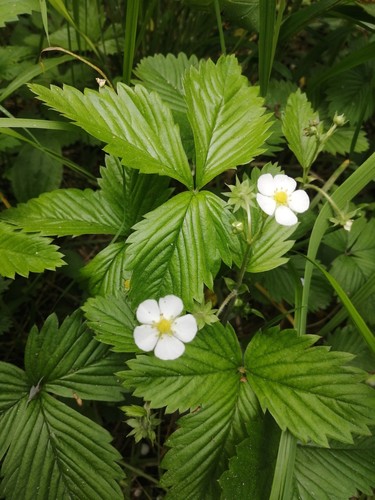
Blackberry
Rubus fruticosus
Also listed as Rubus dumosus, Rubus maximus
Also known as Bramble Blackberry, Shrubby Blackberry, Bramble
Climate Match for your location
See how well Blackberry grows in your area.
Enter your ZIP code and we'll show you how this plant fits your local climate.
A vigorous thorny shrub producing delicious black berries in summer, highly productive and often naturalized in disturbed areas. Excellent for food production, wildlife habitat, and erosion control in permaculture systems.
Why grow it
Blackberry produces reliable yields with minimal inputs once established, making it practical for food production in permaculture systems. It tolerates poor soils and disturbed sites better than many fruit-bearing shrubs, and establishes quickly. Compared to cultivated raspberry or other Rubus species, blackberry typically requires less pruning and management while offering comparable nutritional value, though thorniness is a trade-off for vigor.
Watch out for
Canes become woody and increasingly difficult to manage in older plantings, requiring periodic cutting back to maintain productivity and access. Dense thickets can shade out nearby plantings if not managed with deliberate spacing or pruning. Hand-harvesting can be tedious due to thorns, and the plants spread vegetatively through root fragments when soil is disturbed, so site placement matters for long-term garden layout.
Overview
- Form
- Growth Rate
- Size
- Dormancy
- Family
- Rosaceae
Native Range
Europe, western Asia, and North Africa
Seasonality
Bloom Season
Harvest Season
Edible Parts
Season of Interest
Shrub
Woody multi-stem plants at eye level.
Succession Role
Tolerances & Soil
Establishment & Care
- Establishment
- Maintenance
- Years to Bearing
- Propagation
A vigorous thorny shrub producing delicious black berries in summer, highly productive and often naturalized in disturbed areas. Excellent for food production, wildlife habitat, and erosion control in permaculture systems.
Climate Match for your location
See how well Blackberry grows in your area.
Enter your ZIP code and we'll show you how this plant fits your local climate.
Why grow it
Blackberry produces reliable yields with minimal inputs once established, making it practical for food production in permaculture systems. It tolerates poor soils and disturbed sites better than many fruit-bearing shrubs, and establishes quickly. Compared to cultivated raspberry or other Rubus species, blackberry typically requires less pruning and management while offering comparable nutritional value, though thorniness is a trade-off for vigor.
Watch out for
Canes become woody and increasingly difficult to manage in older plantings, requiring periodic cutting back to maintain productivity and access. Dense thickets can shade out nearby plantings if not managed with deliberate spacing or pruning. Hand-harvesting can be tedious due to thorns, and the plants spread vegetatively through root fragments when soil is disturbed, so site placement matters for long-term garden layout.
Overview
- Form
- Growth Rate
- Size
- Dormancy
- Family
- Rosaceae
Native Range
Europe, western Asia, and North Africa
Seasonality
Bloom Season
Harvest Season
Edible Parts
Season of Interest
Shrub
Woody multi-stem plants at eye level.
Succession Role
Tolerances & Soil
Establishment & Care
- Establishment
- Maintenance
- Years to Bearing
- Propagation
Similar shrubs you might consider:
Enter your ZIP code to see top native species and strong climate fits for you.