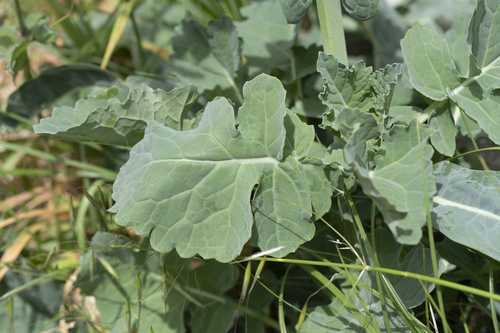
Canadian Meadow Garlic
Allium canadense
Also listed as Kalabotis canadensis
Also known as Canadian Garlic, Meadow Garlic, Wild Garlic
Climate Match for your location
See how well Canadian Meadow Garlic grows in your area.
Enter your ZIP code and we'll show you how this plant fits your local climate.
A native North American wildflower with delicate pink or white flowers and edible bulbs that smell of garlic. It thrives in sunny meadows and prairies with minimal water once established.
Why grow it
Canadian meadow garlic produces smaller, more delicate bulbs than cultivated garlic varieties, making it better suited to naturalized plantings and meadow gardens than kitchen production. Unlike many ornamental alliums, it is native to North America and establishes readily in prairie and meadow contexts with minimal inputs once established. Its dual value as a spring wildflower and edible crop makes it useful for diversified polycultures that emphasize ecological fit over yield.
Watch out for
Bulbs can be slow to reach harvestable size and are scattered rather than clustered, requiring patience and careful digging to collect. Plants may self-seed prolifically in suitable conditions, so deadheading after flowering is advisable if you want to contain spread. Performance is highly site-dependent, and plants typically struggle in poorly drained soils or heavy shade despite preference for open sites.
Overview
- Form
- Growth Rate
- Size
- Dormancy
- Family
- Amaryllidaceae
Native to the United States
Native Range
North America
Native to: Alabama, Arkansas, Connecticut, District of Columbia, Delaware, Florida, Georgia, Iowa, Illinois, Indiana, Kansas, Kentucky, Louisiana, Massachusetts, Maryland, Maine, Michigan, Minnesota, Missouri, Mississippi, Montana, North Carolina, North Dakota, Nebraska, New Hampshire, New Jersey, New York, Ohio, Oklahoma, Pennsylvania, Rhode Island, South Carolina, South Dakota, Tennessee, Texas, Virginia, Vermont, Wisconsin, West Virginia
Seasonality
Bloom Season
Harvest Season
Edible Parts
Season of Interest
Herb
Soft non-woody plants of the field layer.
Succession Role
Tolerances & Soil
Establishment & Care
- Establishment
- Maintenance
- Years to Bearing
- Propagation
A native North American wildflower with delicate pink or white flowers and edible bulbs that smell of garlic. It thrives in sunny meadows and prairies with minimal water once established.
Climate Match for your location
See how well Canadian Meadow Garlic grows in your area.
Enter your ZIP code and we'll show you how this plant fits your local climate.
Why grow it
Canadian meadow garlic produces smaller, more delicate bulbs than cultivated garlic varieties, making it better suited to naturalized plantings and meadow gardens than kitchen production. Unlike many ornamental alliums, it is native to North America and establishes readily in prairie and meadow contexts with minimal inputs once established. Its dual value as a spring wildflower and edible crop makes it useful for diversified polycultures that emphasize ecological fit over yield.
Watch out for
Bulbs can be slow to reach harvestable size and are scattered rather than clustered, requiring patience and careful digging to collect. Plants may self-seed prolifically in suitable conditions, so deadheading after flowering is advisable if you want to contain spread. Performance is highly site-dependent, and plants typically struggle in poorly drained soils or heavy shade despite preference for open sites.
Overview
- Form
- Growth Rate
- Size
- Dormancy
- Family
- Amaryllidaceae
Native to the United States
Native Range
North America
Native to: Alabama, Arkansas, Connecticut, District of Columbia, Delaware, Florida, Georgia, Iowa, Illinois, Indiana, Kansas, Kentucky, Louisiana, Massachusetts, Maryland, Maine, Michigan, Minnesota, Missouri, Mississippi, Montana, North Carolina, North Dakota, Nebraska, New Hampshire, New Jersey, New York, Ohio, Oklahoma, Pennsylvania, Rhode Island, South Carolina, South Dakota, Tennessee, Texas, Virginia, Vermont, Wisconsin, West Virginia
Seasonality
Bloom Season
Harvest Season
Edible Parts
Season of Interest
Herb
Soft non-woody plants of the field layer.
Succession Role
Tolerances & Soil
Establishment & Care
- Establishment
- Maintenance
- Years to Bearing
- Propagation
Similar herbs you might consider:
Enter your ZIP code to see top native species and strong climate fits for you.