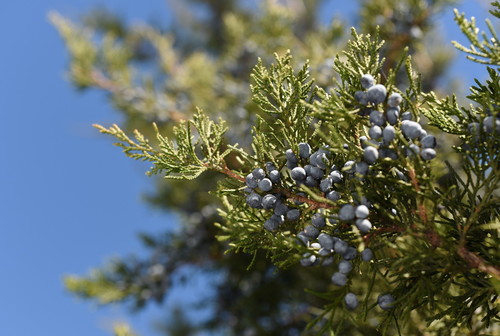
Common Serviceberry
Amelanchier arborea
Also listed as Amelanchier botryapium, Amelanchier wangenheimiana
Also known as Downy Serviceberry, Shadblow, Juneberry
Climate Match for your location
See how well Common Serviceberry grows in your area.
Enter your ZIP code and we'll show you how this plant fits your local climate.
A native understory tree with delicate white flowers in spring, edible dark blue berries in early summer, and vibrant orange-red foliage in fall. It's adaptable to various conditions and attracts wildlife.
Why grow it
Common serviceberry offers reliable three-season ornamental interest with less disease pressure than many Amelanchier species in humid regions. It tolerates partial shade better than most native fruit-bearing understory trees, making it useful for woodland edges or dappled light sites where alternatives like crabapple perform less predictably. The fruit ripens earlier than many serviceberries, reducing overlap with other summer harvests.
Watch out for
Young trees benefit from consistent moisture during establishment; inconsistent watering can stress growth. Flowering occurs very early in spring, so frost pockets where late freezes are common may occasionally damage the bloom and reduce fruit set. In areas with high humidity, monitor for fungal leaf spots, though this rarely requires intervention in established specimens.
Overview
- Form
- Growth Rate
- Size
- Dormancy
- Family
- Rosaceae
Native to the United States
Native Range
Eastern North America
Native to: Alabama, Arkansas, Connecticut, District of Columbia, Delaware, Florida, Georgia, Iowa, Illinois, Indiana, Kansas, Kentucky, Louisiana, Massachusetts, Maryland, Maine, Michigan, Minnesota, Missouri, Mississippi, North Carolina, Nebraska, New Hampshire, New Jersey, New York, Ohio, Oklahoma, Pennsylvania, Rhode Island, South Carolina, Tennessee, Texas, Virginia, Vermont, Wisconsin, West Virginia
Seasonality
Bloom Season
Harvest Season
Edible Parts
Season of Interest
Sub-canopy
Smaller trees living beneath the canopy.
Shrub
Woody multi-stem plants at eye level.
Succession Role
Tolerances & Soil
Flood Tolerance
Deer Resistance
Inferred from USDA browse palatability
pH Range
Soil Texture
Establishment & Care
- Establishment
- Maintenance
- Years to Bearing
- Propagation
A native understory tree with delicate white flowers in spring, edible dark blue berries in early summer, and vibrant orange-red foliage in fall. It's adaptable to various conditions and attracts wildlife.
Climate Match for your location
See how well Common Serviceberry grows in your area.
Enter your ZIP code and we'll show you how this plant fits your local climate.
Why grow it
Common serviceberry offers reliable three-season ornamental interest with less disease pressure than many Amelanchier species in humid regions. It tolerates partial shade better than most native fruit-bearing understory trees, making it useful for woodland edges or dappled light sites where alternatives like crabapple perform less predictably. The fruit ripens earlier than many serviceberries, reducing overlap with other summer harvests.
Watch out for
Young trees benefit from consistent moisture during establishment; inconsistent watering can stress growth. Flowering occurs very early in spring, so frost pockets where late freezes are common may occasionally damage the bloom and reduce fruit set. In areas with high humidity, monitor for fungal leaf spots, though this rarely requires intervention in established specimens.
Overview
- Form
- Growth Rate
- Size
- Dormancy
- Family
- Rosaceae
Native to the United States
Native Range
Eastern North America
Native to: Alabama, Arkansas, Connecticut, District of Columbia, Delaware, Florida, Georgia, Iowa, Illinois, Indiana, Kansas, Kentucky, Louisiana, Massachusetts, Maryland, Maine, Michigan, Minnesota, Missouri, Mississippi, North Carolina, Nebraska, New Hampshire, New Jersey, New York, Ohio, Oklahoma, Pennsylvania, Rhode Island, South Carolina, Tennessee, Texas, Virginia, Vermont, Wisconsin, West Virginia
Seasonality
Bloom Season
Harvest Season
Edible Parts
Season of Interest
Sub-canopy
Smaller trees living beneath the canopy.
Shrub
Woody multi-stem plants at eye level.
Succession Role
Tolerances & Soil
Flood Tolerance
Deer Resistance
Inferred from USDA browse palatability
pH Range
Soil Texture
Establishment & Care
- Establishment
- Maintenance
- Years to Bearing
- Propagation
Similar sub-canopy trees you might consider:
Enter your ZIP code to see top native species and strong climate fits for you.