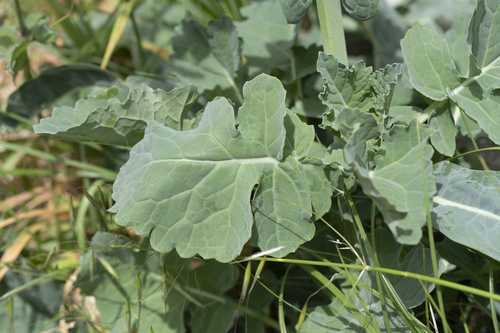
Elephant Garlic
Allium ampeloprasum
Also listed as Allium adscendens, Allium albescens
Also known as Great-headed Garlic, Levant Garlic, Leek
Climate Match for your location
See how well Elephant Garlic grows in your area.
Enter your ZIP code and we'll show you how this plant fits your local climate.
Elephant garlic is a mild-flavored relative of common garlic producing large bulbs with few massive cloves. It is grown as an annual or biennial crop and is valued for its impressive size and sweeter taste compared to regular garlic.
Why grow it
Elephant garlic produces substantially larger cloves than common garlic (Allium sativum), making it easier to peel and process for cooking. The flavor is notably milder and sweeter, appealing to gardeners who find standard garlic too pungent. It grows similarly to hardneck garlic varieties but with a longer growing season, typically requiring 7 to 8 months of cultivation.
Watch out for
Elephant garlic requires a consistent cold period (vernalization) to properly develop cloves, so it should be planted in fall in most temperate climates. The large bulbs need adequate spacing and consistent soil moisture to reach full size; crowded plantings or drought stress will reduce bulb development. Storage life is shorter than common garlic, typically lasting 2 to 3 months rather than 6 to 8 months, so plan harvest and use accordingly.
Overview
- Form
- Growth Rate
- Size
- Dormancy
- Family
- Amaryllidaceae
Native Range
Mediterranean
Seasonality
Bloom Season
Harvest Season
Edible Parts
Season of Interest
Herb
Soft non-woody plants of the field layer.
Tolerances & Soil
Establishment & Care
- Establishment
- Maintenance
- Years to Bearing
- Propagation
Elephant garlic is a mild-flavored relative of common garlic producing large bulbs with few massive cloves. It is grown as an annual or biennial crop and is valued for its impressive size and sweeter taste compared to regular garlic.
Climate Match for your location
See how well Elephant Garlic grows in your area.
Enter your ZIP code and we'll show you how this plant fits your local climate.
Why grow it
Elephant garlic produces substantially larger cloves than common garlic (Allium sativum), making it easier to peel and process for cooking. The flavor is notably milder and sweeter, appealing to gardeners who find standard garlic too pungent. It grows similarly to hardneck garlic varieties but with a longer growing season, typically requiring 7 to 8 months of cultivation.
Watch out for
Elephant garlic requires a consistent cold period (vernalization) to properly develop cloves, so it should be planted in fall in most temperate climates. The large bulbs need adequate spacing and consistent soil moisture to reach full size; crowded plantings or drought stress will reduce bulb development. Storage life is shorter than common garlic, typically lasting 2 to 3 months rather than 6 to 8 months, so plan harvest and use accordingly.
Overview
- Form
- Growth Rate
- Size
- Dormancy
- Family
- Amaryllidaceae
Native Range
Mediterranean
Seasonality
Bloom Season
Harvest Season
Edible Parts
Season of Interest
Herb
Soft non-woody plants of the field layer.
Tolerances & Soil
Establishment & Care
- Establishment
- Maintenance
- Years to Bearing
- Propagation
Similar herbs you might consider:
Enter your ZIP code to see top native species and strong climate fits for you.