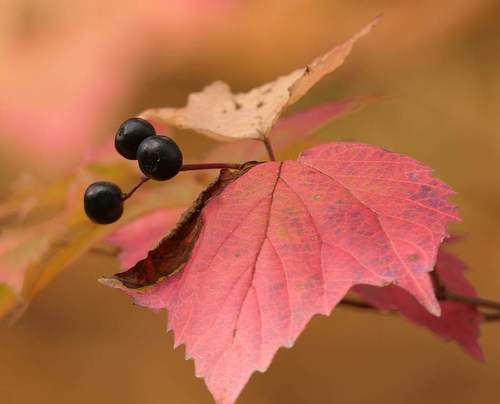
mapleleaf viburnum
Viburnum acerifolium
Climate Match for your location
See how well mapleleaf viburnum grows in your area.
Enter your ZIP code and we'll show you how this plant fits your local climate.
A native woodland shrub prized for its distinctive three-lobed maple-like leaves that turn wine-red in fall. It produces small white flowers in spring followed by blue-black berries that attract birds.
Overview
- Form
- Growth Rate
- Size
- Dormancy
- Family
Native to the United States
Native Range
Eastern North America
Native to: Connecticut, Delaware, Georgia, Massachusetts, Maryland, Maine, North Carolina, New Hampshire, New Jersey, New York, Ohio, Pennsylvania, Rhode Island, South Carolina, Virginia, Vermont, West Virginia
Seasonality
Bloom Season
Season of Interest
Shrub
Woody multi-stem plants at eye level.
Succession Role
Tolerances & Soil
Flood Tolerance
pH Range
Soil Texture
Function & Care
Establishment & Care
- Establishment
- Maintenance
- Propagation
A native woodland shrub prized for its distinctive three-lobed maple-like leaves that turn wine-red in fall. It produces small white flowers in spring followed by blue-black berries that attract birds.
Climate Match for your location
See how well mapleleaf viburnum grows in your area.
Enter your ZIP code and we'll show you how this plant fits your local climate.
Overview
- Form
- Growth Rate
- Size
- Dormancy
- Family
Native to the United States
Native Range
Eastern North America
Native to: Connecticut, Delaware, Georgia, Massachusetts, Maryland, Maine, North Carolina, New Hampshire, New Jersey, New York, Ohio, Pennsylvania, Rhode Island, South Carolina, Virginia, Vermont, West Virginia
Seasonality
Bloom Season
Season of Interest
Shrub
Woody multi-stem plants at eye level.
Succession Role
Tolerances & Soil
Flood Tolerance
pH Range
Soil Texture
Function & Care
Establishment & Care
- Establishment
- Maintenance
- Propagation