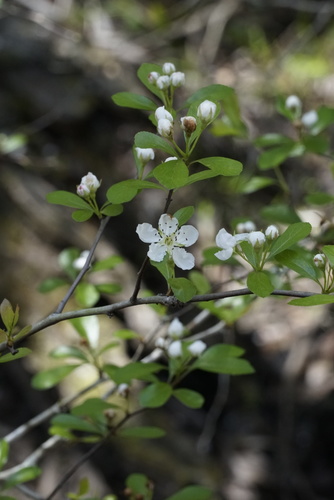
Mayhaw
Crataegus aestivalis
Climate Match for your location
See how well Mayhaw grows in your area.
Enter your ZIP code and we'll show you how this plant fits your local climate.
A small native tree or large shrub producing small red to yellow fruits in late spring that are excellent for jellies and preserves. Mayhaw is valued by permaculturists for its edible fruit, wildlife food, and ability to thrive in bottomland and wetland areas.
Overview
- Form
- Growth Rate
- Size
- Dormancy
- Family
Native to the United States
Native Range
Southeastern United States
Native to: Alabama, Arkansas, Florida, Georgia, Louisiana, Mississippi, North Carolina, South Carolina, Texas
Seasonality
Bloom Season
Harvest Season
Season of Interest
Sub-canopy
Smaller trees living beneath the canopy.
Succession Role
Tolerances & Soil
Flood Tolerance
pH Range
Soil Texture
Function & Care
Edible Parts
Establishment & Care
- Establishment
- Maintenance
- Years to Bearing
- Propagation
A small native tree or large shrub producing small red to yellow fruits in late spring that are excellent for jellies and preserves. Mayhaw is valued by permaculturists for its edible fruit, wildlife food, and ability to thrive in bottomland and wetland areas.
Climate Match for your location
See how well Mayhaw grows in your area.
Enter your ZIP code and we'll show you how this plant fits your local climate.
Overview
- Form
- Growth Rate
- Size
- Dormancy
- Family
Native to the United States
Native Range
Southeastern United States
Native to: Alabama, Arkansas, Florida, Georgia, Louisiana, Mississippi, North Carolina, South Carolina, Texas
Seasonality
Bloom Season
Harvest Season
Season of Interest
Sub-canopy
Smaller trees living beneath the canopy.
Succession Role
Tolerances & Soil
Flood Tolerance
pH Range
Soil Texture
Function & Care
Edible Parts
Establishment & Care
- Establishment
- Maintenance
- Years to Bearing
- Propagation