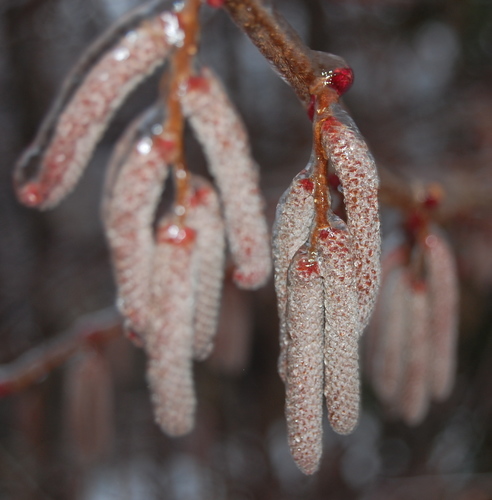
Red Alder
Alnus rubra
Also listed as Alnus oregana
Also known as Oregon Alder, Western Alder
Climate Match for your location
See how well Red Alder grows in your area.
Enter your ZIP code and we'll show you how this plant fits your local climate.
A fast-growing native deciduous tree with reddish catkins in early spring and dark green foliage. Red alder thrives in wet or riparian areas and is valuable for wildlife and nitrogen fixation.
Why grow it
Red alder establishes faster than most native nitrogen-fixing trees, making it useful for rapidly stabilizing riparian soils and establishing canopy in restoration plantings. Unlike many alders, it tolerates a wider range of moisture conditions once established, though it still prefers wet sites. Its early catkins and subsequent seed production support early-season wildlife, particularly birds and pollinators seeking pollen when few other sources are available.
Watch out for
Red alder has relatively shallow roots and can lean or fall in exposed sites or after heavy snow, so consider support or sheltered placement in windier areas. Aggressive suckering from roots and stumps means removal, if needed, typically requires repeated cutting or herbicide application rather than a single fell.
Overview
- Form
- Growth Rate
- Size
- Dormancy
- Family
- Betulaceae
Native to the United States
Native Range
Pacific Northwest North America
Native to: Alaska, California, Idaho, Montana, Oregon, Washington
Seasonality
Season of Interest
Sub-canopy
Smaller trees living beneath the canopy.
Succession Role
Tolerances & Soil
Flood Tolerance
Deer Resistance
Inferred from USDA browse palatability
pH Range
Soil Texture
Establishment & Care
- Establishment
- Maintenance
- Propagation
A fast-growing native deciduous tree with reddish catkins in early spring and dark green foliage. Red alder thrives in wet or riparian areas and is valuable for wildlife and nitrogen fixation.
Climate Match for your location
See how well Red Alder grows in your area.
Enter your ZIP code and we'll show you how this plant fits your local climate.
Why grow it
Red alder establishes faster than most native nitrogen-fixing trees, making it useful for rapidly stabilizing riparian soils and establishing canopy in restoration plantings. Unlike many alders, it tolerates a wider range of moisture conditions once established, though it still prefers wet sites. Its early catkins and subsequent seed production support early-season wildlife, particularly birds and pollinators seeking pollen when few other sources are available.
Watch out for
Red alder has relatively shallow roots and can lean or fall in exposed sites or after heavy snow, so consider support or sheltered placement in windier areas. Aggressive suckering from roots and stumps means removal, if needed, typically requires repeated cutting or herbicide application rather than a single fell.
Overview
- Form
- Growth Rate
- Size
- Dormancy
- Family
- Betulaceae
Native to the United States
Native Range
Pacific Northwest North America
Native to: Alaska, California, Idaho, Montana, Oregon, Washington
Seasonality
Season of Interest
Sub-canopy
Smaller trees living beneath the canopy.
Succession Role
Tolerances & Soil
Flood Tolerance
Deer Resistance
Inferred from USDA browse palatability
pH Range
Soil Texture
Establishment & Care
- Establishment
- Maintenance
- Propagation
Similar sub-canopy trees you might consider:
Enter your ZIP code to see top native species and strong climate fits for you.