Virginia Strawberry
Fragaria virginiana
Also listed as Potentilla virginiana
Also known as Wild Strawberry, Mountain Strawberry, Thickleaved Wild Strawberry
Climate Match for your location
See how well Virginia Strawberry grows in your area.
Enter your ZIP code and we'll show you how this plant fits your local climate.
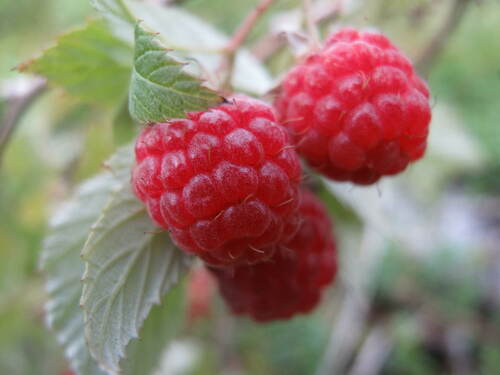
A low-growing native groundcover that produces delicious small red berries in early summer. Its white flowers in spring and runners that spread across the ground make it attractive for garden edging or woodland areas.
Why grow it
Virginia strawberry offers smaller fruit than commercial cultivars but compensates with superior cold hardiness, shade tolerance, and persistence as a perennial groundcover. Unlike hybrid strawberries, it spreads vigorously via runners and requires minimal fertilizer or amendment once established, making it well-suited to naturalistic plantings and woodland edges where conventional strawberries would struggle.
Watch out for
The runners can establish densely and may overtake nearby plantings if not monitored; containing it to a designated area prevents competition with slower-growing neighbors. Fruit production varies considerably by site conditions and day length, so yields in deep shade or far from native range may disappoint compared to performance in open sun.
Overview
- Form
- Growth Rate
- Size
- Dormancy
- Family
- Rosaceae
Native to the United States
Native Range
Eastern North America
Native to: Alaska, Alabama, Arkansas, Arizona, California, Colorado, Connecticut, District of Columbia, Delaware, Florida, Georgia, Iowa, Idaho, Illinois, Indiana, Kansas, Kentucky, Louisiana, Massachusetts, Maryland, Maine, Michigan, Minnesota, Missouri, Mississippi, Montana, North Carolina, North Dakota, Nebraska, New Hampshire, New Jersey, New Mexico, Nevada, New York, Ohio, Oklahoma, Oregon, Pennsylvania, Rhode Island, South Carolina, South Dakota, Tennessee, Texas, Utah, Virginia, Vermont, Washington, Wisconsin, West Virginia, Wyoming
Seasonality
Bloom Season
Harvest Season
Edible Parts
Season of Interest
Ground cover
Low spreading plants that carpet the soil.
Succession Role
Tolerances & Soil
Establishment & Care
- Establishment
- Maintenance
- Years to Bearing
- Propagation
A low-growing native groundcover that produces delicious small red berries in early summer. Its white flowers in spring and runners that spread across the ground make it attractive for garden edging or woodland areas.
Climate Match for your location
See how well Virginia Strawberry grows in your area.
Enter your ZIP code and we'll show you how this plant fits your local climate.
Why grow it
Virginia strawberry offers smaller fruit than commercial cultivars but compensates with superior cold hardiness, shade tolerance, and persistence as a perennial groundcover. Unlike hybrid strawberries, it spreads vigorously via runners and requires minimal fertilizer or amendment once established, making it well-suited to naturalistic plantings and woodland edges where conventional strawberries would struggle.
Watch out for
The runners can establish densely and may overtake nearby plantings if not monitored; containing it to a designated area prevents competition with slower-growing neighbors. Fruit production varies considerably by site conditions and day length, so yields in deep shade or far from native range may disappoint compared to performance in open sun.
Overview
- Form
- Growth Rate
- Size
- Dormancy
- Family
- Rosaceae
Native to the United States
Native Range
Eastern North America
Native to: Alaska, Alabama, Arkansas, Arizona, California, Colorado, Connecticut, District of Columbia, Delaware, Florida, Georgia, Iowa, Idaho, Illinois, Indiana, Kansas, Kentucky, Louisiana, Massachusetts, Maryland, Maine, Michigan, Minnesota, Missouri, Mississippi, Montana, North Carolina, North Dakota, Nebraska, New Hampshire, New Jersey, New Mexico, Nevada, New York, Ohio, Oklahoma, Oregon, Pennsylvania, Rhode Island, South Carolina, South Dakota, Tennessee, Texas, Utah, Virginia, Vermont, Washington, Wisconsin, West Virginia, Wyoming
Seasonality
Bloom Season
Harvest Season
Edible Parts
Season of Interest
Ground cover
Low spreading plants that carpet the soil.
Succession Role
Tolerances & Soil
Establishment & Care
- Establishment
- Maintenance
- Years to Bearing
- Propagation
Similar ground covers you might consider:
Enter your ZIP code to see top native species and strong climate fits for you.