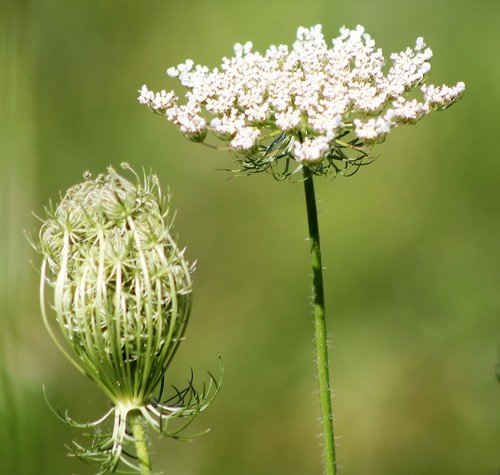
Wild Garlic
Allium vineale
Also listed as Allium assimile, Allium subvineale
Also known as Crow Garlic, Field Garlic, Stag Garlic
Climate Match for your location
See how well Wild Garlic grows in your area.
Enter your ZIP code and we'll show you how this plant fits your local climate.
A bulbous perennial with thin, grass-like foliage and small pink or white flowers in clusters. Often considered invasive in lawns and pastures, it spreads via bulbils and seeds.
Why grow it
Wild garlic offers a perennial bulb crop that requires minimal management once established and produces both edible bulbs and foliage for culinary use. It tolerates poor soils and part shade better than most allium species, making it useful in less-managed corners of a permaculture system. The self-seeding habit can be an asset in situations where reliable regeneration matters more than containment, though this same trait demands careful consideration of site context.
Watch out for
The prolific bulbil and seed production means containment within a bed or designated area requires deliberate planning; volunteer seedlings will appear in adjacent spaces year after year. Harvesting is labor-intensive relative to yield since bulbs are small, and the strong sulfurous odor can linger on hands and tools. Dense stands can shade out desirable neighbors, and the plant's vigor in disturbed soil means it spreads fastest through tilled or cultivated ground.
Overview
- Form
- Growth Rate
- Size
- Dormancy
- Family
- Amaryllidaceae
Native Range
Mediterranean and Central Asia
Seasonality
Bloom Season
Harvest Season
Edible Parts
Season of Interest
Herb
Soft non-woody plants of the field layer.
Succession Role
Tolerances & Soil
Establishment & Care
- Establishment
- Maintenance
- Years to Bearing
- Propagation
A bulbous perennial with thin, grass-like foliage and small pink or white flowers in clusters. Often considered invasive in lawns and pastures, it spreads via bulbils and seeds.
Climate Match for your location
See how well Wild Garlic grows in your area.
Enter your ZIP code and we'll show you how this plant fits your local climate.
Why grow it
Wild garlic offers a perennial bulb crop that requires minimal management once established and produces both edible bulbs and foliage for culinary use. It tolerates poor soils and part shade better than most allium species, making it useful in less-managed corners of a permaculture system. The self-seeding habit can be an asset in situations where reliable regeneration matters more than containment, though this same trait demands careful consideration of site context.
Watch out for
The prolific bulbil and seed production means containment within a bed or designated area requires deliberate planning; volunteer seedlings will appear in adjacent spaces year after year. Harvesting is labor-intensive relative to yield since bulbs are small, and the strong sulfurous odor can linger on hands and tools. Dense stands can shade out desirable neighbors, and the plant's vigor in disturbed soil means it spreads fastest through tilled or cultivated ground.
Overview
- Form
- Growth Rate
- Size
- Dormancy
- Family
- Amaryllidaceae
Native Range
Mediterranean and Central Asia
Seasonality
Bloom Season
Harvest Season
Edible Parts
Season of Interest
Herb
Soft non-woody plants of the field layer.
Succession Role
Tolerances & Soil
Establishment & Care
- Establishment
- Maintenance
- Years to Bearing
- Propagation
Similar herbs you might consider:
Enter your ZIP code to see top native species and strong climate fits for you.