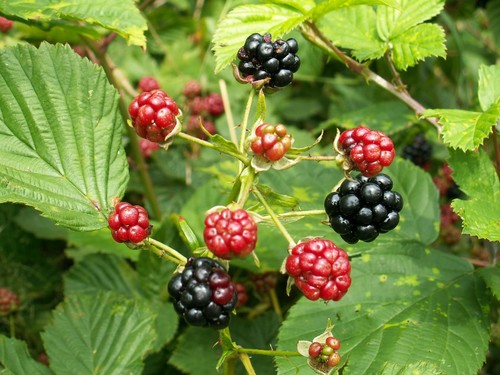
Woodland Strawberry
Fragaria vesca
Also listed as Potentilla vesca
Also known as Wild Strawberry, Alpine Strawberry, Wood Strawberry
Climate Match for your location
See how well Woodland Strawberry grows in your area.
Enter your ZIP code and we'll show you how this plant fits your local climate.
Woodland strawberry is a low-growing perennial groundcover producing delicate white flowers followed by small, intensely flavored red fruits. It spreads readily via runners and is ideal for shaded garden edges and woodland settings.
Why grow it
Woodland strawberry offers superior cold-hardiness and shade tolerance compared to commercial strawberry cultivars, making it suitable for temperate woodland gardens and partial-shade edges where larger strawberry species struggle. The small fruits have more concentrated flavor than most modern strawberry varieties, though yields per plant are modest. It establishes quickly as groundcover in acidic to neutral soils and requires less fertility and maintenance than cultivated strawberries.
Watch out for
Fruit production declines noticeably in dense shade; partial shade with at least a few hours of indirect light yields better crops. Plants may take a season or two to achieve full coverage, and runners can spread into adjacent plantings if not managed. Performance varies significantly by regional climate and soil type, so local extension guidance on cultivar selection is advisable.
Overview
- Form
- Growth Rate
- Size
- Dormancy
- Family
- Rosaceae
Native to the United States
Native Range
Europe and western Asia
Native to: Arizona, California, Colorado, Connecticut, Delaware, Iowa, Idaho, Illinois, Indiana, Kentucky, Massachusetts, Maine, Michigan, Minnesota, Missouri, Montana, North Carolina, North Dakota, Nebraska, New Hampshire, New Jersey, New Mexico, New York, Ohio, Oregon, Pennsylvania, Rhode Island, South Dakota, Texas, Utah, Virginia, Vermont, Washington, Wisconsin, West Virginia, Wyoming
Seasonality
Bloom Season
Harvest Season
Edible Parts
Season of Interest
Ground cover
Low spreading plants that carpet the soil.
Succession Role
Tolerances & Soil
Establishment & Care
- Establishment
- Maintenance
- Years to Bearing
- Propagation
Woodland strawberry is a low-growing perennial groundcover producing delicate white flowers followed by small, intensely flavored red fruits. It spreads readily via runners and is ideal for shaded garden edges and woodland settings.
Climate Match for your location
See how well Woodland Strawberry grows in your area.
Enter your ZIP code and we'll show you how this plant fits your local climate.
Why grow it
Woodland strawberry offers superior cold-hardiness and shade tolerance compared to commercial strawberry cultivars, making it suitable for temperate woodland gardens and partial-shade edges where larger strawberry species struggle. The small fruits have more concentrated flavor than most modern strawberry varieties, though yields per plant are modest. It establishes quickly as groundcover in acidic to neutral soils and requires less fertility and maintenance than cultivated strawberries.
Watch out for
Fruit production declines noticeably in dense shade; partial shade with at least a few hours of indirect light yields better crops. Plants may take a season or two to achieve full coverage, and runners can spread into adjacent plantings if not managed. Performance varies significantly by regional climate and soil type, so local extension guidance on cultivar selection is advisable.
Overview
- Form
- Growth Rate
- Size
- Dormancy
- Family
- Rosaceae
Native to the United States
Native Range
Europe and western Asia
Native to: Arizona, California, Colorado, Connecticut, Delaware, Iowa, Idaho, Illinois, Indiana, Kentucky, Massachusetts, Maine, Michigan, Minnesota, Missouri, Montana, North Carolina, North Dakota, Nebraska, New Hampshire, New Jersey, New Mexico, New York, Ohio, Oregon, Pennsylvania, Rhode Island, South Dakota, Texas, Utah, Virginia, Vermont, Washington, Wisconsin, West Virginia, Wyoming
Seasonality
Bloom Season
Harvest Season
Edible Parts
Season of Interest
Ground cover
Low spreading plants that carpet the soil.
Succession Role
Tolerances & Soil
Establishment & Care
- Establishment
- Maintenance
- Years to Bearing
- Propagation
Similar ground covers you might consider:
Enter your ZIP code to see top native species and strong climate fits for you.