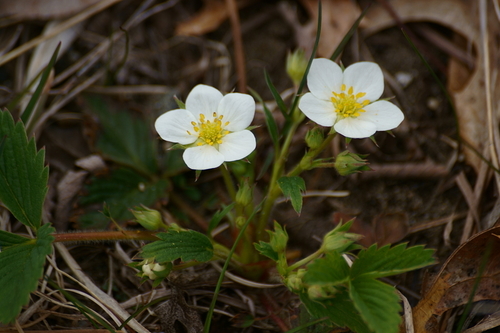
Red Raspberry
Rubus idaeus
Also listed as Batidaea idaea, Rubus fragrans
Also known as Raspberry, Domestic Red Raspberry, European Raspberry
Climate Match for your location
See how well Red Raspberry grows in your area.
Enter your ZIP code and we'll show you how this plant fits your local climate.
A deciduous shrub prized for its sweet red berries produced in summer. Grows vigorously with thorny or thornless canes depending on cultivar.
Why grow it
Red raspberry produces fruit reliably across most temperate regions with minimal pest pressure compared to brambles like blackberry. It tolerates partial shade better than many berry crops and establishes quickly on marginal land. The canes are shorter and more manageable than some Rubus species, making harvest less labor-intensive.
Watch out for
Canes can spread aggressively from root fragments if not contained, requiring annual pruning to maintain boundaries. Disease pressure varies by region; in humid areas, anthracnose and spur blight can reduce yields if air circulation is poor.
Overview
- Form
- Growth Rate
- Size
- Dormancy
- Family
- Rosaceae
Native to the United States
Native Range
Europe and Western Asia
Native to: Alaska, Arizona, California, Colorado, Connecticut, Delaware, Iowa, Idaho, Illinois, Indiana, Massachusetts, Maryland, Maine, Michigan, Minnesota, Missouri, Montana, North Carolina, North Dakota, Nebraska, New Hampshire, New Jersey, New Mexico, Nevada, New York, Ohio, Oklahoma, Oregon, Pennsylvania, Rhode Island, South Dakota, Tennessee, Utah, Virginia, Vermont, Washington, Wisconsin, West Virginia, Wyoming
Seasonality
Bloom Season
Harvest Season
Edible Parts
Season of Interest
Shrub
Woody multi-stem plants at eye level.
Succession Role
Tolerances & Soil
Flood Tolerance
Deer Resistance
Inferred from USDA browse palatability
pH Range
Soil Texture
Establishment & Care
- Establishment
- Maintenance
- Years to Bearing
- Propagation
A deciduous shrub prized for its sweet red berries produced in summer. Grows vigorously with thorny or thornless canes depending on cultivar.
Climate Match for your location
See how well Red Raspberry grows in your area.
Enter your ZIP code and we'll show you how this plant fits your local climate.
Why grow it
Red raspberry produces fruit reliably across most temperate regions with minimal pest pressure compared to brambles like blackberry. It tolerates partial shade better than many berry crops and establishes quickly on marginal land. The canes are shorter and more manageable than some Rubus species, making harvest less labor-intensive.
Watch out for
Canes can spread aggressively from root fragments if not contained, requiring annual pruning to maintain boundaries. Disease pressure varies by region; in humid areas, anthracnose and spur blight can reduce yields if air circulation is poor.
Overview
- Form
- Growth Rate
- Size
- Dormancy
- Family
- Rosaceae
Native to the United States
Native Range
Europe and Western Asia
Native to: Alaska, Arizona, California, Colorado, Connecticut, Delaware, Iowa, Idaho, Illinois, Indiana, Massachusetts, Maryland, Maine, Michigan, Minnesota, Missouri, Montana, North Carolina, North Dakota, Nebraska, New Hampshire, New Jersey, New Mexico, Nevada, New York, Ohio, Oklahoma, Oregon, Pennsylvania, Rhode Island, South Dakota, Tennessee, Utah, Virginia, Vermont, Washington, Wisconsin, West Virginia, Wyoming
Seasonality
Bloom Season
Harvest Season
Edible Parts
Season of Interest
Shrub
Woody multi-stem plants at eye level.
Succession Role
Tolerances & Soil
Flood Tolerance
Deer Resistance
Inferred from USDA browse palatability
pH Range
Soil Texture
Establishment & Care
- Establishment
- Maintenance
- Years to Bearing
- Propagation
Similar shrubs you might consider:
Enter your ZIP code to see top native species and strong climate fits for you.